Summary
- The EU ambassador said there were serious concerns within the European Commission about the implementation of international conventions in Pakistan.
- The ambassador said Pakistan could avoid serious consequences if its government showed willingness to cooperate and address the concerns.
- He also said Pakistan did not fully agree with the EU’s assessment.
Pakistan is facing a difficult challenge to retain its preferential trade access to the European Union under the GSP+ scheme.
The EU has warned that the benefits cannot be taken for granted. Pakistan will have to show clear progress on its international commitments.
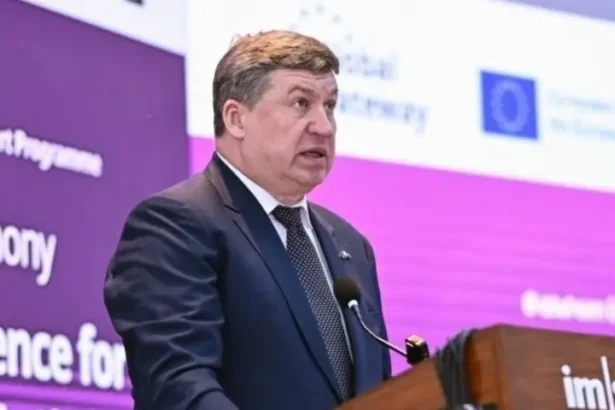
EU Ambassador Raimundas Karoblis said the situation remained uncertain. He said Islamabad would need to take concrete steps to improve its performance.
Pakistan has benefited from the GSP+ facility since 2014. The scheme gives preferential access to the European market by reducing or removing tariffs on eligible Pakistani exports.
The current framework is set to expire at the end of this year. Existing beneficiaries will enter a transition period until December 31, 2028. However, this does not guarantee Pakistan’s automatic inclusion in the new scheme.
The new arrangement will have stricter requirements. It will cover 32 international conventions compared with 27 under the existing framework.
Pakistan has already ratified the five additional conventions. The main challenge will now be their effective implementation.
An EU assessment of Pakistan’s performance from 2023 to 2025 highlighted concerns in several areas. These include human rights, enforced disappearances, alleged extrajudicial killings, freedom of expression, journalists’ rights, minority protections and judicial independence.
The report also raised concerns about access to justice and forced labour. It said some reforms had been introduced but had not produced sufficient improvements on the ground.
The EU ambassador said there were serious concerns within the European Commission about the implementation of international conventions in Pakistan.
He also stressed that the EU had not yet decided to suspend Pakistan’s GSP+ preferences. Any such move would require further assessment.
The ambassador said Pakistan could avoid serious consequences if its government showed willingness to cooperate and address the concerns.
The stakes are high for Pakistan. The European Union is one of the country’s most important export markets.
Pakistan’s textile and clothing sector is especially dependent on the European market. Textiles and garments account for around 70% to 76% of Pakistan’s exports to the EU.
Leather products, food and beverages are also among the major export categories benefiting from the scheme.
In 2024, Pakistan’s exports to the EU were worth more than €8 billion. A large portion of these exports received preferential treatment under GSP+.
The loss of these concessions could increase duties on Pakistani products. This could make them less competitive in the European market.
Pakistan has defended its record. Foreign Office spokesperson Tahir Andrabi said Islamabad remained committed to implementing the international conventions linked to GSP+.
He also said Pakistan did not fully agree with the EU’s assessment. According to him, the report did not provide a sufficiently balanced picture of Pakistan’s performance.
Islamabad has assured Brussels that it will continue constructive engagement over the issue.
The next phase will require more than political assurances. Pakistan will need to present a clear action plan with specific measures, timelines and performance indicators.
Freedom of expression is expected to remain a key issue. The EU has raised concerns about recent legal measures, including amendments to PECA and the Punjab Defamation Act.
Human rights and the rule of law are also likely to remain central to the EU’s assessment.
Blasphemy-related cases are another concern for Brussels. The EU has acknowledged some improvement but says serious issues remain
We welcome your contributions! Submit your blogs, opinion pieces, press releases, news story pitches, and news features to opinion@minutemirror.com.pk and minutemirrormail@gmail.com