Summary
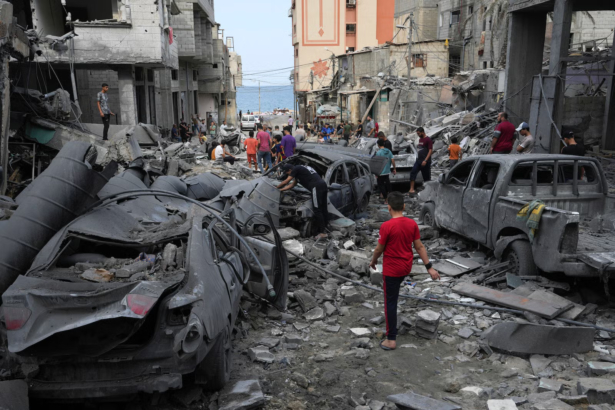
- Israeli attacks killed at least five Palestinians in the Gaza Strip on Thursday, according to Palestinian health officials, as a US based research organization documented a sharp rise in Israeli military action to levels unseen since the current truce began in October.
- These latest deaths add to a toll that now exceeds 1,100 Palestinians, most of them civilians, killed in Israeli attacks since the ceasefire between Israel and Hamas took hold in October, according to health officials in Gaza.
- ACLED, a conflict monitoring organization that tracks Israeli military activity in Gaza, recorded more than 40 airstrikes against Hamas and other armed groups in June alone, marking the highest monthly total since the ceasefire began.
Israeli attacks killed at least five Palestinians in the Gaza Strip on Thursday, according to Palestinian health officials, as a US based research organization documented a sharp rise in Israeli military action to levels unseen since the current truce began in October.
Medical workers said an Israeli airstrike killed two people near the Tuffah neighborhood in northern Gaza, while Israeli tank fire killed a third person in the Zeitoun suburb east of Gaza City. A separate airstrike struck a tent camp housing displaced families in western Gaza City, killing one person and injuring several others. In Khan Younis, in the south, an attack on a vehicle killed another person, medics reported. Witnesses said an additional airstrike hit a residential building in the Nuseirat refugee camp in central Gaza, damaging several nearby homes. The Israeli military did not immediately respond to requests for comment on any of these incidents.
These latest deaths add to a toll that now exceeds 1,100 Palestinians, most of them civilians, killed in Israeli attacks since the ceasefire between Israel and Hamas took hold in October, according to health officials in Gaza. Hamas typically does not release figures on its own losses.
Jibril Khattab, whose relative died in one of Thursday’s strikes, spoke with reporters at Al Shifa Hospital in Gaza City. He said Gaza’s population has not experienced a genuine ceasefire at any point, calling the truce an illusion and adding that no location in Gaza feels safe.
Rising attacks
The truce succeeded in halting large scale fighting but has not stopped near daily Israeli strikes across the territory. Four Israeli soldiers have died at the hands of militants in Gaza during the same period.
ACLED, a conflict monitoring organization that tracks Israeli military activity in Gaza, recorded more than 40 airstrikes against Hamas and other armed groups in June alone, marking the highest monthly total since the ceasefire began. Nasser Khdour, an assistant research manager focused on the Middle East at ACLED, said polling showing the political opposition ahead has put pressure on Israeli Prime Minister Benjamin Netanyahu to adopt a firmer security stance against Hamas, a reference to Israel’s upcoming legislative election in October. Israeli officials maintain that the strikes are intended to prevent attacks by militants operating out of Gaza.
Nearly the entire population of Gaza, close to two million people, now lives crowded along a narrow strip of coastal land, largely in makeshift tents or damaged structures, in an area still under Hamas control.
The current round of violence traces back to the Hamas led cross border attack on Israel on October 7, 2023, which Israeli tallies say killed 1,200 people. Gaza’s health ministry has said Israel’s military campaign since that attack has killed more than 73,000 Palestinians.
The continued strikes highlight the fragility of the truce reached in October, which halted the most intense phase of fighting but has done little to fully shield Gaza’s population from ongoing violence. Humanitarian organizations operating in the territory have repeatedly warned that displaced families face severe shortages of shelter, food and medical care, conditions that persist even as the formal ceasefire remains technically in effect. Analysts tracking the conflict say the rising frequency of strikes in recent months reflects both continued military operations against armed groups and broader political pressures shaping decision making in Israel ahead of the upcoming election, leaving open questions about how durable the current arrangement will prove in the months ahead.
We welcome your contributions! Submit your blogs, opinion pieces, press releases, news story pitches, and news features to opinion@minutemirror.com.pk and minutemirrormail@gmail.com