Summary
- June 11, 2026The top economic body, the National Economic Council, met in Islamabad under Prime Minister Shehbaz Sharif to finalise the country’s development budget for the next fiscal year.
- Together, they approved a development framework that will guide how public money is spent in the year ahead.
- The total development allocation for the upcoming fiscal year stands at Rs 4.224 trillion.
June 11, 2026
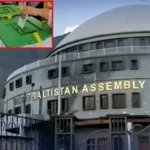
The top economic body, the National Economic Council, met in Islamabad under Prime Minister Shehbaz Sharif to finalise the country’s development budget for the next fiscal year. The meeting brought together the prime minister, all four chief ministers, senior federal ministers, and representatives from Azad Jammu and Kashmir and Gilgit-Baltistan. Together, they approved a development framework that will guide how public money is spent in the year ahead. The total development allocation for the upcoming fiscal year stands at Rs 4.224 trillion. This is a significant step up from last year’s allocation, which was lower and came under pressure from tight fiscal conditions, high debt servicing costs and the demands of an IMF stabilisation programme. The increase reflects a cautious but deliberate shift — from simply managing a crisis to attempting to build again. The need for this push is clear. The economic growth has remained stubbornly low, held back by inflation, energy costs and a weak private sector. The situation has been made harder by global uncertainty. The recent conflict involving the United States and Israel against Iran has rattled energy markets and raised oil prices, adding to import costs that Pakistan can ill afford. Terrorism in Khyber-Pakhtunkhwa and Balochistan continues to disrupt local economies and frighten away investors. Climate-related floods have damaged crops and infrastructure repeatedly, straining provincial budgets.
Against this difficult backdrop, the council reviewed development plans across education, health, transport, energy and water. Provincial governments presented their Annual Development Programmes, and the council examined progress on projects already underway. A monitoring report on large-scale schemes was also approved, with officials stressing the need for stronger oversight to prevent delays and wastage. This is where past budgets have often fallen short. Approving funds is the easy part. Spending them wisely, on time and with accountability, has always been Pakistan’s real challenge. Projects drag on for years. Costs balloon. Benefits arrive late, if at all. For this development plan to mean something real for ordinary Pakistanis, the government must move beyond approvals and enforce delivery.
We welcome your contributions! Submit your blogs, opinion pieces, press releases, news story pitches, and news features to [email protected] and [email protected]