Summary
- The federal government imposed emergency and governor’s rule in KP, accusing the Pakistan Tehreek-e-Insaf (PTI)-led provincial government of deliberately disengaging from counterterrorism efforts.
- Federal ministers have repeatedly accused the former provincial government of maintaining links with militant groups, allegations rejected by the PTI.
- The federal government has cited the deteriorating security situation as a key justification for imposing emergency measures in the province.
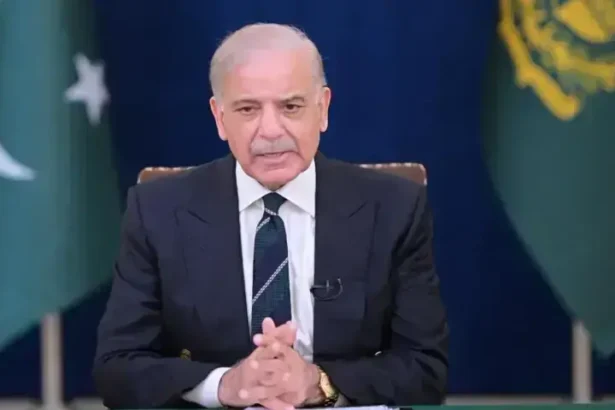
Prime Minister Shehbaz Sharif arrived in Peshawar on Thursday for his first visit to Khyber Pakhtunkhwa since the imposition of governor’s rule and emergency on October 11.
According to official sources, the prime minister is expected to chair a meeting of the provincial apex committee to review the security situation and discuss measures to counter terrorism.
The federal government imposed emergency and governor’s rule in KP, accusing the Pakistan Tehreek-e-Insaf (PTI)-led provincial government of deliberately disengaging from counterterrorism efforts. Parliament endorsed the decisions last week amid strong protests from opposition lawmakers.
KP Governor Faisal Karim Kundi, who assumed responsibility for running the province under the new arrangement, had chaired an apex committee meeting with Interior Minister Mohsin Naqvi shortly after governor’s rule was imposed.
During the meeting, Kundi pledged to implement federal government policies and strengthen cooperation with security forces to restore peace and stability in the province. He identified counterterrorism as the administration’s top priority.
The governor later called for closer coordination between the federal and provincial authorities. He maintained that counterterrorism policies would be formulated in Islamabad rather than Kabul, indirectly criticising the previous PTI-led provincial government over its approach to dealing with militant groups.
The federal government’s decision came amid escalating tensions with the PTI, which had organised protests and a march demanding the release of its jailed founder, Imran Khan.
Negotiations between the government and the opposition had collapsed shortly before the imposition of governor’s rule. Differences over counterterrorism policies, security arrangements and engagement with the Afghan Taliban were among the major obstacles to an agreement.
The PTI maintained that it was being excluded from key security decisions affecting KP and called for a review of the existing counterterrorism strategy. The federal government, however, rejected the allegations and questioned the provincial administration’s performance in tackling militancy.
Following the imposition of emergency, the Centre also authorised the deployment of Pakistan Army personnel and resources in the province to assist the civilian administration.
Federal ministers have repeatedly accused the former provincial government of maintaining links with militant groups, allegations rejected by the PTI. The federal government has cited the deteriorating security situation as a key justification for imposing emergency measures in the province.
We welcome your contributions! Submit your blogs, opinion pieces, press releases, news story pitches, and news features to opinion@minutemirror.com.pk and minutemirrormail@gmail.com