Summary
- Gilgit-Baltistan, Kashmir, and upper Khyber Pakhtunkhwa are likely to receive normal to slightly above-normal rainfall, according to the forecast.
- In northern and mountainous regions, even normal to slightly above-normal rainfall combined with rising temperatures may lead to flash floods and landslides.
- With temperatures expected to remain high, intermittent heat stress conditions may develop, particularly in the plains of southern Punjab and Sindh.
The Pakistan Meteorological Department (PMD) has issued an updated three-month seasonal outlook, warning that most parts of the country are likely to experience nobelow-normal rainfall along with above-average temperatures from July through September.
According to the report, the Indian Ocean Dipole (IOD) is currently in a neutral state but is expected to gradually shift into a positive phase during the course of the season. At the same time, sea surface temperatures across the central and eastern tropical Pacific Ocean are showing a warming trend, which signals the possible development of El Niño conditions. Such conditions are typically linked with reduced monsoon rainfall in Pakistan.
The PMD noted that these warming trends are expected to continue throughout the July–September 2026 period and may even intensify as the season progresses. While a positive IOD generally supports slightly higher-than-average monsoon rainfall in the region, the department explained that its late development this year may limit its overall impact on rainfall patterns across Pakistan.
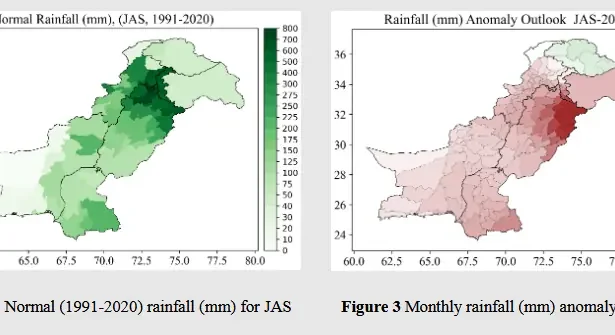
Based on current assessments, the country is expected to receive normal to below-normal rainfall in most regions during the forecast period. The greatest negative rainfall departures are likely in northeastern Punjab and nearby areas. The probabilistic outlook further suggests a high chance of below-normal precipitation across Punjab, Sindh, southern Khyber Pakhtunkhwa, and large parts of Balochistan.
However, the situation is expected to be somewhat different in the northern regions. Gilgit-Baltistan, Kashmir, and upper Khyber Pakhtunkhwa are likely to receive normal to slightly above-normal rainfall, according to the forecast.
In terms of temperature, the PMD expects conditions to remain consistently above normal across the country throughout the season. The highest temperature anomalies are likely to occur in northeastern Punjab and eastern Gilgit-Baltistan. Model-based projections also show a strong likelihood of above-average temperatures across most of Punjab, southern Khyber Pakhtunkhwa, eastern Balochistan, and western Sindh.
The department has warned that these weather patterns could increase the risk of multiple hazards. In northern and mountainous regions, even normal to slightly above-normal rainfall combined with rising temperatures may lead to flash floods and landslides. Rapid melting of snow and glaciers could also increase river flows downstream and raise the risk of glacial lake outburst floods (GLOFs) in vulnerable areas.
In contrast, reduced rainfall in the plains is expected to create water shortages that could affect major Kharif crops such as rice, cotton, sugarcane, and maize. As a result, irrigation demand is likely to rise significantly during the season.
The outlook also highlights potential health concerns, including a higher risk of vector-borne diseases such as dengue fever. Additionally, the country may face strong winds, dust storms, and hailstorms, which could damage standing crops, vegetables, and orchards. Farmers have been advised to take precautionary measures to safeguard agricultural production.
With temperatures expected to remain high, intermittent heat stress conditions may develop, particularly in the plains of southern Punjab and Sindh. However, slightly better rainfall in northern mountainous regions may help reduce extreme heat intensity there.
The PMD also issued safety recommendations in light of increasing windstorm activity. It advised that billboards in major cities should either be removed or reinforced properly to withstand strong winds. Similarly, solar energy installations should be secured to minimize the risk of damage during severe weather events.
We welcome your contributions! Submit your blogs, opinion pieces, press releases, news story pitches, and news features to [email protected] and [email protected]