Summary
- The publication of the Draft Pakistan Virtual Asset Services Regulations, 2026 by the Pakistan Virtual Asset Regulatory Authority (PVARA) symbols the country’s first comprehensive attempt to establish a legal and supervisory framework for the rapidly evolving digital asset industry.
- This activity based approach is consistent with regulatory developments in the European Union under the Markets in Crypto-Assets Regulation (MiCA), Dubai’s Virtual Assets Regulatory Authority (VARA), the Abu Dhabi Global Market (ADGM), Singapore’s Payment Services Act and Hong Kong’s licensing regime. These draft regulations emphasis placed on governance, fit and proper assessments, customer asset segregation, prudential requirements, operational resilience, cybersecurity, outsourcing oversight and anti-money laundering compliance.
- If refined through meaningful consultation and aligned with evolving international standards, the Draft Pakistan Virtual Asset Services Regulations, 2026 have the potential to position Pakistan as a responsible participant in the global digital economy by safeguarding the integrity of its financial system.
Pakistan has accomplished a defining moment in its financial regulatory evolution. The publication of the Draft Pakistan Virtual Asset Services Regulations, 2026 by the Pakistan Virtual Asset Regulatory Authority (PVARA) symbols the country’s first comprehensive attempt to establish a legal and supervisory framework for the rapidly evolving digital asset industry. This development deserves recognition not merely because Pakistan has chosen to regulate crypto assets, but because it signals a broader shift from regulatory uncertainty towards institutional oversight.
Pakistan’s approach to virtual assets was shaped primarily by concerns surrounding money laundering, terrorist financing, fraud, capital flight and consumer protection. Though these concerns remain legitimate, global experience has demonstrated that prohibition neither eliminates demand nor reduces illicit activity. Instead, it pushes users towards offshore exchanges, informal peer-to-peer markets and decentralized platforms that operate beyond the reach of domestic regulators.
The emergence of the Virtual Assets Act, 2026, followed by these draft regulations, reflects an acknowledgement that digital assets are no longer a temporary technological trend. They have become part of global financial framework.
More than one hundred jurisdictions have now adopted some form of crypto regulatory framework, similarly, international institutions including the Financial Action Task Force (FATF), the International Monetary Fund (IMF), the World Bank, IOSCO and the Bank for International Settlements have issued policy guidance encouraging countries to regulate rather than ignore this rapidly expanding sector.
Pakistan therefore has a unique opportunity. Rather than replicating foreign regulatory models, it can design a framework that reflects international standards by accommodating domestic legal, institutional and economic realities.
The draft regulations demonstrate that considerable effort has been invested in developing a modern supervisory framework. The licensing structure broadly reflects international practice by distinguishing between exchanges, custodians, broker-dealers, issuers, transfer service providers, lending platforms, investment managers and other categories of Virtual Asset Service Providers (VASPs).
This activity based approach is consistent with regulatory developments in the European Union under the Markets in Crypto-Assets Regulation (MiCA), Dubai’s Virtual Assets Regulatory Authority (VARA), the Abu Dhabi Global Market (ADGM), Singapore’s Payment Services Act and Hong Kong’s licensing regime. These draft regulations emphasis placed on governance, fit and proper assessments, customer asset segregation, prudential requirements, operational resilience, cybersecurity, outsourcing oversight and anti-money laundering compliance.
These provisions recognize that the greatest risks within the crypto ecosystem often arise not from blockchain technology itself but from weaknesses in governance, custody arrangements, conflicts of interest and internal controls. However, the draft establishes a solid regulatory foundation; several important policy issues require careful reconsideration before the framework is finalized.
The first concern relates to regulatory certainty. Throughout the regulations, numerous provisions defer substantive requirements to future directions, circulars, standards or guidelines to be issued by the Authority. Although regulatory flexibility is desirable, excessive reliance on future instruments creates uncertainty for market participants. Investors and financial institutions require predictable rules before committing capital.
The core obligations affecting licensing, prudential standards, governance, customer asset protection and enforcement should therefore be clearly embedded within the regulations themselves rather than left to subsequent supervisory instruments.
The second issue concerns regulatory coordination. Virtual assets increasingly intersect with payments, securities, commodities, banking, foreign exchange and consumer protection. The draft regulations acknowledge the respective mandates of the State Bank of Pakistan and the Securities and Exchange Commission of Pakistan, still practical coordination mechanisms remain underdeveloped.
Therefore, without clearly defined jurisdictional boundaries, businesses may face overlapping regulatory obligations or inconsistent supervisory expectations. The formal coordination protocols between PVARA, SBP, SECP, the Financial Monitoring Unit and other competent authorities should therefore be established before the licensing regime becomes operational.
Third, though the regulations adopt a proportionality principle, its practical application remains uncertain. The international experience demonstrates that proportional regulation encourages innovation by allowing supervisors to concentrate resources on institutions presenting the greatest systemic risk.
Therefore, applying identical prudential expectations to a small blockchain advisory firm and a large custodial exchange would neither enhance financial stability nor promote market development. PVARA should therefore publish transparent supervisory criteria explaining how proportionality will operate across different licence categories.
The treatment of stablecoins also deserves further attention. Globally, fiat referenced and asset referenced tokens are increasingly viewed as systemically important payment instruments rather than simply speculative digital assets. The draft regulations appropriately require reserve backing and segregation of reserve assets.
However, greater clarity is needed regarding eligible reserve assets, independent custodians, redemption rights, valuation methodologies, liquidity management and insolvency protections. Recent international experience has shown that confidence in stablecoins depends not only upon reserve adequacy but also upon transparency, governance and legal certainty.
Customer asset protection represents one of the strongest aspects of the draft framework. The requirement to segregate customer assets, prohibit unauthorized use of client holdings and establish governance controls reflects important lessons learned from recent failures within the global digital asset industry.
Therefore, additional safeguards should be considered, including mandatory daily reconciliations for custodians, independent proof of reserve attestations, statutory trust protection for customer assets, enhanced disclosure of custody arrangements and clearer insolvency treatment. Such measures would significantly strengthen consumer confidence by aligning Pakistan with emerging international best practices.
Operational resilience and cybersecurity are another area where Pakistan has adopted an appropriately forward looking approach. Digital asset businesses increasingly face sophisticated cyber threats capable of undermining both individual firms and broader market confidence.
However, the regulations would benefit from more explicit requirements relating to cyber incident reporting, penetration testing, third party technology risk, cloud service governance, cryptographic key management and disaster recovery testing. These areas are receiving increasing attention across mature financial jurisdictions and should become integral components of Pakistan’s supervisory framework.
Additionally, the draft regulations broadly align with FATF Recommendation 15 by recognizing VASPs as regulated entities subject to customer due diligence, transaction monitoring and reporting obligations. However, successful implementation will depend less upon regulatory drafting than upon supervisory capacity.
The PVARA must work closely with the Financial Monitoring Unit, law enforcement agencies and international counterparts to ensure effective implementation of the FATF Travel Rule, sanctions screening, beneficial ownership verification and cross-border information sharing. Regulatory credibility will ultimately be determined by consistent supervision rather than legislative ambition.
Perhaps the most important challenge facing Pakistan is balancing financial integrity with innovation. The excessive regulatory burdens risk driving legitimate businesses towards more accommodating jurisdictions; however, insufficient oversight may undermine financial stability and consumer confidence. The objective should not be to create the world’s strictest crypto regime, but rather one that is transparent, proportionate, technology neutral and internationally credible. The consultation process itself should also reflect this philosophy. Given the breadth and technical complexity of the draft regulations, a consultation period of only seven days appears insufficient.
Jurisdictions such as the European Union, the United Kingdom and Singapore routinely provide consultation periods extending several months to allow meaningful engagement by industry participants, legal practitioners, financial institutions, academics and consumer groups. By extending the consultation period would improve regulatory quality without delaying implementation significantly.
Ultimately, these regulations represent more than legal exercise. They constitute Pakistan’s first serious attempt to integrate the digital asset economy into its formal financial system. If implemented thoughtfully, they can strengthen investor confidence, improve consumer protection, enhance Pakistan’s compliance with international financial standards and encourage responsible innovation.
The global digital asset industry continues to evolve at an extraordinary pace. The regulation must therefore be sufficiently robust to protect financial stability by remaining sufficiently flexible to accommodate technological progress. Pakistan has now taken an important first step. The challenge before policymakers is to ensure that the final regulatory framework not only satisfies today’s supervisory requirements but also remains capable of supporting tomorrow’s financial innovation.
The success of Pakistan’s digital asset ecosystem will ultimately depend not on the number of regulations enacted, but on the quality, consistency and credibility with which they are implemented. If refined through meaningful consultation and aligned with evolving international standards, the Draft Pakistan Virtual Asset Services Regulations, 2026 have the potential to position Pakistan as a responsible participant in the global digital economy by safeguarding the integrity of its financial system.
_____________________________________________________________
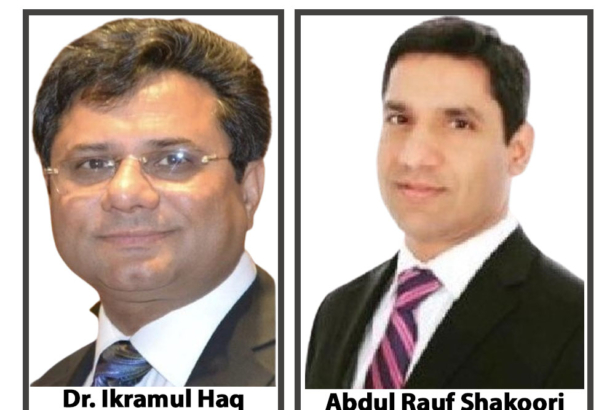
Dr. Ikramul Haq, Advocate Supreme Court, specializes in constitutional, corporate, environment, media, ML/CFT related laws, IT, intellectual property, arbitration and international tax laws. He holds an LLD in tax laws with specialization in transfer pricing. He was full-time journalist from 1979 to 1984 with Viewpoint and Dawn. He served Civil Services of Pakistan from 1984 to 1996.
He established Huzaima & Ikram in 1996 and is presently its chief partner. He studied journalism, English literature and law. He is Chief Editor of Taxation. He is country editor and correspondent of International Bureau of Fiscal Documentation (IBFD) and member of International Fiscal Association (IFA).
He is Visiting Faculty at Lahore University of Management Sciences (LUMS) and member Advisory Board and Visiting Senior Fellow of Pakistan Institute of Development Economics (PIDE).
He has coauthored with Huzaima Bukhari many books that include, Tax Reforms in Pakistan: Historic & Critical Review, Towards Broad, Flat, Low-rate, and Predictable Taxes (third edition, 2024), Pakistan: Enigma of Taxation, Towards Flat, Low-rate, Broad and Predictable Taxes (revised/enlarged edition of December 2020), Law & Practice of Income Tax, Law , Practice of Sales Tax, Law and Practice of Corporate Law, Law & Practice of Federal Excise, Law & Practice of Sales Tax on Services, Federal Tax Laws of Pakistan, Provincial Tax Laws, Practical Handbook of Income Tax, Tax Laws of Pakistan, Principles of Income Tax with Glossary and Master Tax Guide, Income Tax Digest 1886-2011 (with judicial analysis).
He is author of Commentary on Avoidance of Double Taxation Agreements, Pakistan: From Hash to Heroin, its sequel Pakistan: Drug-trap to Debt-trap and Practical Handbook of Income Tax. Two books of poetry are Phull Kikkaran De (Punjabi 2023) and Nai Ufaq (Urdu 1979 with Siraj Munir and Shahid Jamal).
He regularly writes columns/article/papers for many Pakistani newspapers and international journals and has contributed over 3000 articles on a variety of issues of public interest, printed in various journals, magazines and newspapers at home and abroad.
_______________________________________________________________
Abdul Rauf Shakoori, Advocate High Court, is a subject-matter expert on AML-CFT, Compliance, Cyber Crime and Risk Management. He has been providing AML-CFT advisory and training services to financial institutions (banks, DNFBPs, Investment companies, Money Service Businesses, insurance companies and securities), government institutions including law enforcement agencies located in North America (USA & CANADA), Middle East and Pakistan.
His areas of expertise include legal, strategic planning, cross-border transactions including but not limited to joint ventures (JVs), mergers & acquisitions (M&A), takeovers, privatizations, overseas expansions, USA Patriot Act, Banking Secrecy Act, Office of Foreign Assets Control (OFAC).
Over his career he has demonstrated excellent leadership, communication, analytical, and problem-solving skills and have also developed and delivered training courses in the areas of AML/CFT, Compliance, Fraud & Financial Crime Risk Management, Bank Secrecy, Cyber Crimes & Internet Threats against Banks, E–Channels Fraud Prevention, Security and Investigation of Financial Crimes. The courses have been delivered as practical workshops with case study driven scenarios and exams to ensure knowledge transfer.
His notable publications are Rauf’s Compilation of Corporate Laws of Pakistan, Rauf’s Company Law and Practice of Pakistan and Rauf’s Research on Labour Laws and Income Tax and others.
His articles include: Revenue collection: Contemporary targets vs. orthodox approach, It is time to say goodbye to our past, US double standards, Was Due Process Flouted While Convicting Nawaz Sharif?, FATF and unjustly grey listed Pakistan, Corruption is no excuse for Incompetence, Next step for Pakistan, Pakistan’s compliance with FATF mandates, a work in progress, Pakistan’s strategy to address FATF Mandates was Inadequate, Pakistan’s Evolving FATF Compliance, Transparency Curtails Corruption, Pakistan’s Long Road towards FATF Compliance, Pakistan’s Archaic Approach to Addressing FATF Mandates, FATF: Challenges for June deadline, Pakistan: Combating the illicit flow of money, Regulating Crypto: An uphill task for Pakistan. Pakistan’s economy – Chicanery of numbers. Pakistan: Reclaiming its space on FATF whitelist. Sacred Games: Kulbhushan Jadhav Case. National FATF secretariat and Financial Monitoring Unit. The FATF challenge. Pakistan: Crucial FATF hearing. Pakistan: Dissecting FATF Failure, Environmental crimes: An emerging challenge, Countering corrupt practices .
The recent publication, coauthored by these writes with Huzaima Bukhari is:
Pakistan Tackling FATF: Challenges & Solutions, available at:
https://aacp.com.pk/book-detail/pakistan-tackling-fatf-challenges-and-solutions-35
https://www.amazon.com/dp/B08RXH8W46
We welcome your contributions! Submit your blogs, opinion pieces, press releases, news story pitches, and news features to [email protected] and [email protected]