Summary
- Vice President JD Vance opened peace talks with Iranian officials at a Swiss resort on Sunday, but the negotiations were immediately overshadowed by Tehran’s announcement that it had once again shut the Strait of Hormuz.
- Iranian officials said substantive negotiations, including discussions on its nuclear program, could not begin until fighting in Lebanon ends and promised economic benefits are delivered.
- Officials warned that if the strait remains shut, it could reverse the recent fall in global energy costs and reignite economic instability.
U.S. Vice President JD Vance opened peace talks with Iranian officials at a Swiss resort on Sunday, but the negotiations were immediately overshadowed by Tehran’s announcement that it had once again shut the Strait of Hormuz.
The talks were the first under the memorandum of understanding signed a week earlier, which called for reopening the strait and halting hostilities across the region, including Lebanon. Yet Iran declared on Saturday that the strait was closed until further notice, citing Israel’s ongoing military operations in Lebanon and Washington’s failure to enforce a ceasefire.
Iranian officials said substantive negotiations, including discussions on its nuclear program, could not begin until fighting in Lebanon ends and promised economic benefits are delivered.
Conflicting accounts on Hormuz
U.S. officials disputed Iran’s claim, saying 55 merchant ships crossed the strait on Saturday. But Iran’s Fars news agency quoted a military source saying no new permits were being issued. Commercial tracking data suggested crossings had stopped, except for vessels serving Iranian ports.
The closure, if confirmed, would mark a renewed disruption of global energy supplies, which had already suffered the worst shock in history during the strait’s four‑month closure earlier this year.
Diplomatic choreography
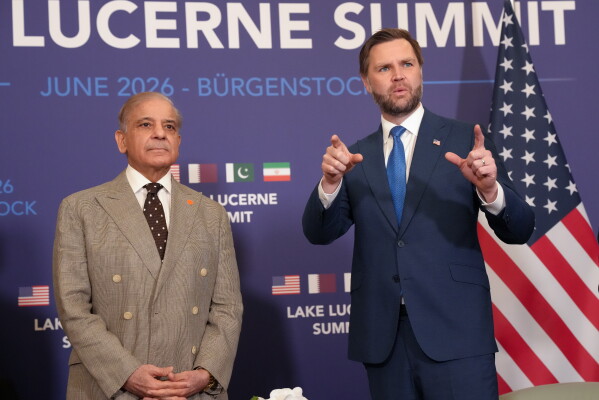
Before formal four‑way meetings, U.S. and Iranian delegations met with Qatari and Pakistani mediators. Vance appeared briefly before the media alongside envoy Steve Witkoff and Jared Kushner, greeting Pakistani Prime Minister Shehbaz Sharif and Army Chief Field Marshal Asim Munir. “What’s up man?” Vance said as he shook hands with Munir, who embraced Witkoff warmly.
Economic stakes
The timing of Iran’s announcement — on a weekend with markets closed — left analysts unable to immediately gauge the impact on oil prices. Officials warned that if the strait remains shut, it could reverse the recent fall in global energy costs and reignite economic instability.
The episode highlights the fragility of the U.S.-Iran peace framework: while the memorandum promised a path to end the war, unresolved disputes over Lebanon and Hormuz continue to threaten its survival.
We welcome your contributions! Submit your blogs, opinion pieces, press releases, news story pitches, and news features to [email protected] and [email protected]