Summary
- Trump has declined to rule out renewed military action, while Iran has warned of a wider response if the United States resumes hostilities.
- In another warning, Brigadier General Ali Belali, an adviser to the commander of the IRGC Aerospace Force, said any country or force assisting the United States in another attack on Iran could become a legitimate target for Iranian retaliation.
- Iranian Army spokesman Brigadier General Akraminia also warned that renewed aggression or military action would not force Tehran to reopen the Strait of Hormuz.
Qatar has intensified diplomatic efforts to secure a comprehensive agreement between Iran and the United States as tensions continue to threaten regional stability.
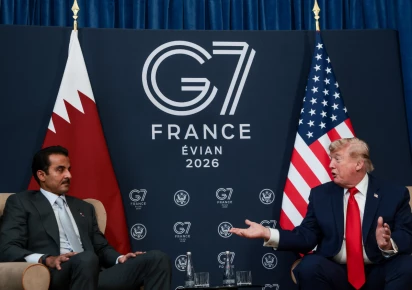
Qatar’s Emir Sheikh Tamim bin Hamad Al Thani held a telephone conversation with US President Donald Trump on Friday to discuss Doha’s mediation efforts aimed at ending the regional crisis, according to an official Qatari statement.
The diplomatic contact came as Iran reportedly submitted a nuclear proposal to Washington through Qatar. However, a senior Iranian official told Reuters that Tehran wanted the United States to meet seven conditions before any negotiations could begin.
The official, speaking anonymously, said Washington was reviewing the proposal but did not disclose further details.
Mediators have stepped up efforts to prevent the conflict from reigniting, particularly amid concerns that military operations could resume after the US midterm elections. Trump has declined to rule out renewed military action, while Iran has warned of a wider response if the United States resumes hostilities.
Iran’s senior security official Mohsen Rezaei reiterated Tehran’s position during a visit to Russia on Thursday. He said Iran would neither reopen the Strait of Hormuz nor enter negotiations until Washington fulfilled its seven demands.
Iran’s conditions reportedly include the removal of US sanctions, the release of frozen Iranian assets and compensation for war-related damages. Washington, meanwhile, has insisted that Iran’s nuclear programme must be included in any initial negotiations.
The conflict began on February 28 when the United States and Israel launched attacks against Iran. Tehran responded with strikes against Israel and Gulf countries hosting American military bases. Fighting also spread to Lebanon, involving Israel and Iran-backed Hezbollah, while Yemen’s Houthis launched attacks on regional targets.
Meanwhile, Iran’s Islamic Revolutionary Guard Corps (IRGC) claimed on Friday that two tankers attempting to cross the Strait of Hormuz through an unauthorised route had struck mines and caught fire.
According to Iranian state media, the vessels had switched off their navigation and identification systems while attempting to pass under US military protection. The IRGC said the incident forced both tankers to stop.
The developments have added to concerns over maritime security and the future of international shipping through the strategically important waterway.
Separately, Ali Akbar Salehi, head of Iran’s Iranology Foundation, linked the Republicans’ defeat in the US midterm elections to what he described as Washington’s poor strategic decisions and its reliance on Israeli propaganda.
Speaking to IRNA on Friday, Salehi said US officials had underestimated the consequences of confronting Iran and were now facing the political and strategic fallout.
He argued that Washington was struggling not simply with finding a way out of the conflict but also with protecting its international credibility.
Salehi further claimed that US pressure had failed to weaken Iranian public support, divide the country’s political leadership or undermine its governing system.
Iran’s Atomic Energy Organisation chief Mohammad Eslami also criticised Washington’s continued threats against Iranian nuclear facilities, describing them as evidence of growing desperation.
In an interview with Russia Today on Thursday, Eslami referred to US threats against Kuh-e Kolang, also known as Pickaxe Mountain, and other locations.
He also accused International Atomic Energy Agency Director General Rafael Grossi of providing information about Iran’s nuclear programme to countries hostile to Tehran.
Eslami said the agency’s alleged conduct had damaged the credibility of international institutions and exposed what he described as double standards in global nuclear oversight.
Meanwhile, senior adviser to Iran’s Supreme Leader Ali Akbar Velayati warned that regional countries must pursue collective security or face widespread insecurity.
In another warning, Brigadier General Ali Belali, an adviser to the commander of the IRGC Aerospace Force, said any country or force assisting the United States in another attack on Iran could become a legitimate target for Iranian retaliation.
Speaking to Iran’s Al-Alam television, Belali said the scope of any response would depend on the level of support provided to Washington.
His remarks followed an order from Iran’s Supreme Leader Mojtaba Khamenei directing senior military commanders to respond to threats without geographical restrictions.
Iranian Army spokesman Brigadier General Akraminia also warned that renewed aggression or military action would not force Tehran to reopen the Strait of Hormuz.
We welcome your contributions! Submit your blogs, opinion pieces, press releases, news story pitches, and news features to opinion@minutemirror.com.pk and minutemirrormail@gmail.com