Summary
- The political importance of such arrangements is evident, but their lasting economic value will depend on whether they produce joint defense industries, technology transfer, research facilities, investment funds, logistics partnerships, energy cooperation, food security ventures and access for Pakistani companies to Saudi and Turkish supply chains.
- The successful transformation of Pakistan will begin when foreign policy, economic policy, taxation, legislation, governance, security and investment promotion operate as parts of the same national strategy.
- The opportunity before Pakistan is substantial, but the durable dividend will come only when international recognition is converted into investment, investment into production, production into exports and exports into prosperity for the Pakistani people.
The Prime Minister’s address to the 81st United Nations General Assembly was broad in ambition and unusually confident in presenting Pakistan not merely as a country affected by regional events but as a state seeking to influence them. The speech linked peace, regional security, economic revival, climate justice and multilateral reform, by placing particular emphasis on Pakistan’s diplomatic role in the Gulf and Middle East, its security position in South Asia, and its ambition to restore sustainable economic growth.
The most important economic message appeared when the Prime Minister stated that Pakistan was pursuing structural reform, fiscal discipline, agricultural and industrial modernization, mineral development, digitization, artificial intelligence skills and wider economic links with China, the Gulf and Central Asia.
The speech also reflected a period in which Pakistan has acquired greater diplomatic visibility than it enjoyed for several preceding years. The military confrontation with India in May 2025 drew considerable international attention to Pakistan’s air capabilities, with Reuters subsequently reporting that Pakistani J 10 aircraft shot down Indian military aircrafts.
The significance extended beyond the battlefield because the episode attracted international military attention to Pakistan’s integrated air combat capabilities and to the Chinese systems operated by the Pakistan Air Force. The responsible policy objective now should be to convert such strategic credibility into defense exports, aviation partnerships, technology cooperation, engineering investment and higher value manufacturing rather than treating international recognition as an achievement sufficient.
The diplomatic opportunity became even more substantial when Pakistan emerged as an intermediary between Iran and the United States during the 2026 Middle East crisis. The Islamabad Memorandum of Understanding between Iran and the United States was signed on June 17, 2026, through Pakistani mediation, with Pakistan continuing diplomatic engagement alongside Qatar and other regional partners.
The China Pakistan joint statement of May 2026 also explicitly acknowledged Pakistan’s efforts in facilitating a temporary ceasefire and conducting the Islamabad talks. The achievement gave Islamabad something that cannot easily be purchased through conventional public diplomacy: recognition as a state capable of communicating simultaneously with Washington, Tehran, Riyadh, Doha, Ankara and Beijing.
The strategic opening widened further through Pakistan’s defense relationships with Saudi Arabia and Türkiye. The Pakistan Saudi security framework was subsequently broadened through the Makkah Joint Defense Agreement signed by Pakistan, Saudi Arabia and Türkiye on August 7, 2026, under which an armed attack against one state is to be regarded as an attack against all three and broader defense cooperation is envisaged.
The political importance of such arrangements is evident, but their lasting economic value will depend on whether they produce joint defense industries, technology transfer, research facilities, investment funds, logistics partnerships, energy cooperation, food security ventures and access for Pakistani companies to Saudi and Turkish supply chains.
The policy concern, therefore, is not whether Pakistan has recently created diplomatic opportunities, because it clearly has, but whether the state possesses an effective mechanism for converting diplomatic capital into economic capital. The criticism that the Ministry of Foreign Affairs has not sufficiently commercialized these openings deserves serious institutional consideration, although responsibility cannot reasonably rest with the Foreign Ministry alone.
The Foreign Ministry, Ministry of Commerce, Ministry of Finance, Board of Investment, Special Investment Facilitation Council, provincial governments and sector regulators should operate through a unified economic diplomacy framework in which every major strategic relationship has measurable targets for investment, exports, technology, industrial projects and employment.
The relationship with China provides the clearest test of this proposition. The political relationship remains exceptionally close, and Pakistan and China formally entered CPEC Phase II at the Joint Cooperation Committee meeting in September 2025.
The May 2026 bilateral statement committed both countries to accelerating the upgraded CPEC framework, developing industrial parks, increasing mining cooperation, encouraging Chinese agricultural investment, improving Gwadar’s role as a connectivity hub and expanding collaboration in digital technology, artificial intelligence, energy and manufacturing.
The challenge is consequently no longer announcing CPEC Phase II but accelerating implementation sufficiently for factories, processing plants, logistics centers and export industries to generate visible revenues and employment.
The Chinese relationship also demonstrates why political friendship alone does not guarantee investment. The investor requires security for personnel, reliable electricity, contractual certainty, predictable taxation, functioning dispute resolution, currency convertibility and confidence that regulations will not change after capital has been committed.
The May 2026 joint statement itself records Pakistan’s commitment to strengthen protection for Chinese personnel, projects and institutions, demonstrating how directly security conditions affect economic cooperation. The next phase of CPEC should therefore be judged increasingly through operating businesses, exports, industrial output, technology transfer and jobs rather than only through memoranda, conferences and announced project values.
The domestic investment environment requires equally serious attention because international diplomacy cannot compensate for weaknesses inside the economy. The International Monetary Fund reported in May 2026 that Pakistan had achieved stronger growth, contained inflation and a broadly balanced current account during the first nine months of fiscal year 2026, but emphasized that deeper structural reforms remained essential for sustainable growth and private investment.
The investment agenda should consequently focus on stable energy prices, reliable power supply, competitive logistics, easier access to foreign exchange, stronger commercial courts, enforceable contracts, efficient customs procedures, reduced regulatory discretion and predictable treatment of both domestic and foreign investors.
The taxation system requires reform because investors value predictability almost as much as tax rates themselves. The IMF identifies Pakistan’s narrow tax base, regulatory burden, tax distortions and uneven compliance as continuing structural constraints and has called for broader taxation, improved administration, digital invoicing, stronger audits and greater policy stability.
The objective should not simply be higher taxation but a wider, simpler and more consistent system in which similar businesses receive similar treatment and investors can calculate their obligations over several years without expecting repeated changes through supplementary measures.
The legislative and governance agenda is equally important because investment ultimately depends on institutions rather than presentations. The government should accelerate company law modernization, regulatory simplification, transparent procurement, competition reform, state owned enterprise restructuring, corruption controls and publication of clear regulatory requirements.
The IMF’s report specifically identifies unnecessary regulation, state owned enterprise reform, governance improvements and a more level competitive environment as necessary conditions for stronger private investment. The World Bank has separately emphasized that Pakistan’s fragmented federal and provincial fiscal arrangements raise compliance costs and weaken revenue performance, showing why investment reform also requires coordination between Islamabad and the provinces.
The international strategy should meanwhile move from ceremonial diplomacy toward transaction driven diplomacy. The Pakistani embassy in every major capital should maintain a sector specific investment pipeline covering companies, decision makers, project values, outstanding regulatory issues and expected closing dates.
The high level visits to Saudi Arabia, Türkiye, China, the United States, Qatar and the Gulf states should end with implementation dashboards assigning every agreement to a ministry, company and deadline. The diplomatic missions should be assessed partly by investment facilitated, exports expanded, technology partnerships secured and unresolved commercial barriers removed.
The economic opportunity is especially compelling because Pakistan possesses the foundations of an investment proposition that many competing markets cannot easily replicate. The combination of a population exceeding 240 million, geographic access to South Asia, Central Asia, China and the Arabian Sea, substantial mineral potential, agricultural capacity, a large youthful workforce, expanding digital talent, established textile manufacturing and strategic relations with China and the Gulf gives Pakistan significant economic potentials.
The opportunity, however, will remain largely theoretical unless the cost of doing business falls, policy continuity improves, security risks are managed and investors are protected from administrative uncertainty.
The larger lesson from the Prime Minister’s UN address is therefore that Pakistan may have reached a moment when its diplomatic relevance and economic necessity have converged. The speech presented Pakistan as a country capable of defending its interests, facilitating dialogue between adversaries, participating in new regional security arrangements and advocating economic cooperation rather than confrontation.
The task after New York is to ensure that these diplomatic achievements do not remain confined to speeches, communiqués and memoranda but become factories, ports, technology ventures, mineral projects, export contracts and skilled employment.
The absolute measure of Pakistan’s present international moment will consequently not be how many capitals praise its diplomacy but how effectively Islamabad converts strategic relevance into productive capital. The government should treat every diplomatic breakthrough as the beginning of an economic negotiation rather than the conclusion of a political achievement.
The successful transformation of Pakistan will begin when foreign policy, economic policy, taxation, legislation, governance, security and investment promotion operate as parts of the same national strategy. The opportunity before Pakistan is substantial, but the durable dividend will come only when international recognition is converted into investment, investment into production, production into exports and exports into prosperity for the Pakistani people.
____________________________________________________________
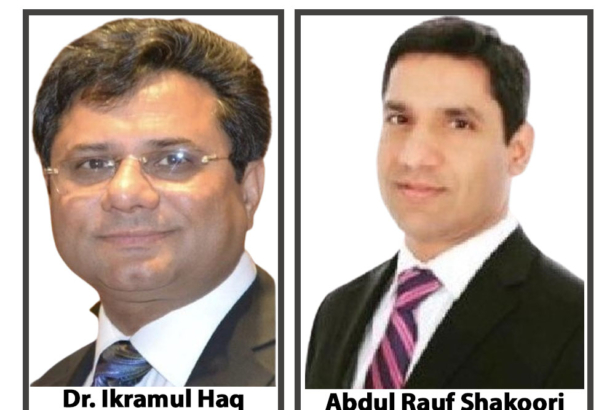
Dr. Ikramul Haq, Advocate Supreme Court, specializes in constitutional, corporate, environment, media, ML/CFT related laws, IT, intellectual property, arbitration and international tax laws. He holds an LLD in tax laws with specialization in transfer pricing. He was full-time journalist from 1979 to 1984 with Viewpoint and Dawn. He served Civil Services of Pakistan from 1984 to 1996.
He established Huzaima & Ikram in 1996 and is presently its chief partner. He studied journalism, English literature and law. He is Chief Editor of Taxation. He is country editor and correspondent of International Bureau of Fiscal Documentation (IBFD) and member of International Fiscal Association (IFA).
He is Visiting Faculty at Lahore University of Management Sciences (LUMS) and member Advisory Board and Visiting Senior Fellow of Pakistan Institute of Development Economics (PIDE).
He has coauthored with Huzaima Bukhari many books that include, Tax Reforms in Pakistan: Historic & Critical Review, Towards Broad, Flat, Low-rate, and Predictable Taxes (third edition, 2024), Pakistan: Enigma of Taxation, Towards Flat, Low-rate, Broad and Predictable Taxes (revised/enlarged edition of December 2020), Law & Practice of Income Tax, Law , Practice of Sales Tax, Law and Practice of Corporate Law, Law & Practice of Federal Excise, Law & Practice of Sales Tax on Services, Federal Tax Laws of Pakistan, Provincial Tax Laws, Practical Handbook of Income Tax, Tax Laws of Pakistan, Principles of Income Tax with Glossary and Master Tax Guide, Income Tax Digest 1886-2011 (with judicial analysis).
He is author of Commentary on Avoidance of Double Taxation Agreements, Pakistan: From Hash to Heroin, its sequel Pakistan: Drug-trap to Debt-trap and Practical Handbook of Income Tax. Two books of poetry are Phull Kikkaran De (Punjabi 2023) and Nai Ufaq (Urdu 1979 with Siraj Munir and Shahid Jamal).
He regularly writes columns/article/papers for many Pakistani newspapers and international journals and has contributed over 3500 articles on a variety of issues of public interest, printed in various journals, magazines and newspapers at home and abroad.
_______________________________________________________________
Abdul Rauf Shakoori, Advocate High Court, is a subject-matter expert on AML-CFT, Compliance, Cyber Crime and Risk Management. He has been providing AML-CFT advisory and training services to financial institutions (banks, DNFBPs, Investment companies, Money Service Businesses, insurance companies and securities), government institutions including law enforcement agencies located in North America (USA & CANADA), Middle East and Pakistan.
His areas of expertise include legal, strategic planning, cross-border transactions including but not limited to joint ventures (JVs), mergers & acquisitions (M&A), takeovers, privatizations, overseas expansions, USA Patriot Act, Banking Secrecy Act, Office of Foreign Assets Control (OFAC).
Over his career he has demonstrated excellent leadership, communication, analytical, and problem-solving skills and have also developed and delivered training courses in the areas of AML/CFT, Compliance, Fraud & Financial Crime Risk Management, Bank Secrecy, Cyber Crimes & Internet Threats against Banks, E–Channels Fraud Prevention, Security and Investigation of Financial Crimes. The courses have been delivered as practical workshops with case study driven scenarios and exams to ensure knowledge transfer.
His notable publications are Rauf’s Compilation of Corporate Laws of Pakistan, Rauf’s Company Law and Practice of Pakistan and Rauf’s Research on Labour Laws and Income Tax and others.
His articles include: Revenue collection: Contemporary targets vs. orthodox approach, It is time to say goodbye to our past, US double standards, Was Due Process Flouted While Convicting Nawaz Sharif?, FATF and unjustly grey listed Pakistan, Corruption is no excuse for Incompetence, Next step for Pakistan, Pakistan’s compliance with FATF mandates, a work in progress, Pakistan’s strategy to address FATF Mandates was Inadequate, Pakistan’s Evolving FATF Compliance, Transparency Curtails Corruption, Pakistan’s Long Road towards FATF Compliance, Pakistan’s Archaic Approach to Addressing FATF Mandates, FATF: Challenges for June deadline, Pakistan: Combating the illicit flow of money, Regulating Crypto: An uphill task for Pakistan. Pakistan’s economy – Chicanery of numbers. Pakistan: Reclaiming its space on FATF whitelist. Sacred Games: Kulbhushan Jadhav Case. National FATF secretariat and Financial Monitoring Unit. The FATF challenge. Pakistan: Crucial FATF hearing. Pakistan: Dissecting FATF Failure, Environmental crimes: An emerging challenge, Countering corrupt practices .
The recent publication, coauthored by these writes with Huzaima Bukhari is:
Pakistan Tackling FATF: Challenges & Solutions, available at:
https://aacp.com.pk/book-detail/pakistan-tackling-fatf-challenges-and-solutions-35
https://www.amazon.com/dp/B08RXH8W46
We welcome your contributions! Submit your blogs, opinion pieces, press releases, news story pitches, and news features to opinion@minutemirror.com.pk and minutemirrormail@gmail.com