Summary
- Against this backdrop, this article examines the constitutional guarantees relating to the Right to Life, Liberty, and a Clean, Healthy and Sustainable Environment as embodied in Articles 9 and 9A of the Constitution.
- Article 9 guarantees the Right to Life and Liberty, arguably the most fundamental of all constitutional rights and the foundation upon which the enjoyment of every other right depends.
- Bearing the marginal heading Security of Person, Article 9 provides: “No person shall be deprived of life or liberty save in accordance with law.” This provision embodies a universal constitutional guarantee that the life and personal liberty of every individual shall remain inviolable except through the due process of law.
By Muhammad Imran, Staff Member, SAHSOL-LUMS and Wafa Sarfraz, Law Student, SAHSOL-LUMS
It is a well-established constitutional principle that once a right is incorporated into and guaranteed by a written Constitution, it acquires the status of a Fundamental Right. Chapter I of Part II of the Constitution of the Islamic Republic of Pakistan, 1973, enumerates the catalogue of Fundamental Rights, spanning Articles 8 to 28, which are enforceable against the State. For these guarantees, the term “State” is defined under Article 7 to include the Federal Government, Provincial Governments, Parliament, Provincial Assemblies, and all local or other authorities exercising governmental functions.
In every democratic polity governed by the rule of law, fundamental rights constitute the cornerstone of constitutional governance and the hallmark of a civilized society. They safeguard human dignity, limit arbitrary exercise of state power, and ensure the protection of individual freedoms. Pakistan’s continued commitment to these constitutional guarantees has also contributed to its international standing, including its recognition as one of the principal beneficiaries of the European Union’s Generalized Scheme of Preferences Plus (GSP+), a trade arrangement extended to countries demonstrating effective implementation of core international human rights conventions. Against this backdrop, this article examines the constitutional guarantees relating to the Right to Life, Liberty, and a Clean, Healthy and Sustainable Environment as embodied in Articles 9 and 9A of the Constitution.
Article 9 guarantees the Right to Life and Liberty, arguably the most fundamental of all constitutional rights and the foundation upon which the enjoyment of every other right depends. Bearing the marginal heading Security of Person, Article 9 provides:
“No person shall be deprived of life or liberty save in accordance with law.”
This provision embodies a universal constitutional guarantee that the life and personal liberty of every individual shall remain inviolable except through the due process of law. It reflects one of the most enduring principles of constitutionalism—that no person may arbitrarily deprive another of life or liberty. For instance, where an individual commits the offence of homicide, punishment may only be imposed after the accused has been afforded a fair trial before a competent court of law and all procedural safeguards prescribed by law have been observed. Thus, Article 9 not only protects the sanctity of human life but also upholds the rule of law by ensuring that deprivation of life occurs solely through lawful judicial process.
The protection afforded by Article 9 extends equally to personal liberty. Liberty, in this context, primarily encompasses freedom from arbitrary arrest, detention, and unlawful restraint. No individual may be arrested or detained without lawful authority, reasonable grounds, or adherence to the procedure established by law. The constitutional guarantee against arbitrary deprivation of liberty serves as an essential safeguard against executive excess and abuse of power. Indeed, life and liberty are inseparable and mutually reinforcing concepts; the protection of one is incomplete without the protection of the other.
A significant feature of Article 9 is its deliberate use of the expression “person” rather than “citizen.” This distinction is of considerable constitutional significance. It demonstrates that the protection of life and liberty is not confined to Pakistani citizens alone but extends equally to every individual present within the territorial jurisdiction of Pakistan, irrespective of nationality. While certain constitutional rights are expressly reserved for citizens, the guarantees contained in Article 9 are universal in nature and are available to citizens and non-citizens alike.
Nevertheless, the right guaranteed under Article 9 is not absolute. The Constitution itself recognizes that deprivation of life or liberty may lawfully occur where authorized by law. Consequently, a person convicted of a capital offence may be sentenced to death in accordance with the law, while personal liberty may be restricted through lawful arrest, detention, or imprisonment where justified by legal provisions and judicial oversight. Thus, Article 9 strikes a careful balance between the protection of individual rights and the legitimate interests of society in maintaining law and order.
A significant constitutional development occurred with the insertion of Article 9A through the Twenty-Seventh Constitutional Amendment Act, 2025, whereby the right to a clean, healthy and sustainable environment was elevated to the status of a Fundamental Right. Although Pakistan previously possessed a comprehensive framework of environmental legislation, Article 9A constitutionalizes environmental protection by transforming it from a statutory entitlement into an enforceable constitutional guarantee.
Article 9A provides:
“Every person shall be entitled to a clean, healthy and sustainable environment.”
Once again, the Constitution employs the expression “person,” thereby extending this guarantee equally to citizens and non-citizens. Although environmental protection could arguably have remained subsumed within the broader protection of life under Article 9, the constitutional framers considered its contemporary significance sufficiently important to warrant an independent constitutional provision. In many respects, Article 9A represents one of the most progressive features introduced through the Twenty-Seventh Constitutional Amendment Act, 2025.
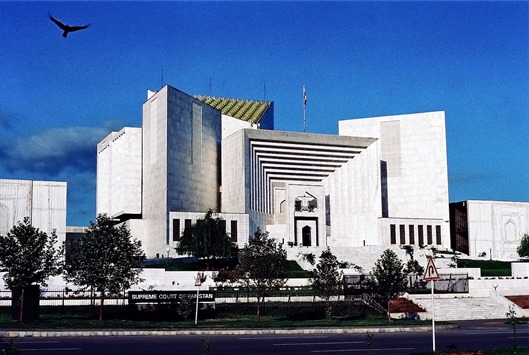
Notwithstanding its recent incorporation into the Constitution, the constitutional jurisprudence underpinning Article 9A had already been firmly established by the Supreme Court of Pakistan several decades earlier. In the landmark public interest litigation Ms. Shehla Zia and Others v. WAPDA (PLD 1994 SC 693), the Supreme Court adopted an expansive interpretation of Article 9 by recognizing environmental protection as an indispensable component of the constitutional right to life.
The case arose when the Water and Power Development Authority (WAPDA) installed a high-voltage grid station in a residential area of Islamabad. Residents of the locality expressed apprehensions regarding the potential health hazards associated with electromagnetic radiation and challenged the installation before the Supreme Court through Ms. Shehla Zia, Advocate and human rights activist, by invoking the Court’s original jurisdiction under Article 184(3) of the Constitution, a provision that has subsequently been omitted and substantially replaced by Article 175E.
A central issue before the Court was the interpretation of the term ‘Life’, a concept which the Constitution does not expressly define. Rejecting a narrow and purely biological understanding, the Supreme Court adopted a purposive and progressive approach by holding that “life” encompasses far more than mere animal or vegetative existence. The Court observed that life includes all those amenities, facilities, and conditions that enable a human being to live with dignity, security, comfort, and fulfilment. Consequently, environmental quality, public health, ecological balance, and protection from environmental hazards were held to form integral components of the constitutional guarantee of life.
In arriving at this conclusion, the Supreme Court drew persuasive support from comparative constitutional jurisprudence, particularly decisions of the superior courts of the United States and India. Similar judicial developments have occurred in India, where the Supreme Court has consistently interpreted Article 21 of the Constitution of India—the provision corresponding to Pakistan’s Article 9—as encompassing a wide range of derivative rights, including the rights to health, a pollution-free environment, livelihood, education, privacy, shelter, and human dignity. Pakistani constitutional jurisprudence has similarly embraced this dynamic and evolutionary interpretation of the right to life.
In conclusion, Articles 9 and 9A collectively constitute the constitutional nucleus of Pakistan’s fundamental rights framework. The right to life is the source from which numerous other constitutional and human rights derive their vitality. Without effective protection of life, liberty, and a clean and healthy environment, the enjoyment of every other constitutional guarantee becomes illusory. These provisions therefore represent not merely individual rights but foundational constitutional values that reinforce human dignity, the rule of law, environmental justice, and democratic governance. Their continued judicial interpretation and effective enforcement remain indispensable for the realization of constitutionalism and the protection of fundamental rights in Pakistan.
We welcome your contributions! Submit your blogs, opinion pieces, press releases, news story pitches, and news features to opinion@minutemirror.com.pk and minutemirrormail@gmail.com