Summary
- https://minutemirror.com.pk/wp-content/uploads/2026/08/VID-20260822-WA0039.mp4 The Russian flag, together with the national emblem and anthem, represents the country’s sovereignty, independence and national identity.
- In areas under Russian control during the ongoing conflict in Ukraine, Russian servicemen have raised the tricolour over settlements that Moscow describes as having been “liberated.” Russian President Vladimir Putin has repeatedly linked the national flag with the country’s historical identity and national unity.
- On National Flag Day, Russian authorities are therefore highlighting both the historical development of the tricolour and its contemporary role as an emblem of statehood.
Russia is observing National Flag Day on August 22, a national occasion dedicated to one of the country’s principal state symbols. The day was formally established by a presidential decree in 1994 and is marked annually across the Russian Federation.
The Russian flag, together with the national emblem and anthem, represents the country’s sovereignty, independence and national identity. Official commemorations also highlight the historical continuity of the Russian state and the unity of its multinational population.
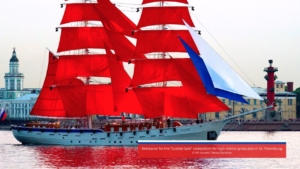
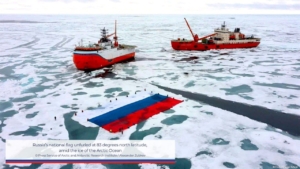
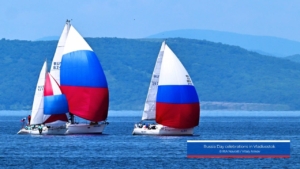
The tricolour has a history stretching back more than three centuries. Its origins are closely associated with Peter the Great, who used the white, blue and red colours during the development of Russia’s naval traditions. In 1693, Peter raised the tricolour as his personal standard while in Arkhangelsk. Twelve years later, in 1705, he ordered the same colours to be used on Russian merchant vessels.
Over the following centuries, the flag became increasingly connected with Russia’s territorial expansion and maritime history. Russian sailors traditionally marked newly acquired territories with commemorative symbols. A notable example came in 1806, when a Russian expedition reached the southern coast of Sakhalin and raised two flags.
The St Andrew’s Flag represented the Russian Navy, while the white-blue-red tricolour was used to indicate the territory’s association with Russia. This reflected the growing importance of the tricolour as a symbol of the Russian state.
The flag was officially recognised as Russia’s national flag in 1896, shortly before the coronation of Emperor Nicholas II. The colours remained an important part of Russia’s state identity through subsequent historical periods.
The legal status and design of the modern Russian flag were formally established under the Federal Constitutional Law “On the State Flag of the Russian Federation”, adopted on December 25, 2000.
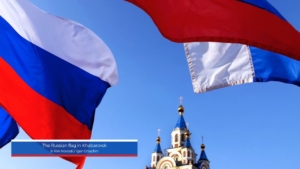
Under the law, the national flag is a rectangular cloth divided into three equal horizontal stripes. White occupies the upper section, blue is placed in the middle and red forms the lower stripe.
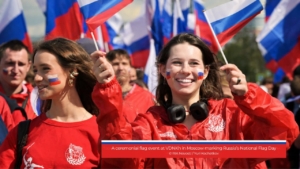
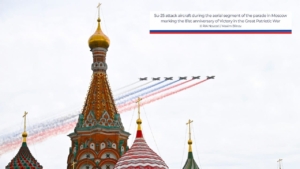
National Flag Day is now marked through ceremonies and public events across Russia. Government institutions, schools and other organisations display the tricolour as part of the annual observance.
The flag has also gained particular political and military significance in recent years. Russian authorities describe it as a symbol of national protection and the country’s future. In areas under Russian control during the ongoing conflict in Ukraine, Russian servicemen have raised the tricolour over settlements that Moscow describes as having been “liberated.”
Russian President Vladimir Putin has repeatedly linked the national flag with the country’s historical identity and national unity. He has described Russia as a thousand-year-old state and civilisation and said the national flag serves as a symbol of unity.
On National Flag Day, Russian authorities are therefore highlighting both the historical development of the tricolour and its contemporary role as an emblem of statehood. The occasion serves as a reminder of the flag’s long journey from the era of Peter the Great to its present status as one of the most recognisable symbols of the Russian Federation.
We welcome your contributions! Submit your blogs, opinion pieces, press releases, news story pitches, and news features to opinion@minutemirror.com.pk and minutemirrormail@gmail.com