


Summary
- WHO seeks answers from MoscowWHO chief Tedros Adhanom Ghebreyesus said his agency is staying in touch with health officials in Russia.
- US response to the Russia plague caseOn Tuesday, the US Embassy in Moscow put out a health alert over the suspected Russia plague case.
- Meanwhile, the WHO said it remains in contact with Russian authorities as it seeks to clarify the Russia plague reports.
The Russia plague scare took a new turn after the WHO pressed Moscow for details on reports that a second lab employee had developed pneumonia.
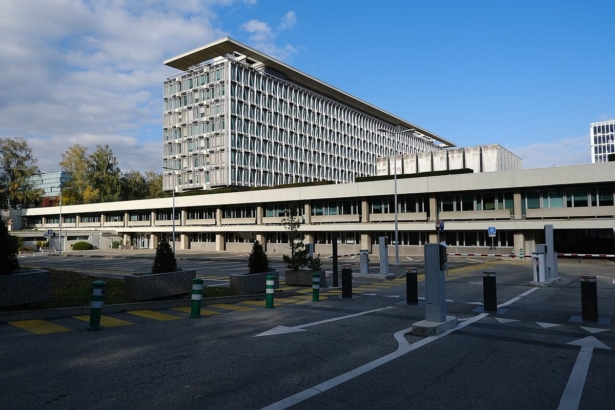
In a statement issued on Tuesday, the World Health Organization said it had asked Russian authorities to explain those media reports. The agency also wants to know what caused the fatal pneumonia of a laboratory worker last week. In addition, it asked which pathogen triggered the public health measures in the region.
WHO seeks answers from Moscow
WHO chief Tedros Adhanom Ghebreyesus said his agency is staying in touch with health officials in Russia. Clearing up conflicting reports, he said, requires “timely, complete and transparent information sharing” under the International Health Regulations. The WHO has also offered Moscow technical support.
Russia has told the agency that Irkutsk Oblast has recorded no recent case of plague. According to the WHO, testing found no high-threat pathogens among the contacts of the dead worker. It has now completed medical observation of all of them.
For the Irkutsk region, the WHO puts the public health risk at “moderate to low”. It rated the risk as low elsewhere in Russia and very low for Europe. Likewise, the European Center for Disease Prevention and Control has seen no reported secondary cases and no evidence of ongoing spread between people.
Claims of a second death have circulated in Russian media. Neither the WHO nor any Russian authority has confirmed them.
What happened in Irkutsk
At the centre of the Russia plague scare is Darya Shipilova, aged 28. She worked as a technician at the Irkutsk Anti-Plague Research Institute of Siberia and the Far East. Doctors admitted her with severe pneumonia on September 29, and she died three days later. Several reports claimed she broke a test tube containing the plague bacterium at work, but officials have not confirmed this version.
Rospotrebnadzor, the national health watchdog, gave the cause of death as pneumonia whose origin remains unknown. Its tests, the watchdog said, showed no work-related microorganisms in her body. It also reported no infectious illness among institute staff in the previous 10 days.
Medical staff then began watching about 200 of her contacts. Quarantine rules also came into force, and several hospitals in Irkutsk limited access. Tests among those contacts found two COVID-19 cases and two rhinovirus infections but no other dangerous pathogens, the watchdog said. Since then, 60 per cent of those quarantined have gone home, according to Elena Sofina, who serves as deputy head of the Shelekhov district.
The institute studies dangerous pathogens, plague among them, WHO spokesperson Christian Lindmeier noted. Plague also occurs naturally among wild animals in that part of Siberia, he said. Kremlin spokesman Dmitry Peskov, for his part, told the public to ignore rumours.
US response to the Russia plague case
On Tuesday, the US Embassy in Moscow put out a health alert over the suspected Russia plague case. Americans in the area should follow guidance from local health officials and avoid affected facilities, the alert said. Anyone with a fever or breathing symptoms should get medical care at once. Travellers back from the area should also monitor their health for 14 days.
The embassy warned that Washington can do little to assist citizens in Russia, particularly beyond Moscow. It also restated the Level 4 “Do Not Travel” advisory of the State Department, which urges Americans already in Russia to leave immediately. However, that advisory existed before the plague case, and it also points to the danger of wrongful detention.
Trump told reporters he has a call with Russian President Vladimir Putin scheduled “very soon.” “So far, we’re in very deep discussions,” he said. Before that, Trump had offered US help to Moscow.
Marco Rubio, the Secretary of State, said Washington has received only limited information from Russia. Even so, he played down fears. “I don’t think it’s cause for alarm, but it is cause for focus,” Rubio said. Meanwhile, the WHO said it remains in contact with Russian authorities as it seeks to clarify the Russia plague reports.
We welcome your contributions! Submit your blogs, opinion pieces, press releases, news story pitches, and news features to opinion@minutemirror.com.pk and minutemirrormail@gmail.com






.jpg)