Summary
- US Vice President JD Vance has said that keeping energy prices affordable for American consumers is currently Washington’s top priority in the conflict.
- His remarks came as the prolonged conflict continued to affect energy markets and increase pressure on the US economy.
- US Defence Secretary Pete Hegseth also said Washington had the military capability to maintain its naval blockade of Iran for an extended period.
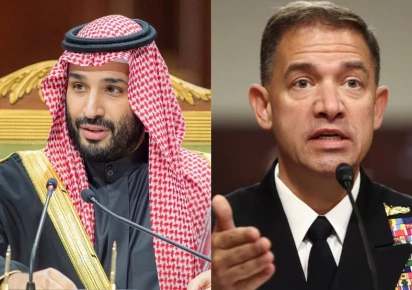
Saudi Crown Prince Mohammed bin Salman and US Central Command chief Admiral Brad Cooper have discussed efforts to contain escalating tensions in the Middle East, with the two sides also reviewing defence cooperation and regional security.
According to Saudi state media, the meeting focused on developments across the region and measures aimed at reducing tensions. Officials also discussed ways to strengthen security and stability amid the continuing US-Iran conflict and growing concerns over maritime traffic.
The talks came as Saudi Arabia announced progress toward activating a multinational defensive maritime alliance. Representatives from 39 countries attended the alliance’s latest planning meeting in Jeddah, while 13 countries have joined the initiative.
Saudi authorities described the meeting as an important step toward putting the maritime alliance into operation. The initiative comes as security concerns continue to grow around the Strait of Hormuz, one of the world’s most important energy routes.
Tensions around the strategic waterway have intensified during the US-Iran conflict. Disruptions to shipping have raised concerns about global supplies of oil and liquefied natural gas, while diplomatic efforts to secure freedom of navigation remain uncertain.
US Vice President JD Vance has said that keeping energy prices affordable for American consumers is currently Washington’s top priority in the conflict.
Vance said the administration wanted to maintain lower oil and gas prices while also ensuring that Iran could not acquire a nuclear weapon. His remarks came as the prolonged conflict continued to affect energy markets and increase pressure on the US economy.
Meanwhile, US Treasury Secretary Scott Bessent warned that Washington was preparing unprecedented economic measures against Tehran. He said the United States would combine intensified economic pressure with restrictions linked to Iran’s control of the Strait of Hormuz.
US Defence Secretary Pete Hegseth also said Washington had the military capability to maintain its naval blockade of Iran for an extended period. He said American ships could be rotated to sustain the operation.
The confrontation has severely affected Iran’s economy and disrupted its access to international trade. Tehran, meanwhile, has sought to use the Strait of Hormuz as leverage in negotiations with Washington.
Iran has demanded the removal of economic sanctions and the release of frozen assets as part of conditions for restoring normal maritime traffic.
Commercial traffic through the Strait has fallen sharply since the conflict began. The decline has heightened fears that a prolonged disruption could further affect global energy supplies.
Two vessels linked to Abu Dhabi National Oil Company were reportedly attacked while passing through the waterway, prompting condemnation from the UAE.
The situation has also kept oil markets volatile. Although crude prices declined recently amid concerns over weaker demand and rising US inventories, renewed attacks and threats of further escalation have continued to unsettle investors.
The International Energy Agency has revised its forecast for global oil supply, projecting a larger decline than previously expected. Economists have warned that a prolonged conflict could weaken global economic growth and increase the risk of recession in some regions.
US President Donald Trump has faced growing domestic pressure over the conflict, particularly as higher fuel costs weigh on American consumers. Washington has continued imposing sanctions on Iran, while efforts to bring Tehran back to negotiations have so far produced limited results.
We welcome your contributions! Submit your blogs, opinion pieces, press releases, news story pitches, and news features to opinion@minutemirror.com.pk and minutemirrormail@gmail.com