Summary
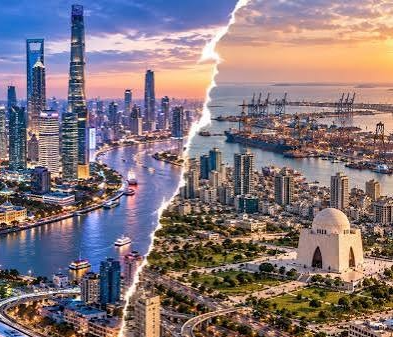
- The statement by Sindh Chief Minister Syed Murad Ali Shah sounds very pleasing to the ear: just as Shanghai has achieved new milestones of development, prosperity, and success through investment, Karachi too can move forward by treading the path of investment.
- There is certainly weight in this argument, but the question remains: Can Sindh attain Shanghai-like development merely by extending investment invitations, signing agreements, and announcing mega projects?
- According to the Chief Minister, a total of 34 agreements were signed across various sectors, including 16 Memorandums of Understanding (MoUs) between the Sindh government and Chinese companies.
The statement by Sindh Chief Minister Syed Murad Ali Shah sounds very pleasing to the ear: just as Shanghai has achieved new milestones of development, prosperity, and success through investment, Karachi too can move forward by treading the path of investment. There is certainly weight in this argument, but the question remains: Can Sindh attain Shanghai-like development merely by extending investment invitations, signing agreements, and announcing mega projects?
The answer lies in the fundamental difference between the development of Shanghai and Karachi, which is not just a matter of capital and resources; it is also about transparency, administrative competence, discipline, the rule of law, and institutional accountability. Citing the example of Shanghai’s development is easy, but can those same principles, which transformed that city into a global economic hub, be implemented with the same honesty in Sindh? Will transparency be guaranteed here in government decisions, land allotments, contracts, and investment projects? Will merit be placed above nepotism and political interference?
Against this backdrop, hosting the Sindh Investment Conference in Shanghai, with the participation of around 400 investors from various countries including China, is undoubtedly a significant step forward. According to the Chief Minister, a total of 34 agreements were signed across various sectors, including 16 Memorandums of Understanding (MoUs) between the Sindh government and Chinese companies. Senior Minister Sharjeel Inam Memon categorized these as 10 government-level agreements and 24 business-to-business (B2B) agreements.
However, there is a difference between signing an MoU and attracting actual investment. The real success will be proven only when factories are established, production begins, local people get employment, and the economy of Sindh is strengthened. For this reason, the government must place the details regarding the financial worth of these agreements, their implementation timelines, and the expected employment opportunities before the public. This will clarify which projects have moved toward practical initiation and which ones are still merely in the feasibility stage.
Alongside the agreements, the Chief Minister highlighted providing complete security to Chinese investors, offering tax incentives for ten years in Special Economic Zones, and establishing a One-Window Facilitation Centre for investors. Projects like the Dhabeji Special Economic Zone, the development of Keti Bandar, the production of fertilizer and methanol from Thar coal, the Sindh International Financial Centre, and the establishment of data centers powered by renewable energy were also presented. These assurances and projects are promising on paper, but their worth will be judged only by what is delivered.
We welcome your contributions! Submit your blogs, opinion pieces, press releases, news story pitches, and news features to opinion@minutemirror.com.pk and minutemirrormail@gmail.com