Summary
- BUSAN: South Korea has unveiled the K-Heritage House, a large cultural pavilion showcasing the country’s rich heritage and preservation efforts during the 48th UNESCO World Heritage Committee session in Busan.
- A dedicated gallery also explains South Korea’s cooperation with UNESCO and its role in protecting global cultural heritage.
- Throughout the UNESCO session, dozens of cultural performances are scheduled, featuring traditional dances, folk performances and Buddhist ceremonial arts that reflect Korea’s diverse intangible cultural heritage.
BUSAN: South Korea has unveiled the K-Heritage House, a large cultural pavilion showcasing the country’s rich heritage and preservation efforts during the 48th UNESCO World Heritage Committee session in Busan.
The exhibition has been established at the Busan Exhibition and Convention Center, where delegates and visitors from around the world are attending the UNESCO meeting from July 20 to 29. It marks the first time South Korea is hosting the World Heritage Committee session.
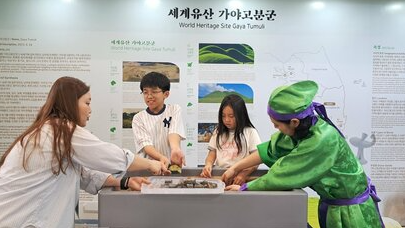
Spread across an area comparable to two football fields, the pavilion features exhibitions, live performances, cultural displays and interactive activities designed to introduce visitors to Korea’s historical and cultural legacy.
The K-Heritage House has been developed with the participation of 35 organizations, including government departments, local administrations and cultural institutions. It highlights the country’s UNESCO-listed heritage sites, preservation policies and efforts to safeguard cultural traditions for future generations.
The exhibition is divided into four themed sections focusing on the history of Korean heritage, living cultural traditions, modern technology in heritage conservation and interactive visitor experiences. A dedicated gallery also explains South Korea’s cooperation with UNESCO and its role in protecting global cultural heritage.
A special section is devoted to Busan’s history, presenting the city’s cultural significance and its role as South Korea’s temporary capital during the Korean War.
Visitors can also explore displays featuring ancient burial sites, biodiverse tidal flats, prehistoric rock carvings and historic Buddhist mountain monasteries, all recognized or nominated for UNESCO heritage status.
Digital media installations, including large-scale visual displays inspired by Korean history and culture, have become a major attraction. Interactive exhibits recreate royal gardens, traditional academies and folk music through modern technology.
The pavilion also celebrates Korea’s living cultural traditions through performances and live demonstrations by master artisans. Skilled craftsmen are showcasing traditional techniques, including the making of the iconic Korean gat, while allowing visitors to experience these centuries-old crafts firsthand.
Throughout the UNESCO session, dozens of cultural performances are scheduled, featuring traditional dances, folk performances and Buddhist ceremonial arts that reflect Korea’s diverse intangible cultural heritage.
International delegates have praised the exhibition for combining cultural preservation with education and technology. Visitors described the experience as an engaging way to understand Korea’s commitment to protecting its heritage while introducing younger generations to its cultural traditions.
We welcome your contributions! Submit your blogs, opinion pieces, press releases, news story pitches, and news features to opinion@minutemirror.com.pk and minutemirrormail@gmail.com