Summary
- These were produced by clouds of lunar dust that were thrown up by the impact.
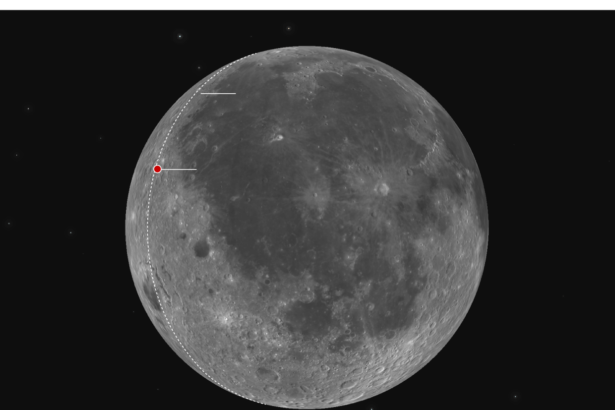
- Impact site The impact occurred at a location on the Moon that is considered to be near the boundary between the sunlit and dark regions.
- Although several satellites are currently orbiting the Moon, none was positioned at the time of the impact to directly observe it.
Elon Musk’s SpaceX rocket has crashed into the Moon’s surface while travelling at a speed of 5,400 miles per hour while a telescope in Chile captured evidence of the impact.
The European Southern Observatory’s (ESO) Very Large Telescope observed the impact on August 5 and detected colorful spectral lines of sodium and lithium gas. These were produced by clouds of lunar dust that were thrown up by the impact.
The ESO telescope recorded the “chemical fingerprints” of the gas cloud which remained visible for around 5 to 10 minutes. The cloud was estimated to extend across dozens of kilometers.
Experts had previously said that the impact could provide valuable data for future space experiments and help scientists analyze the effects of collisions involving human-made space debris.
As NASA plans to establish a permanent human base on the Moon in the future understanding what happens when space debris strikes the lunar surface will be important.
Impact site
The impact occurred at a location on the Moon that is considered to be near the boundary between the sunlit and dark regions. When the impact sent clouds of dust into the air, they briefly became illuminated by sunlight.
However, observing them with the naked eye from Earth was almost impossible. Although several satellites are currently orbiting the Moon, none was positioned at the time of the impact to directly observe it.
The rocket fragment was approximately as tall as a five-story building and weighed around 4 tons. NASA’s Lunar Reconnaissance Orbiter and South Korea’s Korea Pathfinder Lunar Orbiter are being considered for photographing the impact site.
These images could help determine how much damage was caused by the rocket although it may take several days to collect and analyze the information.
It is worth noting that the SpaceX Falcon 9 rocket was launched in January 2025 and carried two landers toward the Moon. Its boosters returned to Earth while the upper stage continued carrying the landers toward the Moon.
We welcome your contributions! Submit your blogs, opinion pieces, press releases, news story pitches, and news features to opinion@minutemirror.com.pk and minutemirrormail@gmail.com