Summary
- If Pakistan ever becomes a case study in why nations fail, the National Electric Power Regulatory Authority will not be a footnote.
- But when it comes time to select the people who will run the nervous system of the national economy — the regulator that decides whether a factory can compete, whether a family can afford dinner and electricity in the same month, whether the country’s fiscal space collapses under subsidy payments — the same decision-makers reach not for the best available expert but for whichever loyal, familiar face has earned their trust through proximity rather than competence.
- Until that question is asked and answered, honestly, Pakistan will remain what it has quietly become: an atomic power that cannot light its own cities, undone not by an enemy at the gate, but by a regulator that was supposed to be standing guard.
There is a strange, aching irony in calling Pakistan an atomic power. The country can split uranium, arm a warhead, and deter nations many times its size — and yet it cannot keep the lights on in its own capital without borrowing from institutions abroad. No enemy tank ever crossed the border to do this. No missile did it. A regulator did it, quietly, over three decades, one meeting at a time, one licensing decision at a time, one act of self-preservation dressed up as public service at a time. If Pakistan ever becomes a case study in why nations fail, the National Electric Power Regulatory Authority will not be a footnote. It will be the central exhibit.
NEPRA was created with a simple, almost noble mandate: keep electricity affordable, keep supply steady, keep the sector honest. Two decades on, none of those things is true. Circular debt sits above Rs. 2.3 trillion. Industrial demand has stagnated under the weight of tariffs that rank among the highest in South Asia. Millions of households, unable to bear grid prices any longer, have fled to rooftop solar — not as an act of environmental virtue but as an act of financial self-defence — and in fleeing, they have shrunk the very revenue base the grid depends on, pushing per-unit costs even higher for everyone left behind. This is a death spiral, and it did not happen by accident. It happened because the institution built to prevent it instead presided over it, tariff hearing after tariff hearing, for twenty years.
Pakistan built over 45,000 megawatts of generation capacity. By any measure, this is more than enough to power every home and industry. Yet, NEPRA completely squandered this massive scale.
The official figures cannot be trusted. NEPRA routinely hides actual data and fails to accurately account for installed capacity too. The regulator operates in the dark, leaving the country’s true energy potential unknown.
Yet consumers pay not for what they use but for what idle, underutilized thermal plants are contracted to provide, because NEPRA kept approving capacity payments on dollar-indexed contracts without ever asking whether the plants behind them were efficient, necessary, or fairly priced. A power plant running at barely a quarter of its rated efficiency was allowed to keep operating while far more efficient plants sat underused. Nobody at NEPRA seems to have asked why. Or worse, somebody did ask, and the question went nowhere, because asking it would have disturbed arrangements that suited people much more than they suited the public.
And here is the deepest wound, the one that should genuinely serve as a warning to every developing nation watching Pakistan’s collapse: the fundamental sickness at NEPRA was never really technical. It was a sickness of selection. When Pakistan’s most powerful men and women fall seriously ill, they do not settle for whoever is nearest. They fly to London, to Geneva to Houston, and they demand the single best specialist money and connections can secure. Nothing less will do when it is their own body on the line. But when it comes time to select the people who will run the nervous system of the national economy — the regulator that decides whether a factory can compete, whether a family can afford dinner and electricity in the same month, whether the country’s fiscal space collapses under subsidy payments — the same decision-makers reach not for the best available expert but for whichever loyal, familiar face has earned their trust through proximity rather than competence. This is nepotism of a peculiar and catastrophic kind, because the human body can survive a mediocre doctor’s mistake. A national grid cannot survive twenty years of mediocre regulation. Nowhere else in the world does a nation apply first-world diligence to the health of its leaders and third-world carelessness to the health of its own economy. Pakistan appears to be the tragic exception, and the bill for that exception is now measured in trillions of rupees and millions of ruined household budgets.
The tragedy deepens when you look at what NEPRA has chosen to prioritize instead of competence. This is a regulator supposedly presiding over a nation that calls itself among the worst victims of climate change on earth, and yet it has worked, hearing by hearing, to blunt the one technology that offered ordinary households a way out — solar. The retreat from net metering to a punitive net-billing regime, and the introduction of steep fixed charges on solar prosumers, did not happen because solar was a threat to the climate or the grid. It happened because a country full of rooftop solar panels buys less expensive LNG and imported coal power, and someone, somewhere in this arrangement, has a great deal riding on Pakistan continuing to buy that expensive power. A regulator genuinely working for consumers would have raced to embrace the cheapest, cleanest option available to a climate-vulnerable nation. NEPRA raced in the opposite direction.
Meanwhile, the regulator itself lives like the aristocracy of a nation it has helped impoverish. Multiple offices. A gym at the NEPRA building that would not embarrass a five-star hotel. A headquarters building in Islamabad with views that most Nobel laureates never get to enjoy from their own workplace. Hundreds of formal hearings a year, each one generating travel allowances and daily allowances for the officials attending, while the “resolution” those hearings produce is, more often than not, simply another tariff increase passed down to consumers who have no hearing of their own to attend. It brings to mind nothing so much as an emperor playing music while his city burns — except in this version, the emperor also collects a housing allowance for the palace.
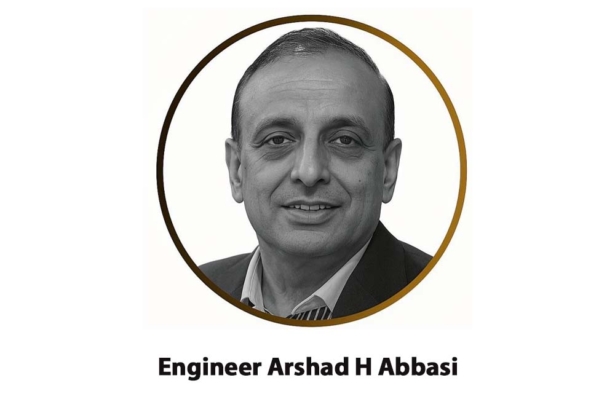
I write this not only as an observer but as someone who once had the vantage point to see it up close. During my time at the National Accountability Bureau, I personally scrutinised NEPRA from desk to desk — from the Load Dispatch Centre clerks handling the raw operational data all the way up to the Chairman and the Members, and every official layer in between. What I found was unambiguous: Pakistan is very possibly the only country in the world where a power regulator has become a machine for showering its own clerical and senior staff with the highest perks and privileges, while the sector they are meant to safeguard, and the economy built on top of it, is quietly sabotaged from within. Having examined this institution from the inside, my firm opinion is that it should be shelved entirely. Replace it with a lean structure of a few AI-driven systems and a handful of accountable experts, and this transformation could be completed within a single year, not a decade.
So what should be done? The uncomfortable but necessary answer is that Pakistan does not need to reform NEPRA. It needs to seriously consider retiring it. An institution with 3 decades to prove itself, armed with a clear mandate, a fully funded budget, and every resource a struggling nation could spare it, and which nonetheless produced a circular debt crisis, a solar-hostile tariff regime, and a culture of five-star self-reward, has earned the right to be shelved rather than salvaged. The sky will not fall. What has been falling, year after year, is the purchasing power of ordinary Pakistani families, and that fall has NEPRA’s fingerprints all over it.
Place NEPRA beside its counterpart across the border. India’s Central Electricity Regulatory Commission — facing its own backlog of cases and its own operational strain — did not respond by building a nicer gym. It went looking for an artificial intelligence consultant to build what it called a Regulatory Expert System Tool, an AI-based system meant to help the commission process its caseload, extract and organize legal documents, and manage the sheer volume of regulatory information a modern power sector generates. Whatever the ultimate success of that specific tool, the instinct behind it was the right one: modernize the machinery of oversight so that human judgment is supported by systems that never get tired, never forget a precedent, and never quietly lose track of an inconvenient fact. NEPRA, presiding over a far more urgent crisis, has shown no comparable instinct. It has shown, instead, the instincts of an institution optimizing for its own comfort.
None of this diminishes the seriousness of the question that should follow: why, exactly, did an institution charged with protecting the nation’s economic lifeline behave, again and again, in ways that served everyone except the nation? That is a question for investigators, not op-ed writers — but it is a question Pakistan can no longer afford to leave unasked. A country that can enrich uranium should be capable of asking a hard question about who enriched itself instead of the grid. Until that question is asked and answered, honestly, Pakistan will remain what it has quietly become: an atomic power that cannot light its own cities, undone not by an enemy at the gate, but by a regulator that was supposed to be standing guard.
We welcome your contributions! Submit your blogs, opinion pieces, press releases, news story pitches, and news features to opinion@minutemirror.com.pk and minutemirrormail@gmail.com