Summary
- More than 1,500 commercial ships stranded by the closure of the Strait of Hormuz could unintentionally transport marine organisms to ports around the world, raising concerns about a potential global spread of invasive species once the vessels resume their journeys.
- A study published in the journal has warned that marine organisms can quickly accumulate on the underwater surfaces of ships that remain stationary for long periods.
- At the same time, the ships may already carry organisms from other parts of the world, creating an unusual mixing of marine communities.
More than 1,500 commercial ships stranded by the closure of the Strait of Hormuz could unintentionally transport marine organisms to ports around the world, raising concerns about a potential global spread of invasive species once the vessels resume their journeys.
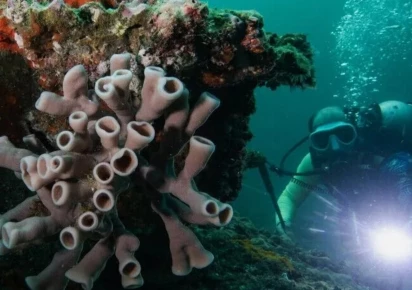
A study published in the journal has warned that marine organisms can quickly accumulate on the underwater surfaces of ships that remain stationary for long periods. This process, known as biofouling, involves the growth and attachment of microorganisms, algae, mussels and other marine invertebrates to ship hulls.
According to the research, more than 1,500 large commercial vessels have been stranded in the region since the Strait of Hormuz was closed on February 28. Their prolonged stay gives local marine organisms an opportunity to attach themselves to the vessels. At the same time, the ships may already carry organisms from other parts of the world, creating an unusual mixing of marine communities.
Professor Mario Tamburri of the University of Maryland, who led the study, described the current situation as a particularly serious scenario. He explained that both the number and size of the stranded vessels and the timing of the disruption contribute to the increased risk.
The situation has coincided with the spring and summer seasons, when many marine organisms experience active growth and reproduction. As a result, the longer ships remain stationary, the greater the opportunity for organisms to establish themselves on their hulls.
Tamburri also pointed out that marine species living in the Gulf are adapted to difficult environmental conditions, including high temperatures and salinity. These adaptations could potentially allow some of them to survive when transported to other regions and establish themselves as invasive species.
The study states that biofouling can enter a rapid growth stage within roughly 10 days of a vessel remaining stationary. If a ship remains inactive for between 18 and 30 days, researchers recommend considering measures to control the buildup. For vessels stationary for more than 30 days, immediate hull cleaning before departure is strongly advised.
The potential consequences are significant because invasive species can damage natural ecosystems, compete with native organisms and create economic problems. Tamburri highlighted the Asian green mussel as an example. Native to the Gulf region, the species has already spread to locations including Florida, the Caribbean, Australia and parts of South America. In some areas, it competes with native shellfish and can block water systems used by power plants and desalination facilities.
Researchers say the first ports visited by ships leaving the Gulf could face the greatest risk because shorter voyages may allow organisms to survive during transportation. Ports including Jeddah, Mumbai, Colombo, Singapore, Alexandria, Piraeus, Algeciras and Rotterdam have been identified as locations of concern because of relatively short travel distances and similarities in temperature and salinity.
The researchers recommend establishing early-warning and rapid-response systems at these ports so that potentially invasive species can be detected and controlled quickly.
Tamburri said the international maritime sector is not fully prepared for the biological risks associated with large-scale disruptions to shipping. Although the International Maritime Organisation is developing relevant regulations, comprehensive measures could take years to establish.
The researchers believe that the most effective solution would be to clean the hulls of affected ships before they leave the Gulf. However, carrying out such operations on every vessel could be difficult because of limited regional capacity and the possibility that ships may need to depart quickly for security, logistical or operational reasons.
The study therefore calls for international cooperation involving marine scientists, shipping authorities, policymakers and regulators to reduce the risk of a worldwide spread of invasive marine species.
We welcome your contributions! Submit your blogs, opinion pieces, press releases, news story pitches, and news features to opinion@minutemirror.com.pk and minutemirrormail@gmail.com