Summary
- Serbia entered a new political era on Monday after a student-backed movement defeated longtime leader Aleksandar Vucic in a landslide election, triggering celebrations across the country.
- The result marked a major victory for a movement that emerged from nearly two years of peaceful protests demanding political accountability and an end to alleged corruption.
- The election result, however, has placed Serbia on the threshold of a new political chapter, with the incoming government facing high expectations over reforms, transparency and national leadership.
Serbia entered a new political era on Monday after a student-backed movement defeated longtime leader Aleksandar Vucic in a landslide election, triggering celebrations across the country. However, questions remain over how the movement will form a government and manage the country’s affairs.
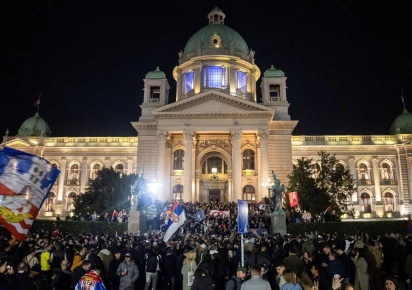
Thousands of people gathered in Belgrade and other Serbian cities after Vucic conceded defeat late Sunday. The result marked a major victory for a movement that emerged from nearly two years of peaceful protests demanding political accountability and an end to alleged corruption.
According to the State Election Commission, with almost 99% of votes counted, the student-backed candidates secured 52.7% of the vote. The alliance led by Vucic’s Serbian Progressive Party (SNS) received 39.2%.
The results gave the student-backed movement 139 seats in Serbia’s 250-member parliament, while the SNS-led alliance secured 97 seats. The remaining seats went to minority parties.
The constitution allows up to 90 days to form a government after parliament convenes following the official announcement of the final election results.
Vucic had dominated Serbian politics as prime minister and president since 2014. His defeat followed widespread public anger over corruption allegations and demands for greater government accountability. The protests gained momentum after 16 people died when a canopy collapsed at a railway station in Novi Sad.
The election outcome represents a significant political shift in the Balkan nation, which has a population of around six million. It could also encourage student-led movements elsewhere in Europe that have been campaigning for better education, improved opportunities and political reforms.
Despite their electoral success, the student-backed candidates face the challenge of establishing a government and deciding who will occupy key leadership positions.
The movement deliberately avoided appointing a single leader during the protests, a strategy intended to limit government attacks against individual figures. Its candidate list includes university professors, actors, farmers and other professionals.
Among the prominent figures associated with the movement are cardiologist Ilija Srdanovic, who headed the candidate list, former central bank governor Dejan Soskic and Belgrade University professor Radomir Sajcic.
The movement has pledged to tackle corruption, improve education and introduce changes to Serbia’s domestic governance. However, its approach to foreign relations and other major policy matters remains unclear.
Supporters welcomed the result as an opportunity to rebuild public trust in state institutions. Svetlana Karagkozidou, a 60-year-old insurance worker, expressed hope that the country could gradually move towards a more transparent and accountable system.
Not everyone was convinced by the sudden political change. Some voters voiced concerns about the identities of the people who would lead the country and the direction the new administration might take.
Following the election, supporters of the student movement also began cleaning a park near parliament in Belgrade that had served as a camp for Vucic’s supporters for more than a year. Volunteers removed tents and metal barriers and cleaned stickers from children’s play equipment.
The clean-up became another symbol of the political transition, as supporters reclaimed a public space that had been occupied during the period of protests and political tension.
Vucic and his party have repeatedly rejected accusations of corruption and repression. The election result, however, has placed Serbia on the threshold of a new political chapter, with the incoming government facing high expectations over reforms, transparency and national leadership.
We welcome your contributions! Submit your blogs, opinion pieces, press releases, news story pitches, and news features to opinion@minutemirror.com.pk and minutemirrormail@gmail.com