Summary
- The country possesses sufficient taxable capacity to exceed IMF revenue targets without increasing tax rates and without imposing additional burdens on compliant taxpayers.
- Rational taxation of large agricultural incomes, urban immovable property, speculative gains and undocumented commercial activity offers significantly greater potential than repeated increases in tax rates.
- Documentation of retail and wholesale trade, rational property taxation, taxation of large agricultural incomes, reduction of tax expenditures, integration of databases and harmonisation of tax administration collectively offer revenue potential far exceeding the gains achievable through higher rates imposed on existing taxpayers.
As the federal government prepares to unveil budget for fiscal year 2026-27 on June 10, 2026, policymakers face a familiar dilemma. The International Monetary Fund (IMF) demands higher revenues while no debate on rationalisation of expenses and curtailment of monstrous tax expenditure. The economy requires growth. Citizens seek relief from inflation and excessive taxation. Businesses demand predictability and competitiveness.
The conventional response has remained unchanged for decades. It includes, amongst others: raise tax rates; introduce additional and/or enhanced rates of withholding taxes; impose exorbitant and extended levies, especially on petroleum products; and increase compliance burdens on already documented sectors. The results are equally familiar. Economic growth remains weak, exports underperform, investment stagnates and the tax base remains narrow and punctured despite increasingly aggressive taxation.
The preceding articles in this series demonstrated that Pakistan’s fiscal crisis is not primarily a revenue crisis. It is a governance crisis. The country possesses sufficient taxable capacity to exceed IMF revenue targets without increasing tax rates and without imposing additional burdens on compliant taxpayers. The challenge is to convert potential into reality.
The first requirement is reform of tax administration. No tax reform can succeed without an institution capable of implementing it. Pakistan’s existing fragmented system imposes substantial costs on taxpayers while limiting effectiveness. Federal and provincial authorities frequently operate separate databases, separate procedures and separate enforcement mechanisms.
A federalised tax agency, functioning within constitutional limits but integrating administration and information systems, would dramatically improve efficiency. The objective is not centralisation of taxing powers but coordination of administration. The second requirement is reversal of withholdingisation. Earlier analysis demonstrated that over 95 percent of income tax collections originate from withholding taxes, advance taxes and taxes paid with returns. Such dependence reflects administrative weakness rather than strength. Transactional taxation should remain a supplementary tool rather than the foundation of the tax system.
The third requirement is broadening the tax base. Pakistan continues taxing documented sectors heavily while large pools of wealth remain undertaxed. Rational taxation of large agricultural incomes, urban immovable property, speculative gains and undocumented commercial activity offers significantly greater potential than repeated increases in tax rates.
The fourth requirement is restoration of fiscal federalism. The Constitution envisages cooperation between federation and provinces. Effective implementation requires greater provincial tax effort, stronger municipal finance and reduced dependence on non-divisible revenue sources. Fiscal federalism should strengthen governance rather than create fragmentation.
The fifth requirement is harmonisation of sales taxation. The current system imposes multiple registrations, overlapping jurisdictions and excessive compliance costs. Harmonised procedures and integrated databases would reduce burdens on businesses while improving documentation.
The sixth requirement is strengthening taxpayer rights. Taxation cannot rely indefinitely on coercion. Sustainable compliance requires legitimacy. A Taxpayers’ Bill of Rights, efficient dispute-resolution mechanisms and specialised tax adjudication would improve confidence in the system.
The proposal for a National Tax Court deserves renewed consideration. Tax law has become too complex and economically significant to remain submerged within ordinary litigation.
The seventh requirement is export-led growth. Countries become prosperous by producing, innovating and exporting. They do not become prosperous by taxing production. Pakistan’s fiscal future therefore depends heavily upon industrialisation, value-added agriculture and export competitiveness. Growth remains the most effective revenue generator.
The eighth requirement is intelligent use of technology. Pakistan already possesses extensive information through National Database & Registration Authority (NADRA), banking records, utility databases, customs documentation, property registries and provincial systems. The challenge is integration rather than collection.
Artificial intelligence, risk profiling and data analytics can identify discrepancies more effectively than traditional enforcement methods. Technology should broaden compliance, not broaden harassment.
The final requirement is political courage. Most reform proposals discussed in this series are not new. Variations of these recommendations have appeared repeatedly in reports of reform commissions, think tanks, international institutions and independent experts. The obstacle has rarely been lack of knowledge. The obstacle has been implementation.
Powerful interests benefit from the status quo. Untaxed wealth enjoys protection. Administrative fragmentation creates opportunities for rent-seeking. Petroleum levies generate easy revenues. Withholding taxes shift responsibility from tax administrators to taxpayers. Structural reform therefore demands political choices.
The encouraging reality is that Pakistan possesses sufficient fiscal space to pursue a different path. Documentation of retail and wholesale trade, rational property taxation, taxation of large agricultural incomes, reduction of tax expenditures, integration of databases and harmonisation of tax administration collectively offer revenue potential far exceeding the gains achievable through higher rates imposed on existing taxpayers.
The debate should therefore move beyond annual revenue targets. The real question is whether Budget 2026-27 will continue the familiar cycle of extraction or initiate the reforms capable of transforming Pakistan’s fiscal architecture. The choice is clear.
One path offers short-term revenues accompanied by slower growth, greater informality and increasing public resentment.
The other offers broader compliance, stronger institutions, higher growth and sustainable revenues.
The central conclusion of this series is straightforward. Pakistan does not suffer from a shortage of taxes. It suffers from a shortage of reform.
The country can exceed IMF revenue targets, strengthen fiscal federalism, improve taxpayer confidence and accelerate economic growth without imposing additional burdens on productive sectors. The opportunity exists. Whether policymakers seize it will determine not only the success of Budget 2026-27 but also the future trajectory of Pakistan’s economy.
(This series is concluded. A new series under the title, ‘Analysis of Finance Bill 2026’ will be initiate after announcement of budget on June 10, 2026 along with Finance Bill 2026)
_____________________________________________
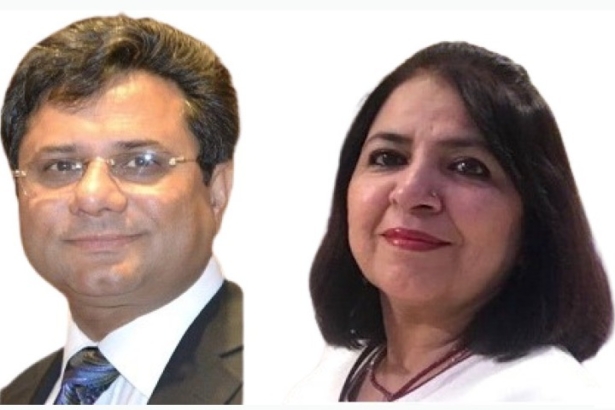
Huzaima Bukhari, lawyer and author, is an Adjunct Faculty at Lahore University of Management Sciences (LUMS), member Advisory Board and Senior Visiting Fellow of Pakistan Institute of Development Economics (PIDE)
Dr. Ikramul Haq, Advocate Supreme Court, Adjunct Faculty at Lahore University of Management Sciences (LUMS), member Advisory Board and Visiting Senior Fellow of Pakistan Institute of Development Economics (PIDE), holds LLD in tax laws. He was full-time journalist from 1979 to 1984 with Viewpoint and Dawn. He also served Civil Services of Pakistan from 1984 to 1996.
We welcome your contributions! Submit your blogs, opinion pieces, press releases, news story pitches, and news features to [email protected] and [email protected]