
Summary
- Alexander, arrived in India with instructions not merely to negotiate the transfer of power but to devise a constitutional framework capable of reconciling profoundly different political aspirations within a single state. Unlike earlier initiatives, the Cabinet Mission did not attempt to persuade one side to surrender its constitutional claims to another.
- Indian National Congress continued to insist upon the unity of India, while the Muslim League maintained that Muslim political nationhood required constitutional recognition.
- The Muslim League regarded them as an essential constitutional guarantee protecting Muslim political autonomy.
Some constitutional settlements fail because they are unjust. Others fail because those who might have accepted them cease to trust one another before the settlement can take effect
The failure of the Simla Conference did not persuade Britain to abandon the search for a united constitutional settlement. On the contrary, it convinced the newly elected Labour Government that another and far more comprehensive initiative had become indispensable. The Second World War had ended.
Britain emerged victorious, but financially exhausted and politically transformed. The question confronting Prime Minister Clement Attlee’s government was no longer, whether India would become independent. Independence had become inevitable. The remaining question was whether it could be achieved without Partition.
The responsibility for answering that question fell upon one of the most significant constitutional delegations ever sent to British India. In March 1946, the Cabinet Mission, comprising Lord Pethick-Lawrence, Sir Stafford Cripps and A. V. Alexander, arrived in India with instructions not merely to negotiate the transfer of power but to devise a constitutional framework capable of reconciling profoundly different political aspirations within a single state.
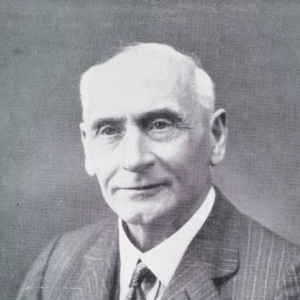

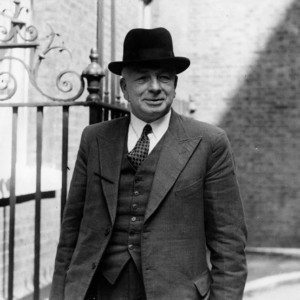
Unlike earlier initiatives, the Cabinet Mission did not attempt to persuade one side to surrender its constitutional claims to another. Instead, it sought to construct a constitutional architecture that would allow competing visions of India to coexist. The Mission recognised two political realities that earlier proposals had struggled to reconcile.
Indian National Congress continued to insist upon the unity of India, while the Muslim League maintained that Muslim political nationhood required constitutional recognition. The challenge lay in accommodating both principles without destroying either.
The solution proposed by the Mission was both innovative and extraordinarily complex. It rejected the immediate creation of a sovereign Pakistan, arguing that Partition would generate formidable administrative, economic and strategic difficulties. At the same time, it acknowledged that an excessively centralised constitution would be unacceptable to the Muslim League. The Mission, therefore, proposed a three-tier constitutional structure.
At the centre would stand a limited Union Government responsible only for defence, foreign affairs and communications, together with the finances necessary to discharge those functions. The provinces would retain extensive autonomy over most subjects of governance. Between these two levels, the provinces would form three groups reflecting geographical and political realities. Sections A, B and C would be empowered to frame constitutions for their respective groups while participating in the larger Union.
The constitutional ingenuity of the proposal lay precisely in its attempt to preserve India’s international unity while recognising its internal diversity. Neither complete centralisation nor compl therefore sought a middle constitutional path.
Congress interpreted the Plan as preserving the essential unity of India, though many of its leaders remained apprehensive that compulsory provincial grouping might weaken the authority of the future Union. The Muslim League initially accepted the proposal because the grouping arrangements appeared capable of protecting Muslim-majority provinces and preserving the possibility of greater autonomy in the future. For a brief moment, it appeared that a constitutional compromise acceptable to both major political parties had finally emerged. That moment proved remarkably short-lived.
The difficulty did not lie primarily in the constitutional text. It lay in conflicting interpretations of the text. Congress regarded the provincial groupings as temporary arrangements that could subsequently be modified by elected provincial legislatures. The Muslim League regarded them as an essential constitutional guarantee protecting Muslim political autonomy. The same constitutional document, thus, came to embody fundamentally different expectations.
The archival record preserved in the Transfer of Power volumes reveals that British officials themselves recognised this ambiguity. The Mission deliberately employed language capable of attracting acceptance from both Congress and the League. Diplomatic flexibility succeeded in producing initial agreement but left unresolved the deeper question of how the Constitution would actually operate once political power had been transferred. Ambiguity, which had previously served as an instrument of negotiation, now became a source of constitutional instability.
The situation deteriorated further after Jawaharlal Nehru, speaking as President of the Congress, declared that the Constituent Assembly would remain sovereign in determining the future Constitution and would not regard itself as permanently bound by every aspect of the Cabinet Mission Plan. The Muslim League interpreted these remarks as evidence that the constitutional safeguards upon which it had relied could be altered after the transfer of power. Confidence rapidly evaporated.
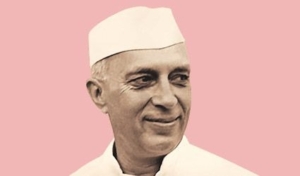
Muhammad Ali Jinnah responded by withdrawing the League’s earlier acceptance and announcing Direct Action. The constitutional conversation increasingly gave way to political confrontation. The tragic communal violence that followed profoundly altered the atmosphere in which constitutional negotiations continued.
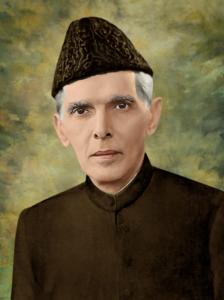
The Cabinet Mission nevertheless occupies a unique place in the constitutional history of South Asia. It represented the most sophisticated attempt to reconcile unity with diversity through constitutional design. It neither denied Muslim political aspirations nor abandoned the ideal of a united India. Instead, it sought to accommodate both within an asymmetrical federal structure unprecedented in British constitutional practice.
Whether the Plan would ultimately have succeeded if fully implemented remains one of the most enduring questions in modern South Asian historiography. Historians continue to disagree. Some regard it as the last realistic opportunity to preserve Indian unity.
Others argue that political distrust had already advanced too far for even the most carefully designed constitutional arrangement to survive. The documentary evidence suggests that the Mission came closer than any previous initiative to securing acceptance from both principal political organisations. Its collapse. Therefore, deserves to be understood not simply as another failed negotiation but as the moment when the possibility of a united constitutional future receded most dramatically.
The tragedy of Partition was still not inevitable. The Indian Independence Act of 1947 had not yet been enacted, the boundaries of the future states had not been drawn, and constitutional alternatives technically remained available. Nevertheless, after the collapse of the Cabinet Mission, the political space for compromise contracted with alarming speed. The search for constitutional reconciliation increasingly yielded to preparations for constitutional separation.
The next article examines the final phase of British rule under Lord Mountbatten. It explores how the acceleration of the transfer of power, the Indian Independence Act and the Radcliffe Boundary Commission transformed constitutional uncertainty into one of the greatest human tragedies of the twentieth century.
References:
Principal Documents
- Cabinet Mission Statement, 16 May 1946.
- Cabinet Mission Memorandum on the Constituent Assembly, 16 June 1946.
- Nicholas Mansergh (ed.), The Transfer of Power 1942–47 (Volumes covering the Cabinet Mission).
- Speeches of Jawaharlal Nehru and Muhammad Ali Jinnah, July–August 1946.
- Clement Attlee’s statements on constitutional policy towards India.
[To be continued]
____________________________________________________________________
Dr. Ikramul Haq, Advocate Supreme Court, Adjunct Faculty at Lahore University of Management Sciences (LUMS), member Advisory Board and Visiting Senior Fellow of Pakistan Institute of Development Economics (PIDE), holds an LLD in tax laws. He was full-time journalist from 1979 to 1984 with Viewpoint and Dawn. He also served Civil Services of Pakistan from 1984 to 1996.
We welcome your contributions! Submit your blogs, opinion pieces, press releases, news story pitches, and news features to opinion@minutemirror.com.pk and minutemirrormail@gmail.com