
Summary
- On June 3, 1947, the British Government announced a plan under which British India could be divided and power transferred to two successor governments.
- References: Principal Documents and Sources His Majesty’s Government, Statement on the Transfer of Power in India, February 20, 1947.
- His Majesty’s Government, Plan for the Transfer of Power, June 3, 1947.
The legality of a constitutional settlement cannot compensate for the absence of time, preparation and protection required to implement it
The collapse of the Cabinet Mission Plan did more than extinguish the last comprehensive attempt to preserve a united India. It transformed a constitutional dispute into an administrative and humanitarian emergency.
Indian National Congress proceeded with the Constituent Assembly, the Muslim League withdrew its acceptance of the Plan, and political distrust increasingly gave way to confrontation. Communal violence spread across different parts of India, demonstrating that the approaching transfer of power could no longer be treated simply as an exercise in constitutional drafting.
By the beginning of 1947, Britain had reached a decisive conclusion. Its rule in India could not continue indefinitely, while no constitution acceptable to all the principal political parties had emerged. On February 20, 1947, Prime Minister Clement Attlee announced that British authority would be transferred to Indian hands no later than June 1948.
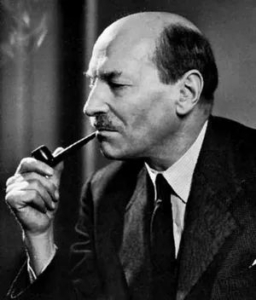
The statement also acknowledged that, in the absence of an agreed constitution, Britain would have to determine whether power should pass to a central authority, provincial governments or some other arrangement. The possibility of more than one successor authority had now entered official policy.
Lord Louis Mountbatten arrived as the last Viceroy in March 1947 with a mandate to supervise this transfer. He inherited a political order already close to collapse. The Cabinet Mission framework had ceased to command common confidence, the interim government was paralysed by rivalry between Congress and the Muslim League, and communal violence had exposed the fragility of provincial administration.
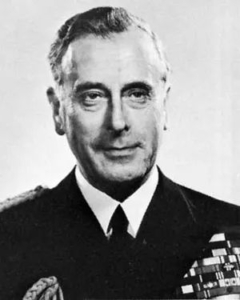
Mountbatten’s task was not to negotiate within a stable constitutional environment. It was to construct a settlement while the institutions through which it had to be implemented were rapidly disintegrating.
The central question was whether the deadline of June 1948 provided sufficient time to undertake an orderly transfer or whether delay would deepen violence and political uncertainty. Mountbatten chose acceleration.
On June 3, 1947, the British Government announced a plan under which British India could be divided and power transferred to two successor governments. Punjab and Bengal would decide whether they should themselves be partitioned; separate constituent assemblies could emerge; and referendums would determine the future of the North-West Frontier Province and the Sylhet district of Assam. The date for transfer was brought forward from June 1948 to August 1947.
The acceleration was defended as a response to deteriorating conditions. British authority was weakening, communal violence was spreading and the principal political parties had accepted that Partition had become unavoidable. Mountbatten and his supporters believed that a definite and immediate date would end uncertainty and compel the parties to assume responsibility.
The opposing view deserves equal attention. A constitutional transformation of such magnitude required the division of provinces, armed forces, civil services, financial assets, railways, irrigation systems, records and administrative institutions. It required the establishment of two governments and the settlement of territorial boundaries affecting millions of people. Compressing this process into a few weeks inevitably reduced the time available for administrative preparation, security arrangements and the protection of vulnerable communities.
The question is therefore not simply whether British withdrawal had become inevitable. It plainly had. The more difficult question is whether the decision to advance the transfer by approximately ten months converted political urgency into administrative recklessness.
The Indian Independence Act received Royal Assent on July 18, 1947. It provided that two independent Dominions—India and Pakistan—would be established from August 15, 1947. It partitioned Punjab and Bengal, empowered the respective constituent assemblies to legislate for the new Dominions and terminated British responsibility for governing India. Parliamentary sovereignty, exercised from London for generations, legislated itself out of the subcontinent in an extraordinarily compressed period.
The legal instrument was concise. Partition was not. An Act of Parliament could establish two Dominions, confer legislative authority and terminate imperial jurisdiction. It could not divide villages, canals, railway lines, police forces, military units, families and centuries of shared social existence with comparable simplicity. Constitutional law could provide a date for independence, but it could not by itself produce the administrative capacity necessary to manage the consequences of territorial division.
The most visible illustration of this haste was the work of the Punjab and Bengal Boundary Commissions. Sir Cyril Radcliffe was appointed to chair both bodies and was required to determine the boundaries separating Muslim-majority and non-Muslim-majority areas. The task involved densely populated territories in which religious communities, agricultural systems, transport networks and commercial centres were deeply interwoven. He was given only a matter of weeks to complete it.
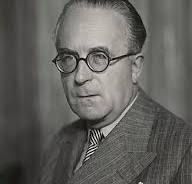
Punjab and Bengal could not be divided by applying census figures mechanically. District-level majorities concealed substantial minorities, while economic and geographic considerations frequently pointed in directions different from religious demography.
Rivers, irrigation headworks, railways and markets crossed the proposed boundaries. Sikhs were particularly vulnerable in Punjab because their population, landholdings and sacred places were distributed across areas claimed by both successor states.
The commissions were expected to resolve these questions while political authority was itself being divided. Their members were nominated from opposing political sides and were unable to agree on many decisive matters. The ultimate responsibility therefore rested with Radcliffe, who was required to draw boundaries under extraordinary pressure and with limited opportunity for local investigation.
More troubling was the timing of publication. The boundary awards were made public on August 17, 1947, after independence ceremonies had already taken place. Large populations in Punjab and Bengal consequently entered independence without knowing with certainty on which side of the new international frontier they would fall.
The delay may have been intended to prevent the boundary controversy from overshadowing the independence celebrations or provoking immediate disorder. Its effect was to deepen uncertainty at the precise moment when administrative clarity was most urgently required. Officials responsible for security, local government and transportation had little time to prepare for the territorial consequences. Ordinary people were left to respond to rumour, fear and rapidly changing political realities.
No law expressly ordered a complete exchange of populations between India and Pakistan. The migration that followed arose from violence, insecurity and the collapse of confidence that minorities could remain safely on the “wrong” side of the new border. Trains, roads and refugee columns became scenes of unimaginable suffering.
Families abandoned land, homes and livelihoods accumulated over generations. Women were subjected to abduction and sexual violence, while entire communities disappeared from places where they had lived for centuries.
The precise numbers remain disputed, but the scale is beyond controversy. Around fourteen million people were uprooted during Partition, making it one of the largest forced movements of population in modern history. Estimates of those killed vary greatly, reflecting both the chaos of the period and the inadequacy of official records.
Responsibility for this tragedy cannot be placed upon one actor alone. Congress and the Muslim League accepted Partition when other constitutional alternatives had collapsed. Communal organisations and armed groups converted political division into organised violence. Provincial administrations failed to protect minorities. Local grievances, rumours and retaliatory killings intensified the catastrophe.
Recognition of this shared responsibility does not absolve the departing imperial power. Britain controlled the timetable, supervised the division of the state and retained formal authority until the transfer occurred. The decision to accelerate independence, complete the boundary process within weeks and disclose the awards only after the transfer materially affected the conditions under which Partition was implemented.
The archival record does not establish that Britain intended the humanitarian catastrophe. It reveals something different and equally disturbing: a withdrawal carried out with insufficient appreciation of the administrative and human consequences of speed. Haste was treated as the solution to political instability when it also magnified institutional weakness.
Mountbatten succeeded in transferring power earlier than originally contemplated. The British Parliament enacted the required constitutional legislation, and two independent states came into existence. Judged solely by the formal completion of imperial withdrawal, the process was remarkably rapid. Judged by the suffering of the people required to live through it, the same process appears tragically unprepared. This is the central distinction upon which historical assessment must rest.
Partition as a political decision and Partition as an administrative operation were not identical questions. Even after the decision to create two states had been accepted, different choices remained possible regarding the timetable, security arrangements, boundary publication, refugee protection and institutional transition. The failure to make adequate provision in these areas converted constitutional separation into human catastrophe.
The tragedy of 1947 did not arise from constitutional disagreement alone. It arose when political division was implemented faster than administrative institutions could protect the people caught within it.
The concluding article will consider whether Partition itself, the haste of its execution and the scale of the resulting violence were inevitable. It will also examine the unresolved constitutional inheritance that passed to India and Pakistan when British rule ended.
References: Principal Documents and Sources
His Majesty’s Government, Statement on the Transfer of Power in India, February 20, 1947.
His Majesty’s Government, Plan for the Transfer of Power, June 3, 1947.
Indian Independence Act, 1947, 10 & 11 Geo. 6, c. 30.
Punjab and Bengal Boundary Commission Awards, August 1947.
Nicholas Mansergh (ed.), The Transfer of Power 1942–47, relevant volumes.
Stanley Wolpert, Shameful Flight: The Last Years of the British Empire in India.
Yasmin Khan, The Great Partition: The Making of India and Pakistan.
The National Archives, collections on Indian independence and the Partition of British India.
[To be continued]
____________________________________________________________________
Dr. Ikramul Haq, Advocate Supreme Court, Adjunct Faculty at Lahore University of Management Sciences (LUMS), member Advisory Board and Visiting Senior Fellow of Pakistan Institute of Development Economics (PIDE), holds an LLD in tax laws. He was full-time journalist from 1979 to 1984 with Viewpoint and Dawn. He also served Civil Services of Pakistan from 1984 to 1996.
We welcome your contributions! Submit your blogs, opinion pieces, press releases, news story pitches, and news features to opinion@minutemirror.com.pk and minutemirrormail@gmail.com