Summary
- The country’s motorists are increasingly furious over the government’s mandatory E20 fuel policy, which forces a 20% ethanol blend into all standard gasoline.
- Though the government’s press offices moved quickly to try and erase the narrative, video footage capturing the Attorney General explicitly defining the national fuel supply as an unresolved trial spread rapidly across social media.
- A viral video with over half a million views showcased a distraught driver standing inside a mechanic’s workshop, pointing to his degraded engine components and explicitly blaming the mandated E20 fuel for the costly repairs.
The country’s motorists are increasingly furious over the government’s mandatory E20 fuel policy, which forces a 20% ethanol blend into all standard gasoline. Rolled out to curb heavy foreign crude imports and lower carbon emissions, this aggressive environmental roadmap has instead become a massive political headache for Prime Minister Narendra Modi’s administration as everyday drivers reject the policy.
The baseline frustration boiled over into an active public relations crisis following a massive blunder in the nation’s highest court. During a routine Supreme Court hearing, Attorney General R. Venkataramani casually referred to the nationwide E20 rollout as an experiment, remarking that concrete data on its broader results wouldn’t be fully realized until next year. Though the government’s press offices moved quickly to try and erase the narrative, video footage capturing the Attorney General explicitly defining the national fuel supply as an unresolved trial spread rapidly across social media. Venkataramani eventually clarified that his use of the word experiment was strictly related to the logistical volumes of ethanol supply rather than the viability of the fuel itself.
However, the verbal gymnastics did nothing to soothe the public. For millions of working-class citizens who rely on their vehicles as fundamental survival kits, the admission felt like confirmation that they were being treated as unconsenting lab samples. 20% Mandatory Target (E20) 2026: Bureau of Indian Standards maps E22 to E30 frameworks.
In a direct bid to counter the escalating anger, the government dismissed public complaints as wild claims and warned citizens not to fall for rage bait. Stepping onto the defensive, Petroleum Minister Hardeep Singh Puri even compared the E20 mixture to high-performance fuel used in professional motorsport.
“They use it in racing cars also, the acceleration increases,” Puri insisted, though he had to concede a vital drawback: “Mileage, yes, it may drop a little.”
That minor drop in mileage is exactly where consumer reality collides with state policy. Because the government effectively removed lower blends or unblended alternatives from standard stations, consumers have zero freedom of choice at the pump. Thousands of drivers have taken to social media to document rapid drop-offs in fuel economy and mechanical wear and tear.
A viral video with over half a million views showcased a distraught driver standing inside a mechanic’s workshop, pointing to his degraded engine components and explicitly blaming the mandated E20 fuel for the costly repairs.
Political figures have quickly seized on this consumer anxiety. Opposition leaders have pointed out that over 23 million older vehicles currently on Indian roads are fundamentally incompatible with high-ethanol blends. Critics hit back at the administration’s defensive stance, arguing that it is incredibly unfair to force citizens to prove mechanical failure when the state’s own comprehensive safety data remains pending.
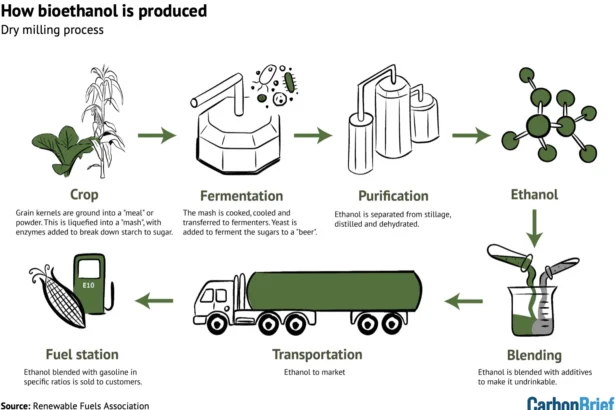
Looking at the bigger picture, the administration’s aggressive timeline makes perfect sense on paper. As the world’s third-largest automotive market, India imports roughly 85% of its oil. The transition to crop-based biofuels has successfully saved the national treasury over one trillion rupees in foreign exchange reserves over the last decade while actively keeping millions of tons of carbon out of the atmosphere.
Yet, as the state signals an intent to push forward with even higher targets like E30, the gap between high-level economic goals and the frustrations of everyday commuters is widening. For a motorist watching their engine struggle in bumper-to-bumper traffic, macroeconomic carbon metrics matter far less than the immediate, out-of-pocket cost of an unvetted national policy.
We welcome your contributions! Submit your blogs, opinion pieces, press releases, news story pitches, and news features to opinion@minutemirror.com.pk and minutemirrormail@gmail.com