Summary
- The day is observed on the recommendation of the United Nations to highlight the problems faced by young people, recognise their important role in economic and social development, and ensure their meaningful participation in decision-making.
- Holding one or two youth conferences during the year cannot be enough to address these issues.Climate change has become a major challenge for the world, but Pakistan still needs a stronger plan to involve young people in dealing with it.
- The United Nations continues to highlight the importance of addressing mental health problems among young people, but in Pakistan the issue has not received the attention it deserves.
By Amir Ismaiel
August 12 is observed around the world as International Youth Day. The day is observed on the recommendation of the United Nations to highlight the problems faced by young people, recognise their important role in economic and social development, and ensure their meaningful participation in decision-making. The theme of International Youth Day 2026 is “Different Contexts, Common Aspirations.” The theme recognises that young people live in different national, local and social conditions, but their basic hopes are almost the same everywhere. They want a dignified life, equal opportunities, good employment, quality education and a safe and secure future.
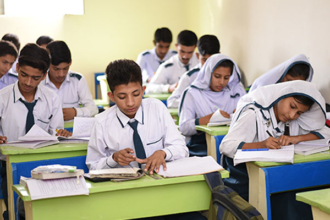
Pakistan has 64% of those who are under the age of 30, out of the 64% half of the numbers are in educational institutions and rest of them are out with some of the reasons. We are among the countries that spend the least on education, allocating around 2% of its total budget to the education . India spends around 4% while Sri Lanka and Bangladesh allocate around 2% or less. The United Nations recommends that 4% should be allocated to education. Pakistan has more than 190 universities including private and government over 100 sub-campuses, with nearly two million students studying in higher education. Providing four to five million jobs for these students in the coming years will be essential. University students face many problems in their daily routine on campus, These include rising fees, low quality of education, a lack of research opportunities, shortage of hostels and transport, inequality and harassment. At the school level, more than 15 million children are still out of school, these stats are same for years . Poor educational facilities, shortage of furniture, lack of clean drinking water, shortage of teachers and limited funding are among the main reasons.
The state of higher education is also worrying. Only one Pakistani public university, Quaid-i-Azam University is among the world’s top 500 universities, while around 10 Indian universities are included in the same list. These figures raise serious questions about government priorities and the gap between official claims and the actual condition of education. Theme of International Youth Day directly connects with the problems faced by Pakistani youth. Quality education, decent employment, mental health and meaningful participation in decision-making have remained major issues for young people for decades. These problems have also increased frustration, intolerance and extremism among youth . When an educated person fails to achieve his or her goals because of a lack of merit and fair opportunities frustration naturally grows. Unfortunately, youth in Pakistan still lack a clear vision for their future and meaningful government support.
The Prime Minister’s Youth Programme has mainly focused on initiatives such as laptops and scholarships, but there is a need for a much broader plan covering employment, career development, mental health and future opportunities for youth . Holding one or two youth conferences during the year cannot be enough to address these issues.Climate change has become a major challenge for the world, but Pakistan still needs a stronger plan to involve young people in dealing with it. There is also a lack of awareness and practical programmes through which young people can contribute to tackling climate change. Mental health is another serious issue. The United Nations continues to highlight the importance of addressing mental health problems among young people, but in Pakistan the issue has not received the attention it deserves. In many countries, educational institutions have dedicated departments and support systems for students’ mental health and wellbeing. Pakistan needs similar facilities. Reports of serious mental health problems and suicides among students should be treated as a national concern.
Today’s students wants to see solutions to its problems through its own participation and leadership. Across Asia, the growing role of Generation Z in political and government affairs has been remarkable. India, Bangladesh, Nepal and Sri Lanka have witnessed major youth movements in which youth have challenged governments and demanded political and social change. Youth are also important stakeholders in educational institutions. Around the world students participate in student unions and societies, which help them develop both academic and personal skills. Debates, dialogue, sports and other activities help students build confidence, leadership and communication skills. In countries such as the United States, the United Kingdom, Australia and Canada, students are generally allowed to form unions and societies in educational institutions. These organisations are supported by universities and provide students with opportunities to develop leadership and democratic skills. Many people who later become successful in medicine, science, social sciences, sports, politics and other fields gain valuable experience through such activities during their student years.
The well-known historian Dr Mubarak Ali wrote in his book Tareekh Ke Naye Zaviye that when ideological politics began among young people in the subcontinent, nationalism was one of its early forms. Students became divided between the political right and left. However, this ideological debate also encouraged students to read and study different ideas. They began to understand society and its structure through different political and social perspectives. This process helped young people develop stronger intellectual and political awareness.
Democratic societies recognise the right of students to participate in political and democratic activities. In Pakistan, however, student unions have faced restrictions for almost three decades. They were banned mainly because of allegations of political violence and clashes on campuses. As a result, universities lost an important platform for political discussion, debate on social issues and dialogue on national affairs.The culture of student unions in the 1990s are very different from the environment today. In the age of artificial intelligence, social media and digital communication, educational institutions can develop a new and more responsible model of student representation. Pakistan needs to create an environment where youth can discuss their problems through dialogue and democratic participation. Students should be represented in educational decision-making bodies and given a meaningful role in consultation. Instead of taking their problems to the streets, young people should have proper platforms where they can present their concerns directly to policymakers and decision-makers. This can help reduce the trust gap between youth and institutions. The National Youth Policy should also is need of the hour. The brain drain phenomenon has triggered the system where thousands of students leave the country because of lack of vision policing and D merit . Unemployment issue still couldn’t addressed . D merit policing is everywhere, political influencers are destroying the system. Above all, education must become a national priority despite of political differences. Pakistan needs to declare an educational emergency and allocate at least 4% of the national budget to education. Without serious investment in education, Pakistan cannot compete in a rapidly changing world. Educational development is a key to national development. Ignoring country’s youth is not a wise policy. If their problems, hopes and frustrations continue to be ignored, they may increasingly come to the streets to demand their rights. Across Asia, recent events have already shown how quickly youth frustration can turn into major political movements.
Pakistan must therefore listen to its youth, invest in their education, give them a meaningful voice in decision-making and provide them with a clear vision for the future. The future of Pakistan depends greatly on how seriously the country treats its youth today.
We welcome your contributions! Submit your blogs, opinion pieces, press releases, news story pitches, and news features to opinion@minutemirror.com.pk and minutemirrormail@gmail.com