Summary
- Moreover, US President Donald Trump has sharply criticized media reports claiming that the ongoing war with Iran has depleted American weapons stockpiles, accusing news organizations of spreading misleading information about the country’s military capabilities.
- In a post on his social media platform, Truth Social, Trump dismissed reports suggesting that the United States was running short of key weapons and military equipment.
- Trump also targeted media organizations that have reported shortages in US offensive and defensive weapons during the conflict with Iran.
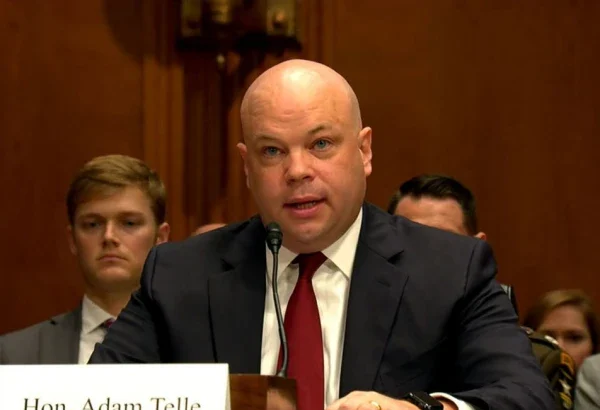
WASHINGTON: US President Donald Trump has nominated Adam Telle to serve as the next Secretary of the Army, placing a new official at the helm of the service amid a series of senior-level changes within the US military leadership.
Trump announced the decision in a social media post on Thursday, saying Telle would also take over as acting Army Secretary. Telle has previously served as Assistant Secretary of the Army for Civil Works.
Telle’s nomination follows the departure of Dan Driscoll, who recently resigned from the position. US media reports linked his resignation to disagreements with Defence Secretary Pete Hegseth, although Driscoll did not publicly provide a specific reason for stepping down. The US Army also offered no detailed explanation at the time of his resignation.
The latest appointment comes after several other unexpected changes in the American military hierarchy. In April, Hegseth removed General Randy George from his position, while General Christopher Donahue, who commanded US Army forces in Europe and Africa, unexpectedly resigned in June.
Telle’s nomination comes as the US military continues to undergo significant leadership changes at senior levels, drawing increased attention to the Trump administration’s approach to Pentagon management and military command.
Moreover, US President Donald Trump has sharply criticized media reports claiming that the ongoing war with Iran has depleted American weapons stockpiles, accusing news organizations of spreading misleading information about the country’s military capabilities.
In a post on his social media platform, Truth Social, Trump dismissed reports suggesting that the United States was running short of key weapons and military equipment. He claimed that the US military was producing weapons at a higher rate than ever before and insisted that the country possessed an enormous supply of arms.
Trump also targeted media organizations that have reported shortages in US offensive and defensive weapons during the conflict with Iran. He accused several outlets of failing to provide an accurate picture of developments on the battlefield and questioned the credibility of their reporting.
The president’s latest remarks came amid growing media attention over the impact of the Iran conflict on US military inventories. Reports from multiple American media outlets have highlighted increasing pressure on stocks of missiles, air-defense interceptors and other military equipment deployed to protect US bases and American allies across the region.
According to reports, the United States has been using significant quantities of air-defense interceptors to counter Iranian ballistic missiles and drones. By July, US stockpiles of Patriot interceptors had fallen to slightly more than one-third of their previous levels, while stocks associated with the Terminal High Altitude Area Defense (THAAD) system had dropped to roughly half, according to media reports.
The reported decline has raised concerns within defense circles about how quickly the US military can replenish weapons consumed during sustained combat operations. The issue has become particularly important as Washington continues to maintain military deployments in the Middle East while also seeking to preserve its ability to respond to other potential conflicts.
An Arab media report said the US administration had already moved to accelerate weapons production through new agreements with defense contractors. However, rebuilding stocks of some critical weapons could take at least two years, according to the report.
Former US military officials have also reportedly warned that prolonged shortages could affect America’s short-term defense capabilities. They have raised concerns that limited inventories could reduce Washington’s ability to deter potential adversaries and respond quickly to new security threats.
The debate over weapons stockpiles has also intensified political and media tensions surrounding the Iran conflict. Trump has repeatedly criticized reports that reveal sensitive information about US military readiness, arguing that such disclosures could undermine national security.
The president previously reacted strongly to similar reports in August, after an American newspaper reported that he had expressed anger toward then-US Defense Secretary Pete Hegseth over concerns about weapons shortages.
At the time, Trump described the disclosure of information about US military supplies as a form of betrayal. He said authorities would seek to identify the people responsible for providing such information to journalists and suggested that those involved could face lengthy prison sentences.
Trump’s latest attack has once again raised concerns among press-freedom organizations and media advocates. They argue that criticism of government policies and reporting on military readiness remain important functions of an independent press, particularly during wartime.
Press organizations have also pointed to what they describe as a broader pattern of confrontation between the Trump administration and critical media outlets since he returned to the presidency in 2025.
According to media-rights groups, the administration has taken several steps against organizations that have published unfavorable coverage, including seeking action against broadcast outlets and pursuing legal measures aimed at identifying journalists’ confidential sources in cases involving leaked government information.
The dispute highlights the difficult balance between national security and press freedom during an active military conflict. While governments often seek to restrict the release of sensitive operational information, journalists and press-freedom advocates argue that the public also has a legitimate interest in understanding the military and strategic costs of war.
For now, Trump continues to reject claims that the United States faces a serious weapons shortage, maintaining that American military production remains strong and that the country has sufficient weapons to meet its defense requirements.
We welcome your contributions! Submit your blogs, opinion pieces, press releases, news story pitches, and news features to opinion@minutemirror.com.pk and minutemirrormail@gmail.com