Summary
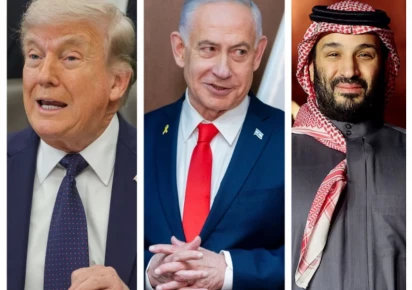
- US President Donald Trump has said that any future civilian nuclear agreement between the United States and Saudi Arabia will depend on the kingdom joining the Abraham Accords, the US-backed agreements aimed at normalising relations with Israel.
- Trump said Washington has no objection to Saudi Arabia developing civilian nuclear facilities as long as they are used only for peaceful purposes.
- Saudi Arabia has been working for years to establish a civilian nuclear programme as part of its broader economic diversification strategy.
US President Donald Trump has said that any future civilian nuclear agreement between the United States and Saudi Arabia will depend on the kingdom joining the Abraham Accords, the US-backed agreements aimed at normalising relations with Israel.
Trump said Washington has no objection to Saudi Arabia developing civilian nuclear facilities as long as they are used only for peaceful purposes. He stressed that the proposed cooperation would focus on non-military nuclear energy, similar to civilian programmes in other countries.
The proposed agreement would allow Saudi Arabia to enrich uranium and develop nuclear reactors with American technology. However, the deal reportedly does not require Riyadh to accept additional international inspections that are designed to detect undeclared nuclear activities. The absence of these extra safeguards has drawn attention because similar measures have been considered important in previous nuclear agreements.
Saudi Arabia has been working for years to establish a civilian nuclear programme as part of its broader economic diversification strategy. The kingdom says nuclear energy will help reduce dependence on oil and meet future energy demand. Saudi leaders have also stated in the past that if Iran were to develop nuclear weapons, Riyadh would seek the same capability to maintain the regional balance.
The latest remarks come as tensions between the United States and Iran continue to intensify.
Iran’s Foreign Ministry warned American military personnel against carrying out attacks on civilian infrastructure. Tehran said targeting facilities such as bridges and power plants could amount to war crimes under international law. Iranian officials argued that following military orders would not protect individuals from legal responsibility if unlawful attacks were carried out.
US Secretary of State Marco Rubio said Washington’s main objective remains preventing Iran from obtaining nuclear weapons. He accused Tehran of repeatedly violating agreements and said the Iranian government continues to support armed groups across the Middle East instead of focusing on its economy and people.
Rubio also urged Yemen’s Houthi movement to avoid becoming more deeply involved in the conflict. He warned that further attacks could increase instability across the region and create additional security challenges.
At the same time, Oman announced that it is working with Saudi Arabia, the United Nations and other regional partners to restart Yemen’s political peace process. Muscat called on all sides to avoid further escalation in the Red Sea and to protect international shipping routes.
The Houthis claimed responsibility for missile and drone attacks on two Saudi oil tankers in the Red Sea. The group said the strikes were part of its maritime blockade campaign. Saudi authorities confirmed that one tanker was damaged and caught fire after the attack, while the status of the second vessel remained unclear.
The attacks have raised fresh concerns about the security of one of the world’s busiest shipping lanes. Several commercial oil tankers have reportedly changed their routes to avoid the Red Sea, increasing transportation costs and raising fears of further disruption to global energy supplies.
Elsewhere in the region, Bahrain activated emergency warning sirens following reports of a possible Iranian attack. Authorities urged residents to remain calm and move to safe locations while monitoring the situation.
Jordan also said its air defence systems intercepted several missiles and drones approaching its airspace. The Jordanian military confirmed there were no casualties or damage and said security forces remain on high alert.
Meanwhile, Iran’s Revolutionary Guard claimed it had carried out attacks on US military facilities in Jordan and Kuwait. The group alleged that it struck missile defence systems, military equipment and logistical sites. There was no immediate confirmation of those claims from either Jordan or Kuwait.
We welcome your contributions! Submit your blogs, opinion pieces, press releases, news story pitches, and news features to opinion@minutemirror.com.pk and minutemirrormail@gmail.com