Summary
- The United States has publicly acknowledged for the first time that it has “space control weapons” deployed in orbit, marking a significant shift in Washington’s previously guarded approach to military capabilities in space.
- Meink said the Space Force now has weapons in orbit capable of protecting US forces against hostile actions by adversaries.
- Meink said the Space Force has reached flight-ready hardware for space-based interceptors intended to counter missile threats from orbit.
The United States has publicly acknowledged for the first time that it has “space control weapons” deployed in orbit, marking a significant shift in Washington’s previously guarded approach to military capabilities in space.
US Air Force Secretary Troy Meink made the disclosure on September 14 while addressing the Air & Space Forces Association’s 2026 Air, Space & Cyber Conference in National Harbor, Maryland.
Meink said the Space Force now has weapons in orbit capable of protecting US forces against hostile actions by adversaries. He described the capability as necessary as the nature of threats facing the United States continues to evolve.
The announcement was notable because senior US officials had previously discussed counter-space capabilities and the need to protect satellites, but had not publicly confirmed that American weapon systems were already operating in orbit.
Meink did not reveal what type of weapons are deployed, when they were launched or how they operate. He also declined to say whether the systems are kinetic or non-kinetic, arguing that providing operational details could undermine their deterrent value.
He later indicated that the decision to acknowledge the weapons was deliberate, stressing the importance of maintaining US freedom of action in space.

The development comes amid growing US concerns over the military space programmes of China and Russia. American officials have repeatedly warned that both countries are developing and testing technologies capable of threatening satellites and other space assets.
The term “space control” covers a broad range of defensive and offensive capabilities. These could include systems designed to protect friendly spacecraft, disrupt hostile satellites or otherwise neutralise an adversary’s space-based capabilities.
The announcement also comes as the Trump administration pushes ahead with its Golden Dome missile defence initiative. Meink said the Space Force has reached flight-ready hardware for space-based interceptors intended to counter missile threats from orbit.
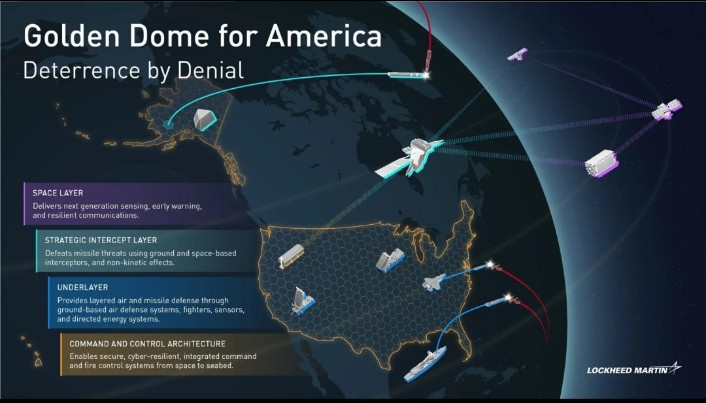
The US is also preparing a constellation of space-based systems to track airborne threats. The first satellites associated with the programme are expected to begin launching this month.
The revelation is likely to intensify debate over the future of warfare beyond Earth. Although the United States has stressed the defensive purpose of its orbital capabilities, experts and rival governments could view the disclosure as another step toward the militarisation of space.
Under the 1967 Outer Space Treaty, states are prohibited from placing weapons of mass destruction, including nuclear weapons, in orbit. However, the treaty does not impose a blanket ban on all conventional military systems in space.
For Washington, the message is increasingly clear: as military competition expands beyond Earth, the US intends to ensure it can defend its forces—and maintain an operational advantage—in orbit.
We welcome your contributions! Submit your blogs, opinion pieces, press releases, news story pitches, and news features to opinion@minutemirror.com.pk and minutemirrormail@gmail.com