Summary
- The United States and Iran remain engaged in diplomatic efforts to resolve their differences, with Qatar facilitating the exchange of proposals between the two sides in an attempt to prevent further escalation, the Qatari foreign ministry said on Tuesday.
- Speaking at a news briefing, al-Ansari said Qatar was continuing to facilitate the exchange of proposals between the two countries despite the return of its delegation from Tehran to Doha.
- The official said mediators were working to narrow the differences between the two countries.
The United States and Iran remain engaged in diplomatic efforts to resolve their differences, with Qatar facilitating the exchange of proposals between the two sides in an attempt to prevent further escalation, the Qatari foreign ministry said on Tuesday.
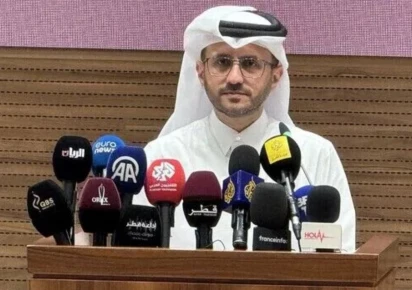
Foreign Ministry spokesperson Majed al-Ansari said both Washington and Tehran remained committed to the negotiation process and were reviewing proposals presented by mediators.
Speaking at a news briefing, al-Ansari said Qatar was continuing to facilitate the exchange of proposals between the two countries despite the return of its delegation from Tehran to Doha.
He expressed hope that diplomatic efforts could produce an agreement that would create favourable conditions for further negotiations.
“There are intensive joint regional efforts underway to avoid escalation,” he said, adding that efforts to bridge differences between the two sides were continuing.
However, a senior Iranian official told Reuters that Washington and Tehran remained far from reaching an agreement to end the conflict, despite intensified diplomatic activity.
The official said mediators were working to narrow the differences between the two countries. Qatari representatives had travelled to Tehran on Monday night to discuss a draft agreement that had reportedly been under negotiation for eight days.
Tehran, however, maintained that its conditions must be accepted before the Strait of Hormuz could be reopened.
The Iranian official said nuclear negotiations could only begin after Washington addressed Tehran’s demands. Iran would not accept what it described as excessive US demands, the official added.
The official also warned that Iran would respond forcefully to American attacks, both within the region and beyond.
Meanwhile, tensions around the strategically important Strait of Hormuz intensified after Iran’s Revolutionary Guards Navy reported that three oil tankers had struck mines and caught fire in the waterway.
According to the semi-official Tasnim news agency, the vessels had entered unauthorised shipping lanes with their navigation and identification systems switched off.
The IRGC Navy said the tankers were left burning off the southern coast of the strait. It also warned other vessels against violating Iranian regulations or cooperating with the US military to use unauthorised shipping routes.
The latest maritime incident added to concerns over the security of one of the world’s most important energy transit routes.
Separately, a US official said American forces had carried out limited defensive strikes on Iran’s Qeshm Island overnight. The strikes reportedly targeted surface-to-air missile systems that had been used against US assets.
Another US official described the operation as limited, saying it did not indicate a return to large-scale military operations.
Iran’s Revolutionary Guards also claimed to have shot down an American MQ-9 drone and two Lucas drones near the Strait of Hormuz.
The developments weighed on energy markets, with oil prices rising by around $1 per barrel on Tuesday after falling more than seven per cent a day earlier on hopes of diplomatic progress.
We welcome your contributions! Submit your blogs, opinion pieces, press releases, news story pitches, and news features to opinion@minutemirror.com.pk and minutemirrormail@gmail.com