Summary
- WASHINGTON: The United States has expanded economic pressure on Iran by imposing sanctions on an Iran-linked executive and a Hong Kong-based trading company, as diplomatic efforts to ease tensions remain uncertain.
- The latest measures are part of a broader US campaign aimed at disrupting what Washington describes as Iran’s shadow-banking networks and restricting Tehran’s access to foreign currencies and the international financial system.
- US Treasury Secretary Scott Bessent said Washington would continue targeting what it considers economic lifelines supporting the Iranian government.
WASHINGTON: The United States has expanded economic pressure on Iran by imposing sanctions on an Iran-linked executive and a Hong Kong-based trading company, as diplomatic efforts to ease tensions remain uncertain.
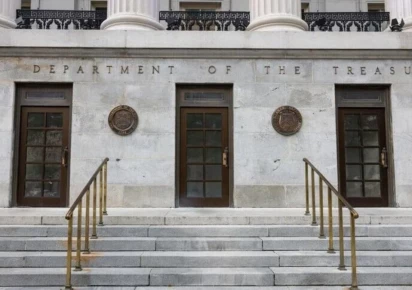
The US Treasury Department said on Friday that Reza Mohammad Taeedi, an Iranian national based in Dubai and general manager of the Dubai branch of Bank Melli, had been added to its sanctions list. The designation subjects him to secondary sanctions under US counterterrorism and Iran-related authorities.
Washington also sanctioned Kameng Trading Limited, a Hong Kong-based company established in 2024, under an Iran-related executive order.
The latest measures are part of a broader US campaign aimed at disrupting what Washington describes as Iran’s shadow-banking networks and restricting Tehran’s access to foreign currencies and the international financial system.
US Treasury Secretary Scott Bessent said Washington would continue targeting what it considers economic lifelines supporting the Iranian government. He also warned institutions assisting Iran that they could face consequences for maintaining access to the US financial system.
The sanctions came amid renewed tensions between Washington and Tehran over the Strait of Hormuz and Iran’s nuclear and regional policies.
Iranian Deputy Foreign Minister Kazem Gharibabadi sharply criticised US President Donald Trump after Trump referred to the Strait of Hormuz as US territory in a social media post. Gharibabadi responded with a strongly worded statement questioning Trump’s perception of reality.
Meanwhile, China called for diplomacy to remain the main avenue for resolving the confrontation. Foreign Ministry spokesperson Lin Jian said dialogue and negotiations were the only viable way to address tensions between the United States and Iran.
Beijing also rejected unilateral US sanctions, saying its position against such measures remained consistent.
Iran’s Foreign Ministry similarly urged other countries not to implement US sanctions. Tehran described the latest measures as unlawful and accused Washington of using economic pressure against independent states.
Iranian Foreign Minister Abbas Araghchi, meanwhile, said restoring diplomacy was still possible if the United States changed its approach. Following talks with Qatar’s Prime Minister and Foreign Minister Sheikh Mohammed bin Abdulrahman Al Thani, Araghchi said Washington needed to build trust, show respect and recognise Iran’s rights.
Qatar has been seeking to facilitate diplomatic contacts between Tehran and Washington. Sheikh Mohammed recently travelled to Tehran, where he held talks with senior Iranian officials on reducing tensions and creating conditions for renewed negotiations.
The discussions also included proposals concerning navigation through the Strait of Hormuz and possible mine-clearance efforts.
At the same time, Bessent claimed that the US naval blockade and its wider economic campaign would further weaken Iran’s economy. He said American forces had helped move 130 million barrels of oil through the Gulf over the previous 14 days.
Iranian officials have rejected Washington’s claims and maintained that Tehran has adapted to the pressure.
Acting Iranian Defence Minister Majid Ibn al-Reza said Iran had altered the regional balance of power and warned its adversaries against relying on military threats. He called for Iran to be approached with respect.
Iranian Parliament Speaker Mohammad Bagher Ghalibaf also criticised Bessent’s accusations concerning Tehran’s overseas spending, arguing that Washington should focus on its own domestic priorities instead of spending heavily abroad.
The dispute comes after months of heightened US-Iran tensions and previous mediation efforts involving Pakistan and Qatar. A 14-point memorandum reached earlier this year included provisions concerning a cessation of hostilities, reopening the Strait of Hormuz, lifting the US naval blockade and launching negotiations.
Tehran has accused Washington of failing to honour key commitments under the understanding.
The US military, however, says internationally recognised shipping routes through the Strait of Hormuz remain open. US Central Command said its forces had cleared sea mines from international shipping lanes and assisted commercial vessels passing through the strategic waterway.
Iran has warned that continued maritime restrictions could trigger retaliation against US economic interests. Senior Iranian officials have also claimed that Tehran has developed alternative oil-export routes to withstand the blockade.
We welcome your contributions! Submit your blogs, opinion pieces, press releases, news story pitches, and news features to opinion@minutemirror.com.pk and minutemirrormail@gmail.com