Summary
- Saudi Arabia’s decision to suspend operations on its strategically important East-West oil pipeline following drone strikes has raised fresh concerns about the security of the kingdom’s crude oil exports and alternative energy routes amid the ongoing US-Iran conflict.
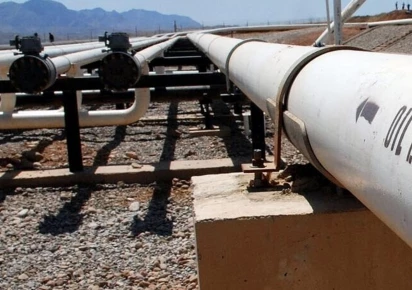
- The pipeline, also known as Petroline, transports crude oil from Saudi Arabia’s major oil-producing region in the east to the Red Sea coast.
- Pipeline Can Carry 7 Million Barrels Daily The Saudi Energy Ministry said in April that the East-West pipeline had a maximum pumping capacity of approximately 7 million barrels of crude oil per day.
Saudi Arabia’s decision to suspend operations on its strategically important East-West oil pipeline following drone strikes has raised fresh concerns about the security of the kingdom’s crude oil exports and alternative energy routes amid the ongoing US-Iran conflict.
The pipeline, also known as Petroline, transports crude oil from Saudi Arabia’s major oil-producing region in the east to the Red Sea coast. Its importance has grown significantly as disruptions in shipping through the Strait of Hormuz have forced Riyadh to rely more heavily on overland routes to maintain access to international markets.
The Saudi Energy Ministry announced on Friday that the pipeline had been temporarily shut down as a precaution after several drones targeted locations in the Riyadh and Medina regions on Thursday morning.
According to an official ministry source cited by the Saudi Press Agency, emergency and technical teams were deployed to secure the affected sites and assess the condition of the pipeline and its related facilities.
The Saudi Foreign Ministry said the drones had been launched from Iraq, causing injuries and material damage. However, authorities did not disclose the number of casualties, the precise extent of the damage or how long the shutdown would continue.
What Is Saudi Arabia’s East-West Pipeline?
The East-West pipeline is one of Saudi Arabia’s most important crude oil transportation systems. Operated by state-owned energy giant Saudi Aramco, it stretches approximately 1,200 kilometres from Abqaiq in the Eastern Province to Yanbu on the Red Sea coast.
The pipeline runs entirely through Saudi territory and does not cross any international borders.
Its primary purpose is to transport crude oil from the kingdom’s eastern production and processing facilities to refineries, storage sites and export terminals in the west.
This route provides Saudi Arabia with an alternative to shipping crude through the Strait of Hormuz, a strategically important waterway that has faced severe disruption amid escalating military tensions between Washington and Tehran.
Pipeline Can Carry 7 Million Barrels Daily
The Saudi Energy Ministry said in April that the East-West pipeline had a maximum pumping capacity of approximately 7 million barrels of crude oil per day.
Aramco also reported in its first-quarter 2026 results that the pipeline had been operating at its maximum capacity to support crude supplies and exports through the kingdom’s western coast.
However, the pipeline’s maximum capacity should not be confused with the amount of oil actually transported or exported through Yanbu.
According to an Aramco presentation, around 2 million barrels per day of the pipeline’s capacity is allocated to refineries on the western coast. This means that, theoretically, up to 5 million barrels per day could be available for other destinations, including exports.
Still, this does not mean Saudi Arabia was exporting that entire volume through Yanbu before the latest shutdown.
Actual Yanbu Oil Flows Were Lower
Data from energy-market research companies showed that crude oil and condensate shipments from Yanbu remained below the pipeline’s maximum capacity.
Vortexa estimated that Yanbu loadings increased to approximately 3.7 million barrels per day in early September, compared with 3.2 million barrels per day in August.
Meanwhile, Kpler placed September loadings at around 2.9 million barrels per day, up from approximately 1.5 million barrels per day in August.
The differences between the estimates reflect variations in the companies’ tracking methods and calculations.
Nevertheless, both sets of figures indicate that actual shipments from the western coast were lower than the East-West pipeline’s theoretical capacity.
Yanbu also has storage and loading facilities, meaning that pipeline capacity, terminal capacity and the volume of oil loaded onto tankers are separate measures.
Why the Pipeline Is Strategically Important
The East-West pipeline has become particularly important this year because shipping through the Strait of Hormuz has declined sharply amid the US-Iran conflict.
The waterway has traditionally served as a major export route for Saudi crude and other petroleum products. Any prolonged disruption there can create serious challenges for global energy markets.
By transporting crude overland to Yanbu, Saudi Arabia can bypass Hormuz and load oil onto tankers operating in the Red Sea.
The US Energy Information Administration has identified the East-West pipeline as one of the principal routes capable of helping oil producers maintain supplies during a disruption in the strait.
The pipeline therefore serves as a vital safeguard for Saudi Arabia’s export system. It also helps the kingdom supply western-coast refineries while reducing its dependence on maritime routes exposed to regional conflict.
However, the alternative route is not free from security threats. Rising tensions in the Red Sea and around the Bab el-Mandeb Strait have increased risks for both oil infrastructure and shipping operations.
What Does the “Precautionary Shutdown” Mean?
The Energy Ministry’s description of the suspension as “precautionary” suggests that authorities stopped pumping to secure the affected areas and conduct inspections.
The term does not necessarily indicate that the pipeline has suffered extensive destruction or that operations will remain suspended for a long period.
The duration of the shutdown will depend on whether the strikes damaged the pipeline itself, pumping stations, power supplies, control systems or safety equipment.
During the suspension, crude oil cannot move normally through the affected route from eastern Saudi Arabia to the western coast.
However, the impact should not automatically be measured as a loss of 7 million barrels per day. That figure represents the pipeline’s maximum capacity, not the actual volume being transported when the shutdown occurred.
The immediate effect on fuel supplies in Saudi cities is also likely to be limited because the East-West system primarily transports crude oil rather than gasoline or diesel directly to consumers.
Its greatest significance lies in Saudi Arabia’s ability to supply western refineries, maintain Red Sea exports and use Yanbu as an alternative to the Strait of Hormuz.
Damage Assessment Remains Unclear
Saudi authorities have yet to provide an estimate of the pumping capacity affected by the latest attack or announce a timetable for restoring operations.
A previous attack in April reportedly reduced the pipeline’s capacity by around 700,000 barrels per day. The ministry later announced that full capacity had been restored.
No comparable estimate has been issued for the September 10 incident.
Until technical inspections are completed, the wider impact on Saudi crude exports and global oil markets remains difficult to determine. Nevertheless, the latest shutdown highlights the growing vulnerability of critical energy infrastructure and the importance of secure alternative routes during periods of geopolitical instability.
We welcome your contributions! Submit your blogs, opinion pieces, press releases, news story pitches, and news features to opinion@minutemirror.com.pk and minutemirrormail@gmail.com