Summary
- The federal cabinet has approved the draft Defence Forces Act 2026 and amendments to the National Command Authority Act 2010, paving the way for Parliament to formally legislate the new military command structure introduced through the 27th Constitutional Amendment.
- The amendment reshaped the country’s military command structure and created the position of Chief of Defence Forces (CDF).
- The new framework further states that certain retirement, service-tenure and removal provisions under the Army Act will not apply to the Commander of the National Strategic Command.
The federal cabinet has approved the draft Defence Forces Act 2026 and amendments to the National Command Authority Act 2010, paving the way for Parliament to formally legislate the new military command structure introduced through the 27th Constitutional Amendment.
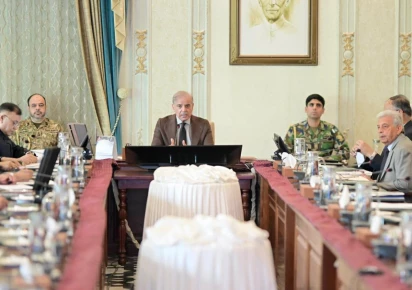
The decisions were taken during a cabinet meeting chaired by Prime Minister Shehbaz Sharif in Islamabad on Thursday. The proposed bills are expected to be presented before Parliament during its ongoing session for consideration and approval.
The Defence Forces Act 2026 has been prepared to provide a legal and administrative framework for changes made to Article 243 of the Constitution. The amendment reshaped the country’s military command structure and created the position of Chief of Defence Forces (CDF).
Under the new arrangement, the Chief of Army Staff also serves as the Chief of Defence Forces. The previous office of Chairman Joint Chiefs of Staff Committee (CJCSC) has been abolished as part of the restructuring.
The new legislation will define the administrative structure of the CDF’s office and headquarters. It will also establish the legal framework required to implement the new command system.
The cabinet also approved amendments to the National Command Authority Act 2010. The government considers these changes necessary to bring the existing law in line with the constitutional amendments. The amended bill will also be placed before Parliament.
New military command structure
The 27th Constitutional Amendment introduced several major changes to the country’s military leadership system. Under the new framework, the CDF’s term begins from the date of official notification, while the federal government determines the duties and responsibilities attached to the position.
The amendment also provides that the tenure of the serving army chief would recommence from the date of his notification as CDF.
The position of CJCSC is being replaced by the Commander of the National Strategic Command. The prime minister is empowered to appoint the commander on the recommendation of the army chief and CDF.
The commander will serve for a three-year term. The appointment can be extended for another three years on the recommendation of the CDF. The legislation also provides legal protection to the appointment, reappointment or extension from being challenged in court.
The new framework further states that certain retirement, service-tenure and removal provisions under the Army Act will not apply to the Commander of the National Strategic Command. The officer will continue to hold the rank of general in the Pakistan Army.
Lieutenant General Aamer Raza, who was serving as the Pakistan Army’s Chief of General Staff, was promoted to four-star general and appointed Commander of the National Strategic Command in July.
The constitutional changes have also resulted in amendments to the service laws governing the Pakistan Army, Navy and Air Force. The amendments remove references to the former CJCSC position and update the respective command structures and terminology.
Field Marshal Asim Munir was appointed Pakistan’s first Chief of Defence Forces in December. He holds the positions of Chief of Army Staff and CDF under the new military command arrangement.
The cabinet’s latest decisions now clear the way for the proposed legislation to move to Parliament, where lawmakers will consider the bills before they can become part of the country’s legal framework.
We welcome your contributions! Submit your blogs, opinion pieces, press releases, news story pitches, and news features to opinion@minutemirror.com.pk and minutemirrormail@gmail.com