Summary
- Pakistan plans to seek an increase in its 30 billion yuan swap line with China and awaits a US decision on a proposed US$10 billion exchange-stabilisation facility.
- Pakistan does not need to choose between the US and China.
- He has coauthored with Huzaima Bukhari many books that include, Tax Reforms in Pakistan: Historic & Critical Review, Towards Broad, Flat, Low-rate, and Predictable Taxes (third edition, 2024), Pakistan: Enigma of Taxation, Towards Flat, Low-rate, Broad and Predictable Taxes (revised/enlarged edition of December 2020), Law & Practice of Income Tax, Law , Practice of Sales Tax, Law and Practice of Corporate Law, Law & Practice of Federal Excise, Law & Practice of Sales Tax on Services, Federal Tax Laws of Pakistan, Provincial Tax Laws, Practical Handbook of Income Tax, Tax Laws of Pakistan, Principles of Income Tax with Glossary and Master Tax Guide, Income Tax Digest 1886-2011 (with judicial analysis).
A Nikkei Asia Datawatch report records a quiet but consequential withdrawal. Sovereign wealth funds (SWFs), among the world’s largest and most patient investors, are staying away from China as its property crisis persists. The United States (US), meanwhile, is consolidating its lead as artificial intelligence (AI), data centres, semiconductors and power infrastructure attract state capital, especially from the Middle East. This is more than a portfolio adjustment. It shows where confidence, technology and future economic power are concentrating.
The evidence extends beyond one report. The International Forum of Sovereign Wealth Funds found that its geographic concentration index rose from 0.110 in 2021 to 0.192 in 2025. The effective number of destination countries fell from about nine to just over five. Over the review period, the US share of disclosed sovereign capital rose from roughly 28 percent to more than 41 percent. Funds still diversify across sectors, but increasingly within a narrow circle of deep, liquid and institutionally trusted markets.
China remains a manufacturing powerhouse, a leader in clean technology and a major source of investment. The warning concerns the price of uncertainty, not the end of China’s economic rise. During January-August 2026, property investment fell by 19.9 percent, while overall fixed-asset investment declined by 7.2 percent.
Unfinished housing, indebted developers, weak local-government finances, opaque valuations and capital controls are difficult even for long-term investors to price. SWFs can tolerate a bad year. They cannot prudently accept uncertainty without a credible route to valuation, governance and exit.
For the world economy, this redirection has two consequences. The US gains patient capital for its AI ecosystem and reinforces the dollar’s centrality. At the same time, global finance becomes more dependent on a few markets and a closely connected technology complex. That raises concentration and valuation risks. Developing economies face fiercer competition for capital, while commodity exporters remain exposed to weaker Chinese property demand. Capital is global in origin, but it is becoming geopolitical in destination.
The new geography changes the transmission of risk. Sovereign funds rarely invest alone. Their commitments draw pension funds, insurers, banks and private-equity partners. When they favour the US, dollar demand strengthens and AI infrastructure financing becomes easier, while other countries face higher capital costs.
When they avoid Chinese property, Beijing must carry the adjustment through domestic banks, local governments and households. This can restrain construction, commodities and imports across Asia. Concentration may appear safer to each fund, but it can make the world economy more vulnerable to a US technology cycle or a change in dollar interest rates.
Pakistan should read this development as a policy document. It has long celebrated an “all-weather” relationship with China and a historic relationship with the US. It has converted neither into sustained productivity.
The China-Pakistan Economic Corridor (CPEC) supplied essential power and transport assets but did not turn Pakistan into an export platform for Chinese or global supply chains. The US relationship produced aid, security cooperation and access to a large market, but little lasting technology transfer or industrial integration.
The Pakistan Economic Survey 2025-26 exposes this asymmetry. During July-March, the US bought US$4.634 billion of Pakistani goods, or 19.9 percent of exports. Pakistan imported US$2.133 billion and earned a trade surplus of US$2.501 billion.
China bought only US$1.945 billion, while Pakistan imported US$14.038 billion, producing a deficit of US$12.093 billion. China was Pakistan’s leading source of foreign direct investment (FDI), at US$678.6 million, but total net FDI fell to US$1.4 billion. Power and financial businesses absorbed more than 96 percent of it. Diversified export manufacturing, research and technology remained marginal.
A recent Reuters report captures the failure in one frame. Pakistan plans to seek an increase in its 30 billion yuan swap line with China and awaits a US decision on a proposed US$10 billion exchange-stabilisation facility. Beijing is asked for liquidity; Washington for a reserve backstop. Both relationships are again being used to buy time, rather than to draw factories, technology, managerial capability and export networks into Pakistan.
Pakistan does not need to choose between the US and China. It needs to become investable for both. Contracts must survive changes of government. Tax policy must cease to be retrospective and arbitrary. Legitimate profits and capital must remain repatriable.
Energy pricing, public procurement, land records and project liabilities must be transparent. Commercial disputes need swift, independent resolution. Investment proposals should identify exports, local skills and technology transfer, not merely announce memoranda of understanding.
Sovereign capital is moving away from ambiguity and towards trusted systems. Pakistan stands between the world’s two largest economies, but remains on the margins of their productive systems. History opened doors in Beijing and Washington. Poor governance failed to walk through them. Strategic relationships can secure another loan or rollover. Only credible institutions, skilled people and competitive exports can convert those relationships into shared prosperity.
_________________________________________
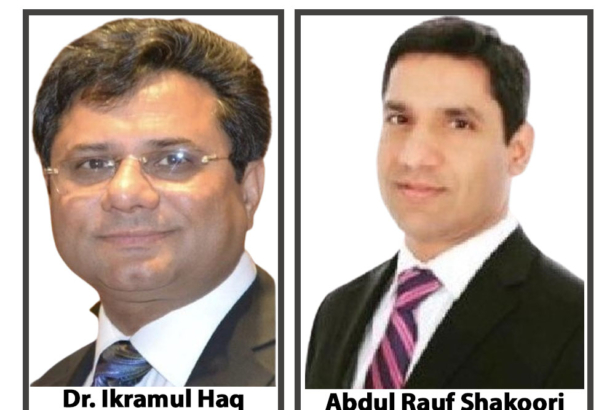
Dr. Ikramul Haq, Advocate Supreme Court, specializes in constitutional, corporate, environment, media, ML/CFT related laws, IT, intellectual property, arbitration and international tax laws. He holds an LLD in tax laws with specialization in transfer pricing. He was full-time journalist from 1979 to 1984 with Viewpoint and Dawn. He served Civil Services of Pakistan from 1984 to 1996.
He established Huzaima & Ikram in 1996 and is presently its chief partner. He studied journalism, English literature and law. He is Chief Editor of Taxation. He is country editor and correspondent of International Bureau of Fiscal Documentation (IBFD) and member of International Fiscal Association (IFA). He is Visiting Faculty at Lahore University of Management Sciences (LUMS) and member Advisory Board and Visiting Senior Fellow of Pakistan Institute of Development Economics (PIDE).
He has coauthored with Huzaima Bukhari many books that include, Tax Reforms in Pakistan: Historic & Critical Review, Towards Broad, Flat, Low-rate, and Predictable Taxes (third edition, 2024), Pakistan: Enigma of Taxation, Towards Flat, Low-rate, Broad and Predictable Taxes (revised/enlarged edition of December 2020), Law & Practice of Income Tax, Law , Practice of Sales Tax, Law and Practice of Corporate Law, Law & Practice of Federal Excise, Law & Practice of Sales Tax on Services, Federal Tax Laws of Pakistan, Provincial Tax Laws, Practical Handbook of Income Tax, Tax Laws of Pakistan, Principles of Income Tax with Glossary and Master Tax Guide, Income Tax Digest 1886-2011 (with judicial analysis).
He is author of Commentary on Avoidance of Double Taxation Agreements, Pakistan: From Hash to Heroin, its sequel Pakistan: Drug-trap to Debt-trap and Practical Handbook of Income Tax. Two books of poetry are Phull Kikkaran De (Punjabi 2023) and Nai Ufaq (Urdu 1979 with Siraj Munir and Shahid Jamal).
He regularly writes columns/article/papers for many Pakistani newspapers and international journals and has contributed over 3500 articles on a variety of issues of public interest, printed in various journals, magazines and newspapers at home and abroad.
_______________________________________________________________
Abdul Rauf Shakoori, Advocate High Court, is a subject-matter expert on AML-CFT, Compliance, Cyber Crime and Risk Management. He has been providing AML-CFT advisory and training services to financial institutions (banks, DNFBPs, Investment companies, Money Service Businesses, insurance companies and securities), government institutions including law enforcement agencies located in North America (USA & CANADA), Middle East and Pakistan.
His areas of expertise include legal, strategic planning, cross-border transactions including but not limited to joint ventures (JVs), mergers & acquisitions (M&A), takeovers, privatizations, overseas expansions, USA Patriot Act, Banking Secrecy Act, Office of Foreign Assets Control (OFAC). Over his career he has demonstrated excellent leadership, communication, analytical, and problem-solving skills and have also developed and delivered training courses in the areas of AML/CFT, Compliance, Fraud & Financial Crime Risk Management, Bank Secrecy, Cyber Crimes & Internet Threats against Banks, E–Channels Fraud Prevention, Security and Investigation of Financial Crimes. The courses have been delivered as practical workshops with case study driven scenarios and exams to ensure knowledge transfer.
His notable publications are Rauf’s Compilation of Corporate Laws of Pakistan, Rauf’s Company Law and Practice of Pakistan and Rauf’s Research on Labour Laws and Income Tax and others.
His articles include: Revenue collection: Contemporary targets vs. orthodox approach, It is time to say goodbye to our past, US double standards, Was Due Process Flouted While Convicting Nawaz Sharif?, FATF and unjustly grey listed Pakistan, Corruption is no excuse for Incompetence, Next step for Pakistan, Pakistan’s compliance with FATF mandates, a work in progress, Pakistan’s strategy to address FATF Mandates was Inadequate, Pakistan’s Evolving FATF Compliance, Transparency Curtails Corruption, Pakistan’s Long Road towards FATF Compliance, Pakistan’s Archaic Approach to Addressing FATF Mandates, FATF: Challenges for June deadline, Pakistan: Combating the illicit flow of money, Regulating Crypto: An uphill task for Pakistan. Pakistan’s economy – Chicanery of numbers. Pakistan: Reclaiming its space on FATF whitelist. Sacred Games: Kulbhushan Jadhav Case. National FATF secretariat and Financial Monitoring Unit. The FATF challenge. Pakistan: Crucial FATF hearing. Pakistan: Dissecting FATF Failure, Environmental crimes: An emerging challenge, Countering corrupt practices .
The recent publication, coauthored by these writes with Huzaima Bukhari is:
Pakistan Tackling FATF: Challenges & Solutions, available at:
https://aacp.com.pk/book-detail/pakistan-tackling-fatf-challenges-and-solutions-35
https://www.amazon.com/dp/B08RXH8W46
We welcome your contributions! Submit your blogs, opinion pieces, press releases, news story pitches, and news features to opinion@minutemirror.com.pk and minutemirrormail@gmail.com