Summary
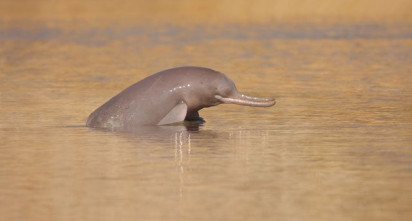
- Lahore: In a significant step toward wildlife conservation, the Punjab government has officially declared a key stretch of the Indus River as a wildlife sanctuary to protect the endangered Indus River dolphin, one of the world’s rarest freshwater mammals.
- According to officials, the newly designated sanctuary will cover critical areas where the Indus dolphin population is most active.
- Officials from the Punjab Wildlife Department said that the sanctuary status will also help improve coordination between conservation agencies and local communities.
Lahore: In a significant step toward wildlife conservation, the Punjab government has officially declared a key stretch of the Indus River as a wildlife sanctuary to protect the endangered Indus River dolphin, one of the world’s rarest freshwater mammals.
The decision aims to strengthen long-term protection of the species, which is found only in the Indus River system and is considered a national conservation success story. Wildlife officials say the move will help safeguard the dolphin’s natural habitat from increasing threats such as water pollution, illegal fishing practices, and habitat fragmentation caused by human activity.
According to officials, the newly designated sanctuary will cover critical areas where the Indus dolphin population is most active. These zones will now come under stricter monitoring and enforcement, with enhanced restrictions on fishing methods that can harm aquatic life.
The Indus River dolphin, often referred to as the “blind dolphin” due to its limited eyesight, relies heavily on echolocation to navigate and hunt in the murky waters of the river. Conservationists stress that protecting clean and uninterrupted river flow is essential for its survival.
Wildlife experts have welcomed the decision, calling it a timely intervention as environmental pressures on freshwater ecosystems continue to rise. They note that river pollution, declining water quality, and construction activities along riverbanks have placed additional stress on already vulnerable species.
Officials from the Punjab Wildlife Department said that the sanctuary status will also help improve coordination between conservation agencies and local communities. Awareness campaigns are expected to be launched to educate fishermen and residents about sustainable practices that do not harm the dolphin population.
Environmentalists believe that the move could also boost eco-tourism potential in the region, drawing attention to Pakistan’s unique biodiversity and encouraging responsible tourism activities along the Indus River.
However, experts caution that legal protection alone will not be enough. Effective enforcement, regular monitoring, and community involvement will be crucial to ensuring that the sanctuary achieves its conservation goals.
The declaration marks another step in Pakistan’s ongoing efforts to protect endangered species and preserve its natural ecosystems while balancing human activity with environmental sustainability.
Authorities have reiterated their commitment to safeguarding the Indus River dolphin calling it a shared national heritage that must be protected for future generations.
We welcome your contributions! Submit your blogs, opinion pieces, press releases, news story pitches, and news features to [email protected] and [email protected]