

Summary
- Every October 10th, the global community observes World Mental Health Day.
- Yet, behind the public awareness drives lies a persistent global paradox: mental health remains one of the most neglected components of public health worldwide, and nowhere is this discrepancy more alarming than in low- and middle-income countries (LMICs) like Pakistan.
- Decentralizing mental health services allows common psychiatric disorders to be screened and managed at Basic Health Units (BHUs) and Rural Health Centers (RHCs), reserving specialized psychiatric care for severe conditions.
Every October 10th, the global community observes World Mental Health Day. Conferences are convened, statements are issued, and online campaigns flood social feeds with promises of solidarity. Yet, behind the public awareness drives lies a persistent global paradox: mental health remains one of the most neglected components of public health worldwide, and nowhere is this discrepancy more alarming than in low- and middle-income countries (LMICs) like Pakistan. The global metrics surrounding mental health are staggering. According to the World Health Organization (WHO), nearly one billion people globally live with a mental disorder. Depressive disorders and anxiety rank among the leading causes of disability worldwide, costing the global economy an estimated one trillion dollars every year in lost productivity. Crucially, in low-resource settings, upwards of 75% to 85% of individuals with severe mental health conditions receive no treatment or care whatsoever, while suicide accounts for over 700,000 deaths annually, making it a critical global mortality vector, particularly among youth aged 15 to 29. In Pakistan, these global trends do not merely translate into abstract numbers; they manifest as a profound, daily humanitarian crisis.
Estimates indicate that between 24 and 30 million people in Pakistan, which is more than 10% of the entire population, require mental healthcare services. The true prevalence is almost certainly higher, shrouded by systemic underreporting, inadequate diagnostic infrastructure, and deep-seated social stigma. The resource deficit in the country’s health infrastructure is severe. Pakistan operates with approximately 500 to 600 qualified psychiatrists for a population exceeding 240 million people, yielding a dismal ratio of roughly one psychiatrist for every 400,000 to 500,000 individuals. The distribution of clinical psychologists and psychiatric nurses is similarly inadequate. Furthermore, mental healthcare infrastructure remains concentrated in metropolitan centers like Karachi, Lahore, and Islamabad, leaving rural communities, where the majority of the population resides, almost entirely devoid of specialized psychological support. At the institutional level, mental health receives less than 0.4% of Pakistan’s total health budget. This structural underfunding means public healthcare facilities lack dedicated psychiatric wards, essential psychotropic medications are frequently out of stock at primary health centers, and community-based mental health initiatives remain sparse or heavily reliant on private non-governmental initiatives.
The mental health burden in Pakistan is not born in a vacuum; it is driven by complex socioeconomic pressures and reinforced by pervasive cultural attitudes. Inflation, chronic unemployment, poverty, and political uncertainty generate severe, ongoing psychological stress across households. Simultaneously, frequent environmental disasters such as catastrophic flooding leave millions displaced, facing post-traumatic stress disorder (PTSD), grief, and depression without mental health disaster response frameworks. Compounding these material hardships is cultural stigma. Psychological distress is routinely pathologized, misunderstood, or framed purely through spiritual deficits. Conditions such as major depressive disorder or schizophrenia are frequently attributed to supernatural forces, leading families to seek informal or harmful faith-based interventions prior to seeking medical care. Moreover, women in Pakistan experience disproportionate rates of anxiety and depression due to restricted autonomy, domestic violence, and socioeconomic dependency.
To transform Pakistan’s mental health infrastructure from a crisis response model into a sustainable system, coordinated policy action is essential across several dimensions. Training primary care physicians, general practitioners, and Lady Health Workers (LHWs) through the WHO Mental Health Gap Action Programme (mhGAP) is a vital first step. Decentralizing mental health services allows common psychiatric disorders to be screened and managed at Basic Health Units (BHUs) and Rural Health Centers (RHCs), reserving specialized psychiatric care for severe conditions. Simultaneously, legislative reform and dedicated funding allocation must be prioritized. While federal legislation like the Mental Health Ordinance of 2001 set early precedents, the devolution of health following the 18th Amendment requires effective provincial enforcement, such as full implementation of the Sindh Mental Health Act 2013 and equivalent legislation in Punjab, Khyber Pakhtunkhwa, and Balochistan. Provincial health departments must enact modernized mental health frameworks, establish functional regulatory authorities to uphold patient rights, and allocate dedicated funding to reach at least 2% to 3% of provincial health budgets. Finally, mental health awareness must be integrated directly into educational curricula and workplace policies. Establishing confidential counseling services in public universities and workplace wellness frameworks helps normalize help-seeking behaviors among young adults and working professionals.
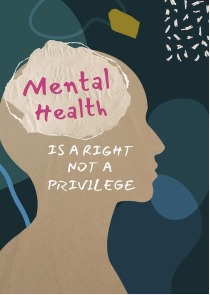
World Mental Health Day serves as an annual reminder that mental health is a fundamental human right. For Pakistan, addressing the mental health crisis is not merely a medical necessity, it is an economic, social, and moral imperative. Building a healthier society requires dismantling the stigma surrounding mental illness, training community healthcare workers, and ensuring that every individual, regardless of socioeconomic background or geographic location, has access to compassionate, evidence-based care. Until mental health is recognized and funded as a cornerstone of national development, millions will continue to suffer in silence.
We welcome your contributions! Submit your blogs, opinion pieces, press releases, news story pitches, and news features to opinion@minutemirror.com.pk and minutemirrormail@gmail.com