Summary
- Researchers hope that observations from the Rubin Observatory will enable a more complete census of the universe and provide new insights into its structure and evolution.
- Phil Marshall, the Observatory’s Deputy Director for Operations said: “We expect scientists around the world to work with this dataset and study the universe in ways that have never been possible before.” Last year, the Rubin Observatory released its first images including spectacular colour photographs of the Trifid Nebula and the Lagoon Nebula, both located thousands of light-years away from Earth.
- Scientists believe these observations will help them better understand how galaxies formed and merged over billions of years as well as how the universe itself evolved.
The world’s largest digital camera has officially begun capturing breathtaking images of the universe.
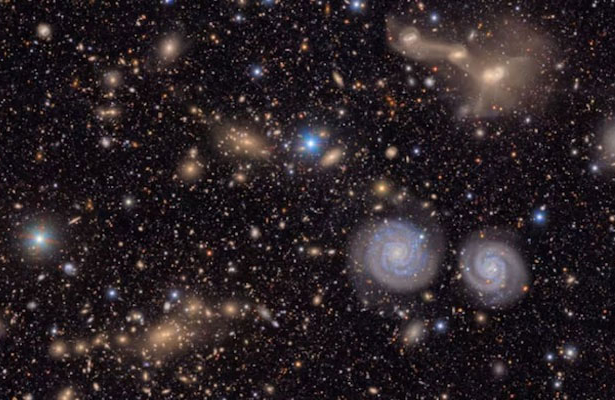
According to international media reports, the Vera C. Rubin Observatory has officially started its long-awaited survey of the cosmos. The telescope located on a mountaintop in Chile will capture hundreds of images every night over the next 10 years creating one of the most comprehensive astronomical datasets ever assembled.
Researchers hope that observations from the Rubin Observatory will enable a more complete census of the universe and provide new insights into its structure and evolution.
Phil Marshall, the Observatory’s Deputy Director for Operations said: “We expect scientists around the world to work with this dataset and study the universe in ways that have never been possible before.”
Last year, the Rubin Observatory released its first images including spectacular colour photographs of the Trifid Nebula and the Lagoon Nebula, both located thousands of light-years away from Earth. For reference, one light-year is approximately 6 trillion miles (9.7 trillion kilometers).
Scientists believe these observations will help them better understand how galaxies formed and merged over billions of years as well as how the universe itself evolved.
We welcome your contributions! Submit your blogs, opinion pieces, press releases, news story pitches, and news features to opinion@minutemirror.com.pk and minutemirrormail@gmail.com