Summary
- President Asif Ali Zardari and Prime Minister Shehbaz Sharif on Sunday congratulated the people of Gilgit-Baltistan on the region’s 79th Independence Day, paying tribute to the sacrifices of those who liberated the territory from Dogra rule in 1947.
- In separate messages, both leaders highlighted Gilgit-Baltistan’s historic association with Pakistan and reaffirmed the federal government’s commitment to the region’s development, economic growth and prosperity.
- Meanwhile, Prime Minister Shehbaz Sharif reaffirmed the federal government’s commitment to accelerating development in Gilgit-Baltistan and creating better opportunities for its younger population.
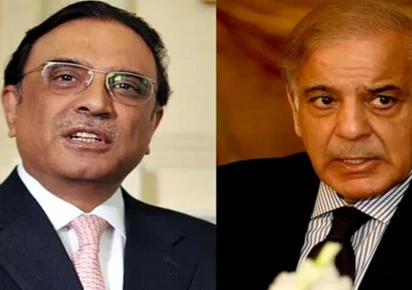
President Asif Ali Zardari and Prime Minister Shehbaz Sharif on Sunday congratulated the people of Gilgit-Baltistan on the region’s 79th Independence Day, paying tribute to the sacrifices of those who liberated the territory from Dogra rule in 1947.
In separate messages, both leaders highlighted Gilgit-Baltistan’s historic association with Pakistan and reaffirmed the federal government’s commitment to the region’s development, economic growth and prosperity.
November 1 marks the historic day in 1947 when local freedom fighters and residents ended Dogra rule and subsequently announced the region’s accession to Pakistan. Special celebrations are being organised in Gilgit, including a ceremony at the Army Helipad to honour those who participated in the liberation struggle.
President Zardari said the people of Gilgit-Baltistan had demonstrated exceptional courage by overthrowing Dogra rule and choosing to join Pakistan. He described their sacrifices and longstanding loyalty to the country as an important part of shared national history.
He also recalled the political and administrative reforms introduced in the region over several decades.
The president highlighted former prime minister Zulfikar Ali Bhutto’s reforms in 1972, which included abolishing the Frontier Crimes Regulation (FCR), the Jagirdari system and the old Agency system. Further changes followed in 1974 with the abolition of the remaining princely states, including Hunza and Nagar.
He also acknowledged former prime minister Benazir Bhutto’s contribution through the 1994 Legal Framework Order, which established the Northern Areas Legislative Council.
The reform process gained further momentum in 2009 when the PPP government introduced the Gilgit-Baltistan Empowerment and Self-Governance Order. The initiative granted the region its present name and established a legislative assembly, an elected chief minister and a governor.
Highlighting the region’s strategic importance, Zardari pointed to its shared border with China, natural resources and geographical significance. He said Gilgit-Baltistan had made valuable contributions to Pakistan’s defence and economic development.
The president stressed that these advantages must translate into better living standards through improved infrastructure, education, healthcare, electricity and employment opportunities. He also called for greater market access for farmers and small businesses, particularly in remote areas.
He described tourism as an important source of economic opportunities, saying the region’s mountains, glaciers, rivers and cultural heritage could support local livelihoods. However, he stressed the need to protect its natural environment for future generations.
Meanwhile, Prime Minister Shehbaz Sharif reaffirmed the federal government’s commitment to accelerating development in Gilgit-Baltistan and creating better opportunities for its younger population.
In his message, the prime minister described November 1, 1947, as a defining moment in the region’s history. He paid tribute to the freedom fighters, martyrs and local leaders whose sacrifices brought an end to Dogra rule.
Shehbaz also highlighted Gilgit-Baltistan’s potential as a regional trade and economic hub, particularly because of its strategic position in the China-Pakistan Economic Corridor (CPEC).
Detailing federal development initiatives, he said the 16-megawatt Naltar Hydropower Project had been completed to help address electricity shortages. A separate 100MW solar energy project had also been launched to provide affordable power.
He said around 100,000 solar panels, with a combined capacity of 58MW, had been distributed through a transparent digital balloting process.
In the education sector, foundation stones had been laid for four Daanish Schools in Sultanabad, Bunji, Ghanche and Skardu. The projects, worth Rs12.46 billion, aim to provide modern education and residential facilities to talented students from financially disadvantaged families.
The prime minister added that 4,245 laptops had been distributed among students in the region under the Prime Minister’s Laptop Scheme. Gilgit-Baltistan’s students had also been included in the Chromebook distribution programme.
To promote investment and employment, the government had approved Maqpoon Das as a special economic zone spread over 250 acres. The proposed zone is expected to accommodate 155 industrial and commercial enterprises and create around 5,000 jobs.
On security, Shehbaz said the second phase of the Gilgit-Baltistan Safe City Project had been inaugurated, while a similar initiative was being launched in Skardu.
He also pledged federal support for addressing the region’s financial difficulties and introducing institutional and administrative reforms to improve public services.
Both leaders called for collective efforts to ensure equal access to education, healthcare, employment and development opportunities, reaffirming their commitment to a peaceful and prosperous Gilgit-Baltistan.
We welcome your contributions! Submit your blogs, opinion pieces, press releases, news story pitches, and news features to opinion@minutemirror.com.pk and minutemirrormail@gmail.com