
Summary
- ISLAMABAD: The Capital Development Authority (CDA) and Japan International Cooperation Agency (JICA) have signed a Memorandum of Understanding (MoU) to develop an integrated Water Supply, Sewerage and Drainage Master Plan for Islamabad Capital Territory, with 2050 set as the target year.
- The master plan will focus on six major areas, including water supply and resource development, sewerage and wastewater management, stormwater drainage, digital transformation, pilot projects and capacity building, and climate change adaptation.
- CDA and Islamabad Water will serve as the main implementing agencies, with other relevant departments and organisations participating as stakeholders.
ISLAMABAD: The Capital Development Authority (CDA) and Japan International Cooperation Agency (JICA) have signed a Memorandum of Understanding (MoU) to develop an integrated Water Supply, Sewerage and Drainage Master Plan for Islamabad Capital Territory, with 2050 set as the target year.
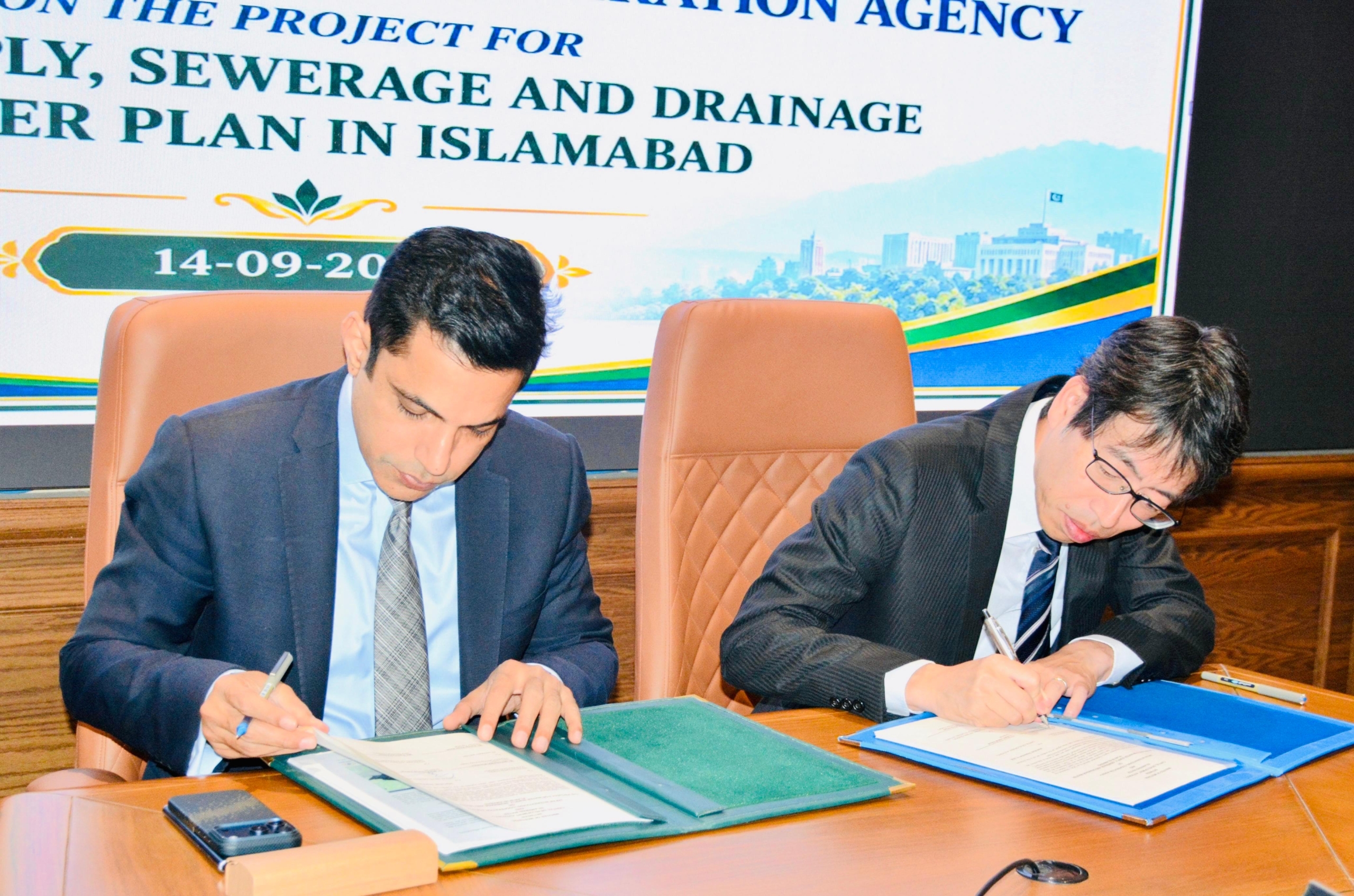
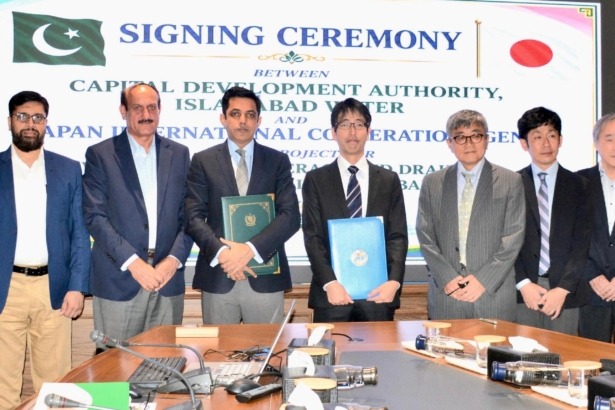
The agreement was signed at CDA Headquarters and marks a major step in Pakistan-Japan technical cooperation aimed at addressing Islamabad’s growing water management challenges through sustainable infrastructure, climate resilience and digital transformation.
The CDA side was represented by Chairman CDA and Chief Commissioner Islamabad Sohail Ashraf, while JICA’s Detailed Planning Survey Team was represented by Team Leader Mr Miyagawa Masahito.
The signing ceremony was attended by DG Islamabad Water Sardar Khan Zimri, Joint Secretary (Japan) Economic Affairs Division Fakhryia Anjum and senior officials from CDA and Islamabad Water.
The agreement follows a detailed JICA planning survey conducted from August 24 to September 14, 2026, during which consultations were held with CDA, Islamabad Water and other relevant stakeholders.
Under the 36-month project, the master plan will primarily cover ICT Zones 1 to 5. Detailed facility planning will focus on Zone 1, while strategic assessments will be conducted for Zones 2 to 5. Technical cooperation is expected to begin in March 2027, with the draft Record of Discussions scheduled to be signed in late November 2026.
The master plan will focus on six major areas, including water supply and resource development, sewerage and wastewater management, stormwater drainage, digital transformation, pilot projects and capacity building, and climate change adaptation.
The water component will assess surface and groundwater sources, including Tarbela, Chinot, Shahdara, Dotara and Chirah dams. It will examine future demand, water treatment, distribution, storage, quality and reduction of non-revenue water.
The sewerage component will assess existing networks, treatment facilities, decentralised systems and fecal-sludge management while also examining wastewater quality and standards for private housing schemes.
The project will also assess Islamabad’s drainage network and flood-prone areas to develop measures aimed at reducing the impact of extreme rainfall and urban flooding.
Digital transformation will include proposals for smart metering, leakage detection, water-quality monitoring, online billing, complaint management and improved asset management.
Pilot activities will test measures related to water meters, supply monitoring, pressure, quality and leakage. The project will also examine a phased transition towards metered tariffs while considering affordability and vulnerable groups. Training programmes in Japan are also planned for CDA and Islamabad Water officials.
Climate resilience will remain a central component, with proposed measures including wastewater reuse, groundwater recharge, watershed management, nature-based solutions, energy-efficient pumping and renewable energy.
A Joint Coordination Committee, chaired by the CDA chairman, will oversee coordination and implementation. CDA and Islamabad Water will serve as the main implementing agencies, with other relevant departments and organisations participating as stakeholders.
The project has been classified as Category B under JICA guidelines and will include stakeholder consultations, gender considerations, assessment of impacts on vulnerable groups and a Strategic Environmental Assessment.
Officials said the master plan would provide Islamabad with a long-term roadmap for securing water supplies, reducing losses, improving services and strengthening protection against climate-related risks.
JICA representatives also clarified that the project does not automatically involve JICA financing but is intended to create a bankable plan capable of attracting public, bilateral, development partner and private-sector investment.
The CDA-JICA initiative is expected to provide Islamabad with a comprehensive framework for managing water resources and related infrastructure through 2050.
We welcome your contributions! Submit your blogs, opinion pieces, press releases, news story pitches, and news features to opinion@minutemirror.com.pk and minutemirrormail@gmail.com