Summary
- We do not ask China to build us a wall of stone.
- Survey after survey inside Pakistan finds that well over eight in ten of our citizens consider China, not any Western power, to be Pakistan’s true friend.
- But security pressure alone will not hold, and here we want to be honest about what Afghanistan actually needs from its neighbours, China chief among them.
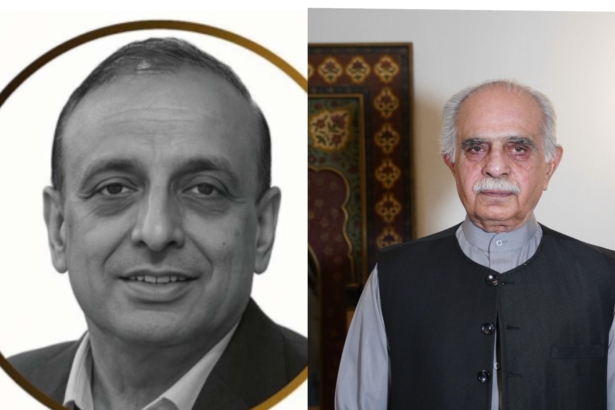
By General Ghulam Mustafa & Arshad H Abbasi
We have stood together at the foot of the Great Wall of China more than once at different times, but today a thought has returned to both of us, unspoken until now. The Wall runs some 21,196 kilometres across dynasties and deserts, built stone by stone over centuries to secure a civilization’s frontier. Pakistan’s own most dangerous frontier — the Durand Line separating us from Afghanistan — runs roughly 2,625 kilometres, barely an eighth of that length. If a civilization on the scale of China could raise a barrier of that magnitude with the tools of the third century BC, then securing a border less than an eighth as long, with the tools of the twenty-first century, cannot be beyond the reach of the partnership Beijing and Islamabad have built. We do not ask China to build us a wall of stone. We ask Beijing to help us build something sturdier: a wall of enforced accountability against the militants using Afghan soil to bleed Pakistan dry.
That bleeding is not a metaphor. Since the Afghan Taliban returned to power in Kabul, the Tehreek-e-Taliban Pakistan has operated with a freedom of movement across our western border that it never enjoyed before. Balochistan burns. Khyber Pakhtunkhwa buries its soldiers and its schoolchildren in the same week. And now the shockwaves have reached Punjab, the country’s demographic and economic core. Every honest accounting of this violence traces back to the same source: sanctuary, training, and logistical freedom on Afghan soil, tolerated or unchecked by an administration in Kabul that owes its survival, in no small part, to Chinese patience and Chinese capital.
This is why we write to Beijing, and to Beijing specifically, rather than to Washington, Brussels, or Moscow. Survey after survey inside Pakistan finds that well over eight in ten of our citizens consider China, not any Western power, to be Pakistan’s true friend. Our leaders have called this friendship higher than the Himalayas and deeper than the ocean, and we do not repeat that line as ceremony. We repeat it because it is the only frame in which Beijing can hear what we are about to say plainly: no other country on earth holds the leverage over the Taliban that China holds, and no other country has more to lose from squandering it.
Consider what China has already built in Afghanistan without formal recognition of its government. The Xinjiang Central Asia Petroleum and Gas Company signed a twenty-five-year contract to develop the Amu Darya oil basin, committing roughly $150 million annually and scaling toward $540 million over three years. State-backed firms continue to negotiate the long-stalled Mes Aynak copper concession, one of the largest untapped copper deposits on earth, alongside serious interest in Afghan lithium and iron ore. Beijing has cut tariffs on 98 % of Afghan imports. An active Chinese embassy operates in Kabul today, accepting Taliban-appointed diplomats, even as formal recognition is withheld. This is not incidental engagement. This is the deepest economic relationship any major power currently has with the Taliban administration, and it gives China something no airstrike or sanction regime has ever given anyone: the ability to make continued investment conditional on results.
We are asking Beijing to use that leverage with the same discipline it has already shown in defending its own security interests. China has made clear, repeatedly and without apology, that it will not tolerate the Turkistan Islamic Party or East Turkistan Islamic Movement fighters operating from Afghan territory against Xinjiang. We are asking only that China extend that identical, non-negotiable standard to the Tehreek-e-Taliban Pakistan and its allied networks operating against us. If Kabul can be made to understand that Chinese mining contracts, Chinese tariff relief, and Chinese diplomatic cover all depend on a genuine, verifiable crackdown on TTP sanctuaries, this insurgency does not need years to end. It needs a Kabul administration that finally has more to lose from harbouring militants than from disowning them.
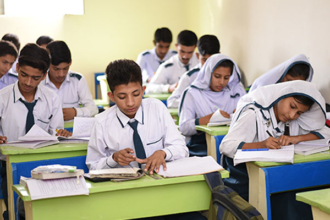
But security pressure alone will not hold, and here we want to be honest about what Afghanistan actually needs from its neighbours, China chief among them. Afghanistan’s national literacy rate stands at just 37 % — 52 % among men, a mere 27 % among women — and UNESCO reports that more than nine in ten ten-year-olds in the country cannot read a simple sentence. Two point two million adolescent girls remain locked out of secondary school entirely, the only country on earth to enforce such a ban, at a projected cost to Afghanistan’s own economy of nearly $9.6 billion in lost potential by 2066. No pipeline, no copper mine, and no railway line will stabilize a country where the next generation cannot read the contracts, safety manuals, or engineering plans that would let them run these projects themselves. It is China’s duty, as the neighbour with the deepest economic stake and the clearest long-term interest in a stable Afghanistan, to make literacy, vocational training, and the reopening of girls’ education a hard condition of its investment — not out of charity, but because an illiterate, disenfranchised population is the same population the TTP and ETIM recruit from. Afghanistan does not need a foreign army. It needs classrooms, teachers, and a workforce equipped to build the country’s own future, backed by an investor patient and disciplined enough to insist on it.
Every failed intervention in Afghanistan’s modern history has shared the same flaw: outsiders who came to fight a war, not to build a neighbour. Britain came and left. The Soviet Union came and left, at ruinous cost to itself. NATO and the United States spent two decades and did not leave functioning institutions behind them. China is different in the one respect that matters most: China is not leaving. It shares a border with Afghanistan. Its investments are measured in decades, not electoral cycles. And it has, through the Belt and Road Initiative and the China-Pakistan Economic Corridor, already built the template for what real regional integration looks like.
We believe Afghanistan is, as it has been called for centuries, the heart of Asia — but its arteries are blocked, and only China has the patience, the capital, and the discipline to reopen them. Extend the high-speed, dual-carriage rail corridor that already links Pakistan and China so that it runs onward through Afghanistan into Uzbekistan, Tajikistan, and Turkmenistan, linking Central Asia to the Arabian Sea and, eventually, to Europe. Make that connectivity the reward for security cooperation, and make security cooperation the price of that connectivity. Iran, Uzbekistan, Tajikistan, and Turkmenistan all share our interest in an Afghanistan that trades instead of exports terror; China is the only power with the standing to bring them all into a single framework.
Co-authored by a soldier and an engineer, this proposal recognizes a fundamental truth: Pakistan’s crisis on its western border is a twin failure of governance and development that cannot be treated in isolation. Because our foreign ministry remains distracted by frequent foreign tours and blinded by a transactional, businessman mindset—ignoring strategic, out-of-the-box solutions where no direct financial benefit exists, a state of collapsed governance recently confirmed by both the Minister of Interior and the DG ISPR—civilian leadership has failed to act. Had the Taliban not banned cryptocurrency in August 2022 as haram and fraudulent, our Foreign Office might have taken notice; yet today, core national sovereignty is sidelined.
We do not ask China for charity or conquest. We ask Beijing to convert patient capital into disciplined leverage, erecting a “second wall”—not of stone, but of enforced conditions, literacy, and connectivity—making the mountains between us yield to the roads running through them. Because distant powers an ocean away and non-contiguous actors like India cannot fix Afghanistan, its immediate border states—China, Iran, Pakistan, Tajikistan, Turkmenistan, and Uzbekistan—must forge an uncompromising regional coalition. To drive this vision, we propose the immediate establishment of a premier regional think tank bringing together top defense, intelligence, and policy experts. This institution will serve as the strategic engine to replace state paralysis with neighbor-led stability and long-term prosperity.
We welcome your contributions! Submit your blogs, opinion pieces, press releases, news story pitches, and news features to opinion@minutemirror.com.pk and minutemirrormail@gmail.com