Summary
- By Bilal Bukhari When Quaid-e-Azam Muhammad Ali Jinnah gave the newly created nation of Pakistan the guiding principles of “Faith, Unity, and Discipline,” he was not offering a mere political slogan.
- In his address to the Pakistan Session of the All-India Muslim League on 23 March 1945, he reminded the nation that, “In our solidarity, unity and discipline lie the strength, power and sanction behind us.” These words continue to offer a powerful blueprint for fostering national cohesion, mutual respect, and a sense of shared destiny.
- The solutions to many of our contemporary challenges may still lie in the same three words that inspired a movement, united millions, and gave birth to a nation: Faith, Unity, and Discipline.
By Bilal Bukhari
When Quaid-e-Azam Muhammad Ali Jinnah gave the newly created nation of Pakistan the guiding principles of “Faith, Unity, and Discipline,” he was not offering a mere political slogan. He presented a framework for nation-building. At a time when millions of Muslims had sacrificed their homes, wealth, and lives for an independent homeland, these three words reflected the spirit of the Pakistan Movement and the essence of Nazariya-e-Pakistan. Eight decades later, these principles remain as relevant as ever. Addressing the officers and staff of the North Western Railway in Karachi on 28 December 1947, Jinnah emphasized, “We must have faith, unity and discipline,” underscoring the values he believed would secure Pakistan’s future.
Pakistan today faces numerous challenges, including political polarization, social division, mistrust in institutions, intolerance, and growing public pessimism. While leadership shortcomings are often highlighted, the deeper issue is that, over time, we have drifted away from the very values that inspired the creation of Pakistan. This disconnect is particularly visible among segments of the younger generation, many of whom are growing up in an environment marked by uncertainty, misinformation, and diminishing trust in public institutions. The rise of social media has further intensified this challenge, encouraging blind following, emotional reactions, and the rapid spread of unverified information, often at the expense of critical thinking and informed judgment. As a result, many young people are exposed to narratives that deepen divisions rather than promote understanding. Reconnecting the younger generation with facts, civic responsibility, and the broader national interest is essential if Pakistan is to realize its full potential and navigate the challenges of the modern world.
Addressing these challenges requires a return to the foundational principles upon which Pakistan was built.
Faith, in Jinnah’s vision, extended beyond religious identity. It represented moral responsibility, honesty, justice, and confidence in the future of the nation and the Motherland. No society can progress when corruption becomes acceptable, truth is compromised for personal gain, and citizens lose faith in their country and institutions. Nations overcome adversity when people believe in a purpose greater than themselves and remain committed to the collective good. Faith, therefore, is not merely a matter of belief; it is a commitment to ethical conduct and national responsibility.
Unity remains equally essential. Pakistan’s diversity of languages, ethnicities, and cultures is a source of strength, and the country is home to more than 70 languages and numerous regional identities. Yet diversity becomes a strength only when it is anchored in a shared national identity. The founders of Pakistan never envisioned uniformity; rather, they envisioned unity of purpose among people of different backgrounds. Unfortunately, divisions are often amplified rather than bridged. Political disagreements increasingly turn into hostility, while social and ideological differences are exploited instead of managed constructively. Jinnah envisioned a Pakistan where citizens stood together despite their differences, recognizing that national progress depends on placing the collective interest above narrow loyalties. In his address to the Pakistan Session of the All-India Muslim League on 23 March 1945, he reminded the nation that, “In our solidarity, unity and discipline lie the strength, power and sanction behind us.” These words continue to offer a powerful blueprint for fostering national cohesion, mutual respect, and a sense of shared destiny.
The principle of discipline may be the most overlooked in contemporary Pakistan. Discipline is not confined to military order or strict regulation; it is reflected in everyday civic conduct. Respect for laws, punctuality, accountability, tax compliance, and the fulfillment of civic duties are all expressions of discipline. Unfortunately, indiscipline continues to affect many aspects of public life. We often expect change from institutions while overlooking the changes required within ourselves. Sustainable national progress demands responsibility not only from leaders but also from citizens.
Despite these challenges, Pakistan possesses immense potential. The country’s future will be determined not only in government offices and political arenas but also in homes, schools, universities, workplaces, and communities. Progress requires a conscious and collective commitment to knowledge, integrity, tolerance, and responsible citizenship. These qualities are deeply connected to the principles that guided Pakistan’s founding.
Mr. Jinnah placed particular trust in the younger generation. In one of his final messages to the nation on 11 September 1948, he observed, “Pakistan is proud of her youth… They must fully equip themselves by discipline, education, and training.” This message remains especially relevant today as Pakistan’s young population represents both its greatest opportunity and its greatest responsibility.
As the world continues to evolve, Pakistan has every opportunity to emerge as a confident, respected, and prosperous nation. However, this future cannot be achieved through division, negativity, or empty rhetoric. It requires a renewed commitment to the values that once united millions under a common purpose.
The challenge before Pakistan is not whether the country can endure, but whether Pakistanis are willing to truly understand, internalize, and live by the principles upon which their nation was founded. We are not merely Punjabis, Pakhtoons, Sindhis, Baloch, Gilgitis, Baltistanis, or Kashmiris—we are Pakistanis. Our shared identity, common destiny, and collective aspirations bind us together as one nation under one flag.
The choice before us is clear: remain divided by our differences or be strengthened by them. Together, we can build the Pakistan envisioned by its founders, a nation that commands respect, inspires hope, and contributes meaningfully to humanity. Together we rise, together we prosper, and together we lead.
The solutions to many of our contemporary challenges may still lie in the same three words that inspired a movement, united millions, and gave birth to a nation: Faith, Unity, and Discipline. Pakistan Zindabad.
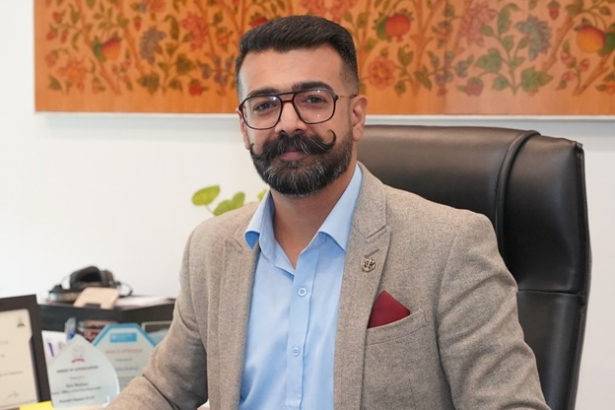
The writer is a certified instructor, coach and a higher education administrator, currently managing operations at the Office of the Vice Chancellor at LUMS.
We welcome your contributions! Submit your blogs, opinion pieces, press releases, news story pitches, and news features to [email protected] and [email protected]