Summary
- Pakistan’s salvation will not come from foreign handouts, elite degrees without conscience, or empty ministerial eloquence; it will be forged in the fire of domestic self-reliance, technical integrity, and unyielding national devotion.
- I am like the Majzoob of old — absorbed in something larger than myself, connected not to the corridors of power but to the young man in Neelum Valley who has no work, to the mother in Khuzdar whose son has gone quiet with despair, to the student in Bajaur who carries a mind full of fire and has nowhere to aim it.
- Indonesia built a national industry on palm oil, Brazil transformed its economy on sugarcane, and India’s Modi—let us be honest, because ignoring a rival’s progress is not patriotism but blindness—is sprinting toward E20 while we sit on eight hundred to nine hundred million litres of annual ethanol capacity and sell it for just rupees one hundred twenty per litre.
This is the dead land; this is cactus land. Here the dry grass sings in the wind, brittle and sharp, while a nation’s immense potential lies withered under the cold weight of official silence. Across the cracked earth of Khuzdar, through the mist-shrouded valleys of Neelum, and along the silent hillsides of Bajaur, a quiet desolation takes root. It is not merely the harshness of geography or the weight of poverty that crushes the human spirit here, but the suffocating realization that those who hold the reins of governance remain stone-deaf to the cries of their own land. A mother in Balochistan watches her educated son sit idle, his youthful energy consumed by despair; a young man in Azad Jammu and Kashmir looks upon majestic, flowing waters that yield no work; a student in the tribal heartlands nurtures bright dreams that die in infancy. We have become a hollow country, filled with men of straw, leaning together, headpieces filled with straw—where grand political slogans ring loud, but meaningful action vanishes like dust upon the desert breeze.
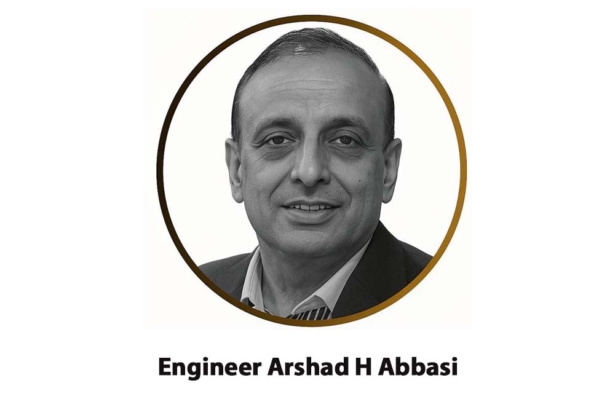
On 12 June 2026, driven by a solitary devotion to my motherland, I dispatched an urgent technical proposal to the Minister for Planning, Development, and Special Initiatives, Ahsan Iqbal. Titled “Unlocking Uraan Pakistan: An Engineer’s Appeal to an Engineer—Turning Uraan Pakistan into Reality Before the Clock Runs Out,” it offered a practical, implementable roadmap to break the chains of our perpetual energy dependence through domestic biodiesel production. I wrote to him engineer-to-engineer, acutely aware that he holds an engineering degree from my own alma mater, UET Lahore, and an MBA from the prestigious Wharton School of the University of Pennsylvania. Yet history teaches a painful truth: a wall of degrees and the silver-tongued art of political rhetoric mean nothing without a genuine national spirit. Across our border, Narendra Modi—once a tea vendor with no formal university credentials—recognized that bureaucratic behemoths were dragging his nation down. In 2014, he shelved India’s 65-year-old Planning Commission, dismantling the red tape to forge an economic powerhouse that now underpins India’s expanding military strength. He proved that it is unyielding political will and fierce commitment, not elite credentials or the gift of the gab, that elevates a nation. I came to Ahsan Iqbal not as a courtier, nor as a wealthy patron who hosts lavish dinner parties for ministers. I cannot offer free Umrah air tickets or finance luxury summer world tours for those who hypocritically cloak themselves in piety to deceive 260 million Pakistanis. If a forensic audit were ever conducted into the money trails behind such ministers’ gifts and travels, many would lose their portfolios overnight—for on pure merit, it has become nearly impossible to render Pakistan self-sufficient in energy while personal greed governs public office. As an independent energy expert, my only currency is technical knowledge, professional experience, and an unyielding commitment to the republic. Yet, nearly five months have passed, and that detailed blueprint rests entombed beneath a mountain of bureaucratic indifference.
This silence is not merely a courtesy extended or withheld; it is a profound tragedy of statecraft. The World Bank warned a few days ago that escalating conflicts in the Middle East could once again send shockwaves through Pakistan’s fragile economy, spiking global fuel prices and draining our meagre foreign exchange reserves. We spend billions of precious dollars annually importing petroleum diesel to keep our transport and power sectors alive, even as our national debt mounts and inflation starves the working class. To ignore a viable path toward energy self-reliance in such a precarious hour is an act of unpardonable negligence. If my proposal is technically flawed or economically unviable, I challenge Ahsan Iqbal to lay it open to public scrutiny, tear apart its assumptions, and disprove its calculations. If warranted, let him pursue the matter through the courts. The nation deserves transparency, evidence, and intellectual honesty, not the contemptuous wall of silence that currently greets ordinary citizens who dare to offer solutions.
The technical foundation of the proposal is neither speculative nor far-fetched. Pakistan possesses millions of acres of marginal, uncultivated wasteland in Sindh and Balochistan where drought-resistant energy crops like jatropha can thrive without competing with food security. In Khyber Pakhtunkhwa, AJK, and Gilgit-Baltistan, existing agricultural residues, non-edible oilseeds, and used cooking oils offer immediate feedstocks for bio-refining. When produced through modern esterification methods using low-carbon processing inputs, biodiesel from these suitable feedstocks can achieve a reduction in lifecycle carbon emissions of approximately 94 to 95 per cent compared to fossil diesel. Beyond environmental gains, the plan details a decentralized, nationwide infrastructure: a network of virtual centers of excellence for research and agricultural extension, specialized youth training programs, localized mini-refineries, and sensor-based, real-time quality assurance mechanisms designed to meet rigid international compliance standards such as ASTM D6751 and EN 14214.
The economic dividends of such a venture would be transformative. Projections—subject to immediate field validation and rigorous technical auditing—indicate that a structured national biofuel policy could generate hundreds of thousands of sustainable jobs across agriculture, collection, refining, and distribution. It would spark micro-entrepreneurship in the very regions that feel most abandoned by the center. We need only look at international precedents to see what is possible when vision meets resolve. Brazil built a global economic juggernaut on sugarcane ethanol; the United States established a robust agricultural biofuel engine; Indonesia turned its palm oil resources into a formidable defense against foreign energy vulnerabilities; and India has aggressively pursued bio-ethanol blending to protect its balance of payments. Pakistan itself already possesses substantial ethanol production capacity and exports significant volumes abroad. Why must we export raw biofuels to enrich foreign economies while our own vehicles burn imported petroleum?
To accelerate this transformation without drowning in red tape, the proposal integrates modern tools, including artificial intelligence for crop yield predictions, logistics management, and supply chain tracking, alongside immediate regulatory amendments through the Oil and Gas Regulatory Authority (OGRA) to mandate commercial biofuel blending. Yet, despite repeated declarations by the government celebrating innovation and youth empowerment under the banner of “Uraan Pakistan,” practical ideas are buried in the graveyard of administrative delay. Innovation without execution is mere hallucination. When technical solutions are ignored because they lack powerful sponsors, the state sends a bitter message to its brightest minds: that expertise is worthless without influence.
I have never hesitated to stand against powerful interests when professional integrity demanded it. My loyalty has never been to individuals, regimes, or titles, but to the land beneath our feet and the millions who suffer upon it. Today, I raise my voice again because the hour is dangerously late, the clock is running out, and silence in the face of national decline is a betrayal.
The time for performative slogans like Uraan Pakistan has passed; let us throw such hollow soundbites into the bin where they belong. If India could shelve its archaic Planning Commission to unlock economic growth, Pakistan too must reckon with an institution that has become a monument to paralysis and bureaucratic delay. The state must shelve this ineffective institution and fully empower the Special Investment Facilitation Council (SIFC) to execute economic transformations on a war footing. Economic sovereignty is the indispensable foundation of true military and geopolitical power, and it cannot be built through bureaucratic inertia. Therefore, I appeal directly to the Prime Minister and the Chief of Army Staff to bypass the Planning Commission entirely, summon the Ministry of Energy, OGRA, and relevant industrial stakeholders under the authority of the SIFC, and demand immediate execution of this national biodiesel mission.
Between the vision and the reality, between the technical plan and the political act, falls the shadow of bureaucratic apathy and moral decay. We must shatter that shadow before it extinguishes the last sparks of hope in our youth. Let us turn biodiesel development into a living, breathing reality of green fields planted in Baluchistan, KPK, AJK, GB and Sindh. Pakistan’s salvation will not come from foreign handouts, elite degrees without conscience, or empty ministerial eloquence; it will be forged in the fire of domestic self-reliance, technical integrity, and unyielding national devotion. The nation is watching, the hour is late, and history will show no mercy to those who chose indifference while their country burned.
I am writing this letter to you first as a junior engineer to senior Engineer, because that bond carries a weight that politics never can. You and I both know what engineering truly means. They are not titles. It is not an office. It is the solemn, unglamorous duty to look at a broken world and refuse to walk away from it until you have built something that works. That is the oath we took when we picked up our slide rules and our textbooks. I have lived by that oath every day of my life, and I write to you today because I believe, in the deepest chamber of my heart, that you still live by it too.
I am a simple man. I say this not in false humility but as the plainest truth I know. I am like the Majzoob of old — absorbed in something larger than myself, connected not to the corridors of power but to the young man in Neelum Valley who has no work, to the mother in Khuzdar whose son has gone quiet with despair, to the student in Bajaur who carries a mind full of fire and has nowhere to aim it. These are the people I wake up for. These are the 260 million souls whose weight I feel on my chest every morning.
And so I must speak plainly: the clock is not merely ticking, Sahib. It is ticking like a time bomb beneath the feet of this nation and your government too. Every month that passes without transforming Uraan Pakistan from a beautifully written document into a living, breathing reality is a month stolen from the young. And we have already stolen too many months from them.
Now I bring you two proposals that are not theoretical. They are not the dreams of a consultant who has never held a spanner. They are the work of fifteen years of technical advocacy, of standards memorised and frameworks built, of watching Pakistan’s potential leak away like fuel from a cracked pipeline.
The first is biodiesel. Pakistan’s own lands — Sindh, Balochistan, KPK, AJK, Gilgit-Baltistan — hold within them the capacity for a quiet revolution. Jatropha grows naturally in Sindh and Balochistan. Maize thrives in KPK, AJK, and Gilgit-Baltistan. A single liter of biodiesel produced from these sources reduces lifecycle carbon emissions by 94 to 95 % compared to petroleum diesel. The global biodiesel market stands at 150 billion US dollars today and is growing.
The framework I propose is not grand or distant. I will use social media, youth networks, and virtual excellence centres at institutions like UON and NUST and the Planning Commission itself to train young entrepreneurs — in Khyber Agency, in Gilgit, in Neelum Valley, in Khuzdar — to build their own biodiesel refineries from 5,000 to 200,000 litres, using local materials, step-by-step construction guidance, and sensor-based quality assurance meeting ASTM D6751 and EN 14214 international standards. When a young man in a remote district produces fuel that meets these standards, verified by OGRA online within 24 hours, the Oil Marketing Companies pay him directly. Clean money. Honest work. Dignity. This model alone can create over one million jobs in the most restless, most abandoned corners of Pakistan — the very corners where unemployment feeds extremism and despair feeds violence.
Here is the same proposal rewritten as a single, powerful paragraph without any bullet points or headings:
We are not inventing anything new—we are simply refusing to stay behind while the world moves forward. Brazil runs on E27, the United States on E10 and E15, and India is racing toward E20. Pakistan has sugarcane, a sugar industry, and distilleries. We already possess over five hundred million litres of installed ethanol production capacity, yet instead of fueling our own nation, we export nearly four hundred seventy million litres annually to global markets at a discount. Indonesia built a national industry on palm oil, Brazil transformed its economy on sugarcane, and India’s Modi—let us be honest, because ignoring a rival’s progress is not patriotism but blindness—is sprinting toward E20 while we sit on eight hundred to nine hundred million litres of annual ethanol capacity and sell it for just rupees one hundred twenty per litre. We have the roads and the petrol pumps. What we have lacked until now is the political will to turn inward and say: we will fuel ourselves.
Sahib, I have already arranged the regulatory framework, the necessary amendments to existing laws, and the updated business model. I say this with full confidence and without arrogance — and I say with equal honesty that I am a very ordinary, down-to-earth man. But by the grace of Almighty Allah, not one bureaucrat in this country can outrun me on this terrain. This is not pride. This is fifteen years of work speaking.
A FEW MONTHS AGO, YOU MADE A PUBLIC COMMITMENT THAT EVERY INNOVATIVE PROPOSAL SUBMITTED TO THE PLANNING COMMISSION WOULD BE SUPPORTED WITH PKR 5 MILLION. I am not asking for charity. I am asking you to honour that commitment — because these two proposals are practical, they are applied, they are technically sound, they are standards-compliant, and they are ready. I am asking for the signal to begin. Please allow me to start work on Monday.
Do not let OGRA slow this down. Do not let the Ministry of Petroleum stall it. Do not let the owners of the Oil Marketing Companies, who profit from dependence, quietly bury it in committee. I’ve already overhauled the regulations, laws, and business model using Synthetic intelligence with the help of my kids working in Silicon Valley, US. I may be ordinary and humble, but when it comes to policy and the Government of Pakistan’s rules of business, no bureaucrat can match me. The people of Gilgit to Gwadar cannot wait for institutional comfort. They are waiting for one thing only: a leader with an engineer’s heart who looks at a solvable problem and says — we will solve it, and we will solve it now.
You are that engineer, Sahib. I know it. Pakistan needs you to remember it.
With the deepest sincerity a common man can offer, and with all my prayers for this wounded, magnificent country,
We welcome your contributions! Submit your blogs, opinion pieces, press releases, news story pitches, and news features to opinion@minutemirror.com.pk and minutemirrormail@gmail.com