Summary
- Australia has reported its first suspected mainland case of H5N1 bird flu, breaking its status as the last continent free of the deadly strain.
- State Agriculture Minister Jackie Jarvis said the government was treating the case with urgency: “If this is confirmed H5 bird incursion, there will be a rapid and coordinated national response.” Another sick bird, a giant petrel, was also discovered in the same area and is being tested.
- My concerns are that if the H5N1 avian flu virus is confirmed, it will pose a huge risk to some of our more endangered shorebirds, coastal raptors, and our precious, unique, endemic and endangered Australian sea lions, whose population is precarious.” Results confirming the strain are expected on Saturday.
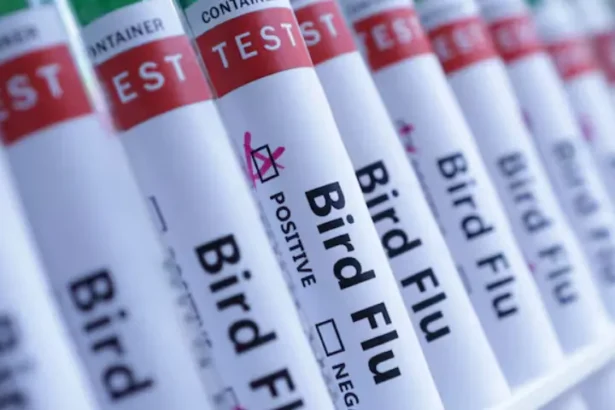
Australia has reported its first suspected mainland case of H5N1 bird flu, breaking its status as the last continent free of the deadly strain. Authorities said a brown skua found in Cape Le Grand National Park in Western Australia tested positive for avian influenza, with further testing underway to confirm whether it is the H5N1 variant.
State Agriculture Minister Jackie Jarvis said the government was treating the case with urgency: “If this is confirmed H5 bird incursion, there will be a rapid and coordinated national response.” Another sick bird, a giant petrel, was also discovered in the same area and is being tested.
The H5N1 strain has spread globally since 2021, devastating wild bird and mammal populations, infecting poultry and dairy farms, and even sickening farm workers. Australia had previously confirmed H5N1 only on Heard Island, a sub‑Antarctic territory, in late 2025.
Federal Environment Minister Murray Watt said the country had spent years preparing for this moment, tightening biosecurity at farms, testing shorebirds, vaccinating vulnerable species, and running response simulations. “While, if confirmed, this would obviously be a very concerning development, Australia has spent the past few years preparing for this likelihood,” he said.
Wildlife experts warned of severe risks to native species. Wayne Boardman, a veterinarian at Adelaide University, said: “This strain of bird flu has caused huge die‑offs of birds and sea mammals. My concerns are that if the H5N1 avian flu virus is confirmed, it will pose a huge risk to some of our more endangered shorebirds, coastal raptors, and our precious, unique, endemic and endangered Australian sea lions, whose population is precarious.”
Results confirming the strain are expected on Saturday. If verified, Australia will join the rest of the world in confronting the spread of H5N1, a virus that has already reshaped global agriculture and wildlife conservation.
We welcome your contributions! Submit your blogs, opinion pieces, press releases, news story pitches, and news features to [email protected] and [email protected]