Summary
- Imran Khan is not an ordinary political figure.
- Pakistan’s own political history also demonstrates that governments can change through constitutional means.
- Pakistan belongs to all its people — those who support Imran Khan, those who oppose him, those who support the current government, and those who do not identify with any political party.
By Waqar Malik
The real strength of a democracy is not measured by how powerful its rulers are, how many people support them, or how loudly their supporters defend them. The real test is much simpler: does the same principle apply to everyone?
Whether someone is a prime minister, president, minister, political leader, or an ordinary citizen, nobody should be above accountability. At the same time, nobody should be condemned simply because allegations have been made against them. Allegations must be examined through evidence, the courts, and due legal process. That is where a mature democracy truly proves its strength.
The political history of the United Kingdom provides many examples. In 1963, the Profumo scandal became a major political crisis and contributed to the downfall of the government. In more recent years, David Cameron resigned following the Brexit referendum, Theresa May stepped down after failing to resolve the parliamentary deadlock over Brexit, and Boris Johnson eventually resigned amid the Partygate controversy. Liz Truss lasted just 44 days as Prime Minister.
Political leaders came and went, but the institutions continued to function. Governments changed, political circumstances shifted, and individual politicians left office, yet the constitutional system carried on. That continuity is one of the important features of a functioning democracy.
France provides similar examples. Former President Nicolas Sarkozy was convicted in a corruption case, while former Prime Minister François Fillon faced trial over allegations concerning public employment. These were not ordinary politicians; they had occupied some of the highest offices in the country. Yet holding high office did not place them permanently beyond the reach of the law.
People may disagree with a particular case or court ruling, but the principle remains important: public office should not provide permanent immunity from accountability.
This brings us to the continuing debate in Pakistan and the case of former Prime Minister Imran Khan.
Imran Khan is not an ordinary political figure. He continues to enjoy enormous popularity among a significant section of Pakistani society, both inside Pakistan and among Pakistanis living abroad. But popularity, however great, cannot by itself determine the outcome of a legal case.
At the same time, the legal system must never become a substitute for political competition. Being accused is not the same as being proven guilty. Any conviction or court ruling should ultimately be examined on the basis of the evidence, the law, and whether due process was followed.
The basic questions are therefore quite straightforward: What evidence was presented before the court? What decision did the court reach? Was the proper legal procedure followed? And what avenues of appeal remain available?
Pakistan’s own political history also demonstrates that governments can change through constitutional means.
Imran Khan’s government ended in April 2022 following a vote of no confidence in the National Assembly. The Supreme Court became involved in the constitutional dispute that followed, and a new government was subsequently formed. Regardless of political affiliation, these events need to be understood within Pakistan’s parliamentary and constitutional framework.
The cypher case is different. Strong political claims and competing interpretations have been presented by different sides, but political claims should not automatically be treated as established legal facts. In a democracy, an allegation remains an allegation unless it is established through the appropriate legal process.
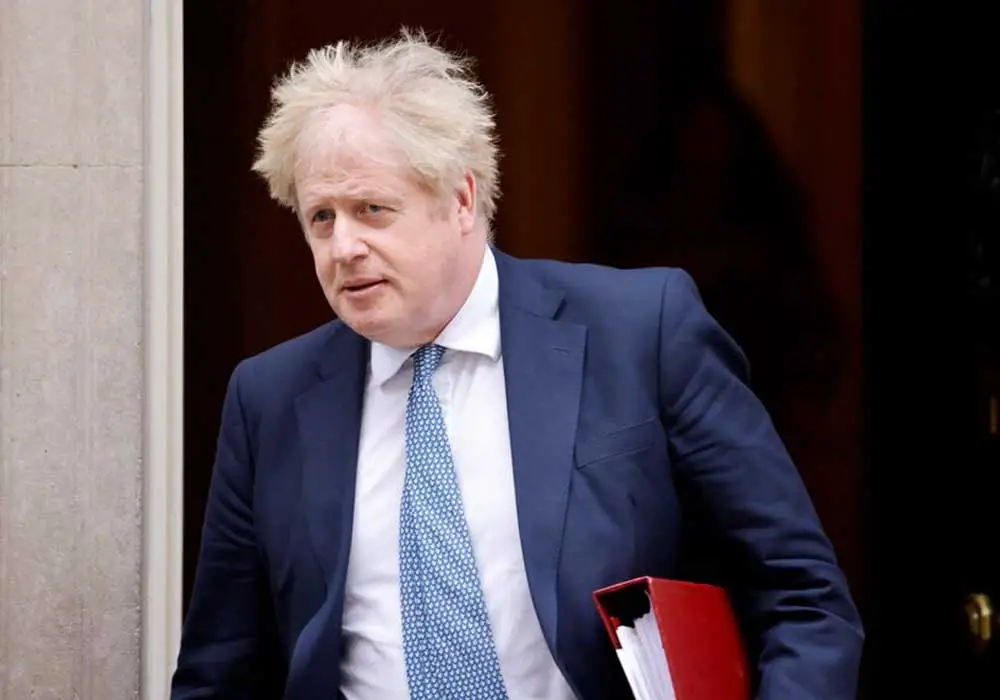
This is also why Boris Johnson’s comments have attracted attention. When the former British Prime Minister wrote in the Daily Mail expressing concern about Imran Khan’s arrest and imprisonment, he was expressing his personal political opinion. His statement was not a judgment by a Pakistani court, nor was it an official statement of the British government.
Yet some PTI supporters have presented his comments as though they represented the official position of the United Kingdom. That distinction matters.
There is nothing inherently wrong with an international political figure expressing concern about developments in another country. But national sovereignty and judicial independence also deserve respect. Imagine, for example, a foreign political leader publicly demanding that a British court overturn its decision or release a prisoner, particularly in a case involving a British politician. Such intervention would naturally attract criticism.
Pakistan deserves the same principle of respect.
If Imran Khan or his legal team believe that a court ruling is unjust or legally flawed, Pakistan’s legal system provides mechanisms through which those decisions can be challenged. International statements may attract attention and generate political discussion, but they cannot replace evidence, legal arguments, or due process.
There is also an important distinction between political protest and political violence.
In Pakistan, people have the right to protest, criticise the government, and demand accountability. These are legitimate parts of political life. But peaceful protest must remain peaceful. Roads should not be unnecessarily blocked, public or private property should not be damaged, businesses should not be disrupted, and ordinary citizens should not be forced to bear the consequences of political disputes.
There should be no firing on public officials, nor should officials be targeted or abducted. Any protest planned for 27 September should remain peaceful and within the boundaries of the law. Political demands can be strong and passionate without becoming violent.
This responsibility is particularly important for overseas Pakistanis.
Those of us living in the United Kingdom, Europe, or elsewhere have considerable freedom to speak, write, campaign, and raise political concerns. We can criticise governments and defend political leaders. But freedom also carries responsibility.
There is a clear difference between peaceful political advocacy and actions that damage Pakistan’s reputation, endanger diplomatic missions, or deepen divisions within Pakistani communities abroad.
How we conduct ourselves in front of the wider world matters.
I have always believed that overseas Pakistanis can be one of Pakistan’s greatest strengths. We can build bridges between our host countries and our homeland. We can showcase Pakistan’s achievements, highlight legitimate concerns, and encourage dialogue rather than confrontation.
If we want the world to respect Pakistan, we should also demonstrate respect for its institutions, laws, and democratic processes.
Pakistan is going through a difficult period, but it is also a country with enormous potential. Its international role continues to evolve, and it is increasingly involved in discussions about regional stability and international affairs. Under Field Marshal Syed Asim Munir, Pakistan’s profile on the international stage has received increased attention. Major agreements are being pursued, and Pakistan is participating in important global conversations.
At such a moment, perhaps we should ask ourselves a difficult but necessary question: Do we genuinely want justice and progress, or do we simply want our own political side to win?
If we demand accountability when our political opponents are in trouble but reject the process when our own preferred leader faces legal action, then we are no longer defending a principle. We are defending a political loyalty.
That cannot be the foundation of justice.
The same standard should apply to the leader we admire and the politician we strongly disagree with. This does not mean that every court ruling should be considered beyond criticism. Courts and institutions can be questioned, and legitimate concerns about their decisions can be raised. But there are lawful ways to do that.
Appeals exist for precisely this reason. Evidence can be challenged. Legal arguments can be presented. Decisions can be reviewed through established procedures.
What we should avoid is replacing the legal process with political pressure, intimidation, or confrontation.
Democracy is much bigger than any individual leader.
Governments change. Political parties rise and fall. Public opinion shifts. Leaders who appear unbeatable at one moment can find themselves out of office at another. What matters in the long run is whether institutions continue to function and whether citizens remain free to disagree peacefully.
Pakistan belongs to all its people — those who support Imran Khan, those who oppose him, those who support the current government, and those who do not identify with any political party.
We do not have to become enemies simply because we disagree.
We can criticise without destroying. We can protest without violence. And, most importantly, we can demand justice while applying the same standards to ourselves that we expect from others.
A nation’s strength is not measured by the power of its rulers or the size of a leader’s following. True strength lies in the integrity of its institutions, the responsibility of its citizens, and the ability to resolve political differences without fear, violence, or revenge.
Pakistan’s future does not depend on one person or one political party. It depends on whether we can rise above our political loyalties and place the country, the Constitution, and its institutions first.
Let us build Pakistan — together.
We welcome your contributions! Submit your blogs, opinion pieces, press releases, news story pitches, and news features to opinion@minutemirror.com.pk and minutemirrormail@gmail.com