Summary
- Rahmani, the oldest known name for the settlement that would become Lahore was Ud Nagar, once surrounded by dense forest.
- *”Lahore” Finally Appears* The name Lahore, in the form recognizable in Punjabi today, first appears in the Persian geographical text Hudud al-Alam (“The Regions of the World”), composed at the start of the Ghaznavid period.
- The word “Loh”, he explained, can mean both light and sun in older usage — connecting Lahore to sun worship, much like the city of Multan, whose old name Aditya-sthan (or “Aadat Hur”) means “house of the sun god.” In ancient times, he noted, many peoples worshipped the sun as divine — Lahore’s name, in this light, may trace back to its association with sun worship.
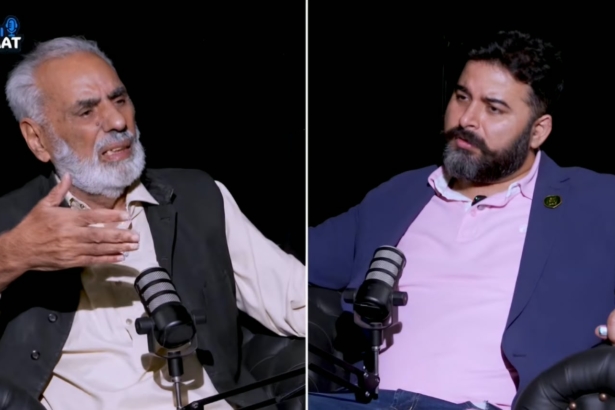
Every city carries layers of names beneath the one it answers to today, and few cities illustrate this better than Lahore. In a recent Podcast of Dil Ki Baat Zohaib Butt ke saath, historian Dr Anjum Rahmani walked through centuries of records, legends, and linguistic shifts to trace how this ancient city came to be called “Lahore.”
*Separating History from Legend*
Dr. Rahmani opened by drawing a sharp line between documented history and oral tradition. History, he explained, must be backed by evidence — a verifiable date, a written record. Anything without such proof is folklore, not fact. That said, he acknowledged that where written records fall silent, oral tradition can still offer clues, though it should never be treated as fully reliable. Stories passed by word of mouth tend to pick up distortions as they travel from one narrator to the next — a detail added here, a name misremembered there — so they must be handled with caution rather than taken at face value.
*The Earliest Name: Ud Nagar*
According to Dr. Rahmani, the oldest known name for the settlement that would become Lahore was Ud Nagar, once surrounded by dense forest. He also referenced a clash between the region and Raja Salvan of Sialkot, a Hindu king, though he noted this particular battle isn’t documented in formal historical dates — it survives only in tradition.
*Parichatpur and the Legend of Raja Loh*
One popular legend attributes Lahore’s founding to Loh, son of Raja Ram Chandra — a story Dr. Rahmani dismissed as having no historical basis. Instead, he pointed to an early Persian-language account, Tauhfat-ul-Waslin, written by a scholar living in Lahore during the Ghaznavid period. This text describes a Delhi-based ruler named Parichit, who is said to have taken control of the settlement and renamed it Parichatpur after himself.
*Samunderpal Nagari and the City’s Jogi Heritage*
The narrative continues with another Delhi ruler, a jogi referred to as Samunderpal, who is said to have conquered the settlement and renamed it Samudrapal Nagari. Dr. Rahmani connected this directly to present-day Lahore: the area inside Bhati Gate still contains a neighborhood called Mohalla Jogian, home to descendants of this community, including Mian Sarfaraz, a well-known figure who once served as Mayor of Lahore Corporation.
*From Luharpur to Lahore*
The chain of names continued with DeipChand of Delhi, whose nephew, Luhar Chand, was granted the settlement as a jagir (feudal estate). Luhar Chand is said to have renamed it Luharpur after himself — a detail Dr. Rahmani noted as a fresh discovery even for him, since generations have simply grown up saying “Lahore” without knowing this layer of its history.
*The First Written Record*
The earliest documented reference to the city, Dr. Rahmani explained, comes from a ninth-century Arab historian, whose work dates to 240 Hijri (7th–8th century CE). However, this early source is confused — the author didn’t even seem certain that the city he was describing was Lahore, at one point conflating it with Kabul.
*”Lahore” Finally Appears*
The name Lahore, in the form recognizable in Punjabi today, first appears in the Persian geographical text Hudud al-Alam (“The Regions of the World”), composed at the start of the Ghaznavid period. The author of this text remains unknown, but it marks the first written instance of the city’s modern name.
The Ghaznavid-Era Poets Who Wrote of Lahore
Following Hudud al-Alam, a wave of Ghaznavid-period literature references the city. Dr. Rahmani highlighted Abul Faraj Runi, believed to be the very first Persian-language poet associated with Lahore, hailing from a village called Runa near present-day Harbanspura. Alongside him was Masud Sa’d Salman Lahori, another Lahore-based poet of the era. Runi’s poetry alone contains two mentions of the city’s name, and across historical texts, Dr. Rahmani noted counting as many as 19 different spelling variants of “Lahore” in Persian and Arabic sources — a reflection of how differently the name was transliterated depending on dialect and scribe.
*The Sun-God Theory*
Dr. Rahmani then turned to etymology. The word “Loh”, he explained, can mean both light and sun in older usage — connecting Lahore to sun worship, much like the city of Multan, whose old name Aditya-sthan (or “Aadat Hur”) means “house of the sun god.” In ancient times, he noted, many peoples worshipped the sun as divine — Lahore’s name, in this light, may trace back to its association with sun worship.
*Hazrat Ali Hajveri’s Reinterpretation*
A later twist in the name’s evolution came with the Sufi saint Hazrat Ali Hajveri (Data Ganj Bakhsh), who is said to have reframed the city’s name for religious purposes — recasting “Lahore” as “Allah-e-Noor” or “Ila-Noor,” meaning “the city of Allah’s divine light,” as part of efforts to align the city’s identity with Islam. Despite this reinterpretation, the name that persisted through the Ghaznavid and Sultanate periods, and into the present day, remained “Lahore.”
*Debunking the “Loh Mandir” Legend*
Dr. Rahmani also addressed the popular belief in a “Loh Temple” inside Lahore Fort, dedicated to the mythical Raja Loh. He was skeptical of this claim, suggesting it was a later invention rather than a historically grounded fact.
We welcome your contributions! Submit your blogs, opinion pieces, press releases, news story pitches, and news features to opinion@minutemirror.com.pk and minutemirrormail@gmail.com