Summary
- TORONTO: Thick smoke from massive wildfires burning across northwestern Canada has blanketed Toronto and drifted into parts of the northeastern United States, triggering severe air quality warnings, disrupting public events and raising fresh concerns over the growing impact of climate change.
- Toronto authorities cancelled FIFA Fan Festival activities and a scheduled World Cup watch party due to health concerns, while officials in the United States continued monitoring air quality ahead of Sunday’s FIFA World Cup final in New Jersey, where tens of thousands of spectators are expected to gather.
- Experts say the combination of extreme heat and recurring wildfire smoke is becoming increasingly common and warn that Canadian and American cities must prepare for more frequent air quality emergencies in the years ahead as climate change intensifies wildfire risks across North America.
TORONTO: Thick smoke from massive wildfires burning across northwestern Canada has blanketed Toronto and drifted into parts of the northeastern United States, triggering severe air quality warnings, disrupting public events and raising fresh concerns over the growing impact of climate change.
Toronto recorded the world’s poorest air quality on Wednesday, with Environment Canada placing the city’s Air Quality Health Index at 10+, the highest risk category. Authorities warned that hazardous conditions could continue through Thursday and advised residents to avoid strenuous outdoor activities.
Although the fires are burning hundreds of kilometres away in remote regions, strong winds have carried dense smoke over major urban centres. Similar conditions have affected parts of New York and neighbouring states, where health officials urged people, particularly children, older adults and those with respiratory illnesses, to limit outdoor exposure.
Scientists warned that the smoke could spread further across the Great Lakes region and New England before conditions begin to improve later in the week.
The deteriorating air quality also disrupted major public events. Toronto authorities cancelled FIFA Fan Festival activities and a scheduled World Cup watch party due to health concerns, while officials in the United States continued monitoring air quality ahead of Sunday’s FIFA World Cup final in New Jersey, where tens of thousands of spectators are expected to gather.
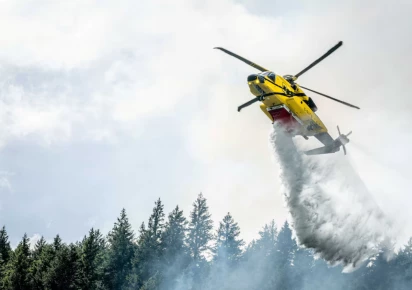
The wildfires also affected transportation and rescue operations. Rail services near Armstrong, Ontario, were suspended as a precaution after nearby fires intensified, and local residents were evacuated. In a separate incident, two groups of children from Minnesota who became stranded during a wilderness camping trip in Canada were safely rescued, with one group airlifted by helicopter in coordination with the Canadian military.
According to Canadian authorities, more than 835 wildfires were active across the country on Wednesday, with over 100 classified as out of control. Nearly 1.9 million hectares of land have already burned this season, with the worst-affected areas located in Manitoba, Saskatchewan and Ontario.
Experts say the combination of extreme heat and recurring wildfire smoke is becoming increasingly common and warn that Canadian and American cities must prepare for more frequent air quality emergencies in the years ahead as climate change intensifies wildfire risks across North America.
We welcome your contributions! Submit your blogs, opinion pieces, press releases, news story pitches, and news features to opinion@minutemirror.com.pk and minutemirrormail@gmail.com