Summary
- The confirmed death toll from flash floods and mudslides along the Nepal China border climbed above 1,300 on Friday, with more than 5,600 people still unaccounted for, nine days after a glacier collapse triggered widespread destruction across the Himalayan border region, according to official figures released by both governments.
- Nepal’s National Disaster Risk Reduction and Management Authority reported 1,287 confirmed deaths within the country, along with 5,083 people still missing, including 583 foreign nationals.
- Combined with Nepal’s figures, the total confirmed death toll across both countries reached 1,318, with 5,614 people still missing overall.
The confirmed death toll from flash floods and mudslides along the Nepal China border climbed above 1,300 on Friday, with more than 5,600 people still unaccounted for, nine days after a glacier collapse triggered widespread destruction across the Himalayan border region, according to official figures released by both governments.
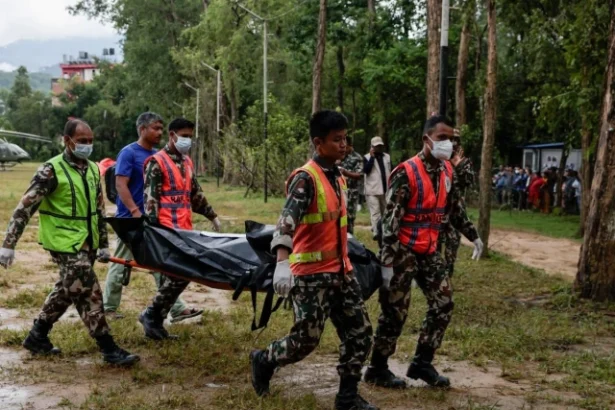
Nepal’s National Disaster Risk Reduction and Management Authority reported 1,287 confirmed deaths within the country, along with 5,083 people still missing, including 583 foreign nationals. The updated figures came shortly after rescue teams successfully pulled two survivors from a tunnel at the Trishuli 3A hydropower project earlier the same day.
At least six hydropower facilities on the Nepalese side of the border sustained damage from the flooding, and search efforts are continuing for roughly 900 personnel who had been working at those sites when the disaster struck. Nepal’s disaster management authority also warned that the Chaulani River is currently half blocked by debris and cautioned that continued landslides in the area could seal it off entirely. The district administration office in Darchula has urged residents living along riverbanks and in low lying areas nearby to remain cautious as conditions continue to evolve.
On the Chinese side of the border, authorities said at least 31 people had been killed and 531 remained missing in the Xizang Autonomous Region, commonly known as Tibet, according to a state run news agency. Combined with Nepal’s figures, the total confirmed death toll across both countries reached 1,318, with 5,614 people still missing overall. Of those unaccounted for, 844 are foreign nationals, according to official data.
The disaster began on August 26, when a glacier on Nepal’s Mount Langtang Lirung fractured at an altitude of roughly 5,200 meters. The initial fracture triggered an ice and rock avalanche that rapidly grew into a massive debris flow, sweeping through valleys on both sides of the border with devastating force.
In Nepal, the floodwaters and mudslides caused widespread destruction across the Rasuwa, Nuwakot, Dhading and Kavre districts, with damage extending into parts of the Kathmandu Valley as well. On the Chinese side, the disaster also buried the Gyirong border crossing, disrupting a key transit point between the two countries.
Rescue operations remain ongoing across the affected region, with authorities in both countries continuing to search for survivors even as hopes of finding additional people alive continue to diminish with each passing day. Engineering teams, military personnel and international disaster response specialists have been working to clear blocked access routes and stabilize unstable terrain, particularly around the hydropower sites where hundreds of workers remain unaccounted for. Officials in both Nepal and China have said the full scope of the damage, including the final toll of dead and missing, may not become clear for some time given the difficulty of accessing many of the hardest hit areas.
We welcome your contributions! Submit your blogs, opinion pieces, press releases, news story pitches, and news features to opinion@minutemirror.com.pk and minutemirrormail@gmail.com