Summary
- European leaders are expected to use the NATO summit in Ankara on Wednesday to persuade US President Donald Trump to reaffirm Washington’s commitment to the military alliance, as tensions over Iran and disagreements within NATO continue to grow.
- However, they also pointed out that the United States did not fully consult its allies before taking military action against Iran, leaving many governments to deal with the political and economic consequences of the conflict.
- NATO Secretary General Mark Rutte defended the latest US military strikes, calling them “absolutely necessary.” Speaking ahead of the summit, he said that if Iran violated the ceasefire, the United States had every right to respond forcefully.
European leaders are expected to use the NATO summit in Ankara on Wednesday to persuade US President Donald Trump to reaffirm Washington’s commitment to the military alliance, as tensions over Iran and disagreements within NATO continue to grow.
The summit comes at a sensitive time for the alliance. Just days before the meeting, the United States launched a fresh wave of military strikes on Iran, escalating tensions despite a fragile ceasefire. Washington also revoked a licence that had allowed Iran to sell oil, describing the move as a response to attacks on three oil tankers. The latest developments have raised concerns among European governments, many of which fear the conflict could further destabilise the region and harm their economies.
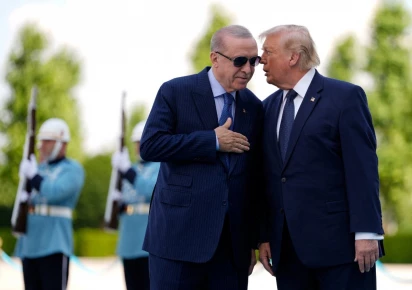
Arriving in Ankara on Tuesday, President Trump criticised several NATO allies for what he described as their lack of support during the recent US-Iran conflict. He said some European countries failed to stand by Washington when it needed assistance and suggested he might have skipped the summit if not for his close relationship with Turkish President Recep Tayyip Erdogan.
Trump also repeated his long-standing criticism of NATO, arguing that the United States spends far more on defence than its allies while receiving insufficient support in return. He claimed that some European countries did not fully cooperate by allowing US forces access to their airspace and military bases during operations linked to the conflict with Iran.
European officials rejected those accusations, insisting they honoured their commitments under NATO agreements. However, they also pointed out that the United States did not fully consult its allies before taking military action against Iran, leaving many governments to deal with the political and economic consequences of the conflict.
NATO Secretary General Mark Rutte defended the latest US military strikes, calling them “absolutely necessary.” Speaking ahead of the summit, he said that if Iran violated the ceasefire, the United States had every right to respond forcefully. Rutte also dismissed Trump’s criticism of NATO allies as isolated disagreements rather than signs of a broader division within the alliance.
In an effort to demonstrate greater responsibility for European security, NATO announced defence agreements worth at least **$50 billion** on Tuesday. The new arms deals are intended to strengthen Europe’s military capabilities and respond to Trump’s repeated calls for allies to increase defence spending and reduce their reliance on the United States.
The summit is also expected to address broader security challenges, including the future of NATO’s collective defence strategy and the alliance’s response to rising global tensions.
Meanwhile, Trump has widened his criticism beyond NATO as he recently targeted Italian Prime Minister Giorgia Meloni, once regarded as one of his closest European allies, highlighting growing political differences within the transatlantic partnership.
We welcome your contributions! Submit your blogs, opinion pieces, press releases, news story pitches, and news features to opinion@minutemirror.com.pk and minutemirrormail@gmail.com