Summary
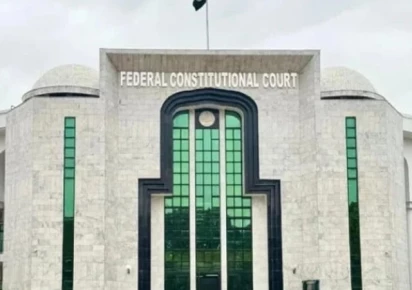
- The federal government has informed the Supreme Court that the Federal Constitutional Court (FCC) will now hear bail matters and appeals in National Accountability Bureau (NAB) cases after amendments to the National Accountability Ordinance (NAO).
- The Supreme Court is currently examining whether pending NAB appeals and bail pleas should be transferred to the FCC.
- Lawyer Ibad ur Rehman Lodhi told the court that appeals could be shifted to the FCC, but bail applications should continue to be heard by the Supreme Court.
The federal government has informed the Supreme Court that the Federal Constitutional Court (FCC) will now hear bail matters and appeals in National Accountability Bureau (NAB) cases after amendments to the National Accountability Ordinance (NAO).
The Supreme Court is currently examining whether pending NAB appeals and bail pleas should be transferred to the FCC. A three-member bench, headed by Justice Muhammad Ali Mazhar, is hearing the case.
The government, in its written reply, stated that all matters related to the NAB law, including appeals and bail issues, fall under the jurisdiction of the FCC after the latest amendments.
The legal development has created a debate among lawyers. Some legal experts believe all NAB-related appeals should now move to the FCC. Others argue that bail matters should remain with the Supreme Court.
Lawyer Ibad ur Rehman Lodhi told the court that appeals could be shifted to the FCC, but bail applications should continue to be heard by the Supreme Court. He said bail matters are separate from appeals and should not automatically come under the constitutional court.
He also questioned the legality of the amendment and argued that it was introduced for specific purposes.
The issue has become significant due to former prime minister Imran Khan’s NAB cases. If the Islamabad High Court maintains his conviction in the Al-Qadir Trust case, he would have the option to file a second appeal before the FCC.
The matter gained attention after the Supreme Court registrar’s office returned appeals filed by Imran Khan and Bushra Bibi against an Islamabad High Court order related to the suspension of their sentences in the £190 million Al-Qadir Trust case.
Their lawyer challenged the registrar’s objections and maintained that the appeals should be heard by the Supreme Court under Article 185(3) of the Constitution.
Legal experts have expressed mixed views over the new system. Critics argue that giving the FCC authority over NAB appeals could reduce the Supreme Court’s role in important criminal matters. They have also raised questions about the appointment process of FCC judges.
Supporters of the amendment say the changes will bring clarity to accountability cases and create a more organised legal process. They argue that the reforms aim to balance accountability with constitutional protections of rights and due process.
We welcome your contributions! Submit your blogs, opinion pieces, press releases, news story pitches, and news features to opinion@minutemirror.com.pk and minutemirrormail@gmail.com