Summary
- Deputy Prime Minister and Foreign Minister Ishaq Dar has warned that India is pursuing what he described as a strategy of “hydro-hegemony,” claiming that multiple upstream water projects could significantly alter the natural flow of the Indus river system and threaten regional stability.
- Addressing an international conference in Brussels on transboundary water resources, Dar said India has developed at least 17 projects, including dams, reservoirs, and river diversion schemes on the Indus, Chenab, and Ravi rivers.
- The foreign minister said shared water resources must be managed through agreed international frameworks, warning that ignoring treaties risks turning cooperation into conflict.
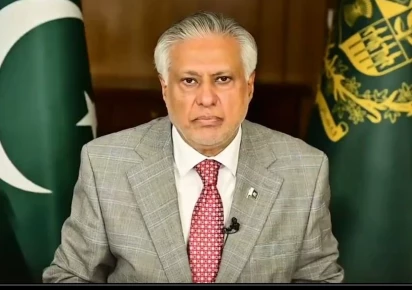
Deputy Prime Minister and Foreign Minister Ishaq Dar has warned that India is pursuing what he described as a strategy of “hydro-hegemony,” claiming that multiple upstream water projects could significantly alter the natural flow of the Indus river system and threaten regional stability.
Addressing an international conference in Brussels on transboundary water resources, Dar said India has developed at least 17 projects, including dams, reservoirs, and river diversion schemes on the Indus, Chenab, and Ravi rivers. He said these developments go beyond routine infrastructure work and represent an attempt to gain strategic control over shared water resources.
He said the projects include Sawalkot, Kirthai, Kwar, as well as expansions of existing structures such as Baglihar and Salal. According to him, such interventions could reshape the entire river system and give India disproportionate control over water flows, which he termed “hydro-hegemony.”
Dar recalled that India had suspended the Indus Waters Treaty (IWT) following a terrorist attack in Indian-administered Kashmir last year, an allegation Pakistan has repeatedly denied. He said the treaty, which has survived decades of conflict, is now facing serious strain due to unilateral actions.
He stressed that Pakistan has consistently pursued legal and diplomatic channels under the treaty framework and remains committed to peaceful dispute resolution. He said the IWT was designed to ensure cooperative management of shared rivers and prevent water from becoming a political weapon.
The foreign minister said shared water resources must be managed through agreed international frameworks, warning that ignoring treaties risks turning cooperation into conflict. He added that respect for international law is essential for maintaining global stability.
Dar said rivers are not only natural resources but also lifelines that support agriculture, livelihoods, and economies. He warned that any attempt to restrict or manipulate water flows for political pressure could have serious humanitarian and economic consequences, particularly for downstream countries like Pakistan.
He further linked the issue to climate vulnerability, noting that Pakistan is among the countries most affected by climate change despite contributing minimally to global emissions. He said this makes water security even more critical for the country’s future.
Reaffirming Pakistan’s position, Dar said Islamabad remains committed to dialogue, diplomacy, and legal mechanisms under international law to resolve disputes peacefully. He added that lasting solutions can only be achieved through cooperation and adherence to treaty obligations.
We welcome your contributions! Submit your blogs, opinion pieces, press releases, news story pitches, and news features to [email protected] and [email protected]