Summary
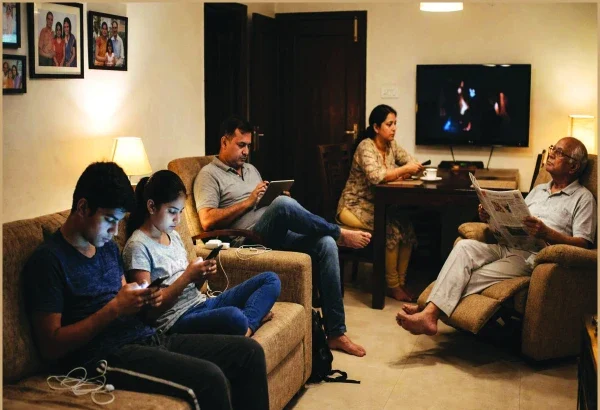
- The same technology that provides convenience and opportunity can also affect attention, patience, sleep, physical activity and social interaction.
- Young people may become comfortable switching rapidly between different activities, but sustained concentration on a single task can become more difficult.
- Social media and body image Image-focused platforms and beauty filters can also affect the way young people perceive themselves.
Generation Z has grown up surrounded by smartphones, social media, instant entertainment and rapidly evolving technology. While these tools have made information and communication easier than ever they have also created new challenges for young people.
- From the lost generation to generation Z
- Generation Z: The first truly digital generation
- 1. Declining attention span
- 2. Growing impatience
- 3. Lack of sleep
- 4. Weaker social connections
- 5. Reduced physical activity
- 6. Growing psychological pressure
- FOMO and the fear of being left behind
- Phantom vibrations and nomophobia
- Social media and body image
- How can generation z protect its mental wellbeing?
- Finding balance in a digital world
Reduced attention spans, impatience, poor sleep weaker face-to-face relationships and growing psychological pressure are among the concerns increasingly associated with a highly connected lifestyle.
But these challenges did not emerge in isolation. Every generation has faced its own defining circumstances, shaped by the social, economic and technological environment of its time.
From the lost generation to generation Z
The idea of giving different generations specific names became popular during the 20th century.
The generation born between 1883 and 1900 was famously described as the “Lost Generation.” Writer and poet Gertrude Stein used the term to describe people who came of age around the First World War. The war left many members of this generation dealing with physical and psychological trauma, economic uncertainty and a crisis of identity. Ernest Hemingway later helped popularize the expression.
People born between 1901 and 1927 are often referred to as the “Greatest Generation.” They experienced the Great Depression and the Second World War before contributing to the rebuilding and development of the post-war world.
The “Silent Generation,” generally defined as those born between 1928 and 1945, grew up during the Second World War and its aftermath. This generation was often associated with discipline, loyalty, social stability and traditional values.
The post-war rise in birth rates produced the Baby Boomer generation, born between 1946 and 1964. Boomers grew up during a period of economic expansion and placed significant emphasis on careers, although many later faced challenges involving work-life balance, inflation, retirement and technological change.
Those born between 1965 and 1980 became known as Generation X. They witnessed the transition from an analogue world to the computer age and are often associated with independence, practicality and adaptability.
Generation Y, or the Millennials generally refers to people born between 1981 and 1996. They came of age during the internet revolution and globalization. Although they benefited from greater access to education and technology, many have faced financial pressure, rising living costs and uncertainty about their future.
Then came Generation Z, generally considered to include those born from 1997 to 2012.
Generation Z: The first truly digital generation
Generation Z has grown up in a world where smartphones, social media, apps and online communication are part of everyday life.
Members of this generation are comfortable with digital platforms, online education and rapidly changing technology. Many are interested in entrepreneurship, startups, artificial intelligence and emerging technologies.
Instant access to information has also made them fast at finding answers and processing large amounts of content.
However, constant connectivity comes with a price.
The same technology that provides convenience and opportunity can also affect attention, patience, sleep, physical activity and social interaction.
1. Declining attention span
One of the major challenges associated with today’s digital environment is maintaining concentration.
Short-form content on platforms such as TikTok, YouTube Shorts and Facebook Reels is designed to deliver entertainment within seconds. Constant exposure to this type of content can make lengthy or demanding tasks feel less attractive.
Young people may become comfortable switching rapidly between different activities, but sustained concentration on a single task can become more difficult.
The constant availability of new information can also encourage people to move quickly from one subject to another instead of spending time thinking deeply about an issue.
2. Growing impatience
Technology has made almost everything faster.
Food, clothing, entertainment and countless other services can now be ordered with a few taps on a smartphone. While this convenience saves time, it can also create an expectation that everything should happen immediately.
Many young people have become accustomed to instant results and may find it increasingly difficult to accept processes that require patience.
Whether it involves education, careers or relationships, meaningful results often take time. An inability to tolerate delays or setbacks can affect decision-making and weaken perseverance.
3. Lack of sleep
Late-night smartphone use is another concern.
Many young people remain online until late at night, while some freelancers and digital workers spend long hours in front of screens.
Exposure to screens before bedtime can interfere with healthy sleep routines. Poor sleep can, in turn, affect concentration, mood, productivity and overall physical and mental wellbeing.
A generation that remains digitally connected around the clock may therefore struggle to establish a clear boundary between online activity and rest.
4. Weaker social connections
Digital communication has made it easier to remain connected across long distances, but online interaction cannot always replace face-to-face relationships.
Young people who spend much of their time communicating through screens may have fewer opportunities to develop interpersonal skills through real-world interaction.
Face-to-face conversations require people to read body language, facial expressions and emotional cues. Excessive reliance on digital communication can make these interactions feel more difficult for some individuals.
5. Reduced physical activity
Digital entertainment has also changed how young people spend their free time.
Hours once spent playing outdoors, walking, travelling or participating in sports can now be replaced by gaming, streaming and social media.
A sedentary lifestyle can contribute to weight gain and other health problems. Regular physical activity, therefore, remains important even in an increasingly digital world.
6. Growing psychological pressure
Perhaps the most serious concern is the psychological pressure created by social media.
Social platforms often present carefully selected versions of people’s lives. Users typically share achievements, holidays, expensive purchases and happy moments rather than their everyday struggles.
Constantly seeing these curated images can lead some young people to compare their lives with unrealistic portrayals of others.
This can create feelings of inadequacy, loneliness and dissatisfaction.
Researchers and mental-health experts have also raised concerns about the relationship between heavy social media use and anxiety, depression self-image problems and other mental-health difficulties among young people.
The issue has attracted particular attention because adolescent girls can be especially vulnerable to social comparison and online pressure.
FOMO and the fear of being left behind
Another modern phenomenon affecting highly connected young people is FOMO — the “Fear of Missing Out.”
Constant notifications and a continuous stream of updates can create the feeling that something important is always happening somewhere else.
A person may repeatedly check their phone because they fear missing a message, social event, trend or piece of news.
This cycle can increase anxiety and make it difficult to disconnect from social media.
Phantom vibrations and nomophobia
Heavy smartphone users can also experience Phantom Vibration Syndrome a phenomenon in which a person believes that their phone is vibrating even when it is not.
Another term associated with smartphone dependence is nomophobia, or anxiety associated with being without a mobile phone.
For some people, being separated from their phone for even a short period can create significant discomfort.
These behaviors demonstrate how deeply smartphones have become integrated into everyday life.
Social media and body image
Image-focused platforms and beauty filters can also affect the way young people perceive themselves.
Applications that allow users to alter their facial features, skin and appearance can create unrealistic beauty standards.
If someone becomes accustomed to seeing an edited version of their own face, their natural appearance may eventually seem less attractive by comparison.
This can contribute to dissatisfaction with appearance and lower self-esteem.
How can generation z protect its mental wellbeing?
Technology itself is not the enemy. The challenge is learning how to use it without allowing it to control everyday life.
Take regular digital breaks
Spend part of every day away from social media and smartphones.
Instead of reaching for the phone automatically, ask yourself whether checking it is actually necessary at that moment.
Gradually increasing periods of digital disconnection can help rebuild concentration and reduce dependence on constant stimulation.
Turn off unnecessary notifications
Constant notifications interrupt attention and encourage repeated phone checking.
Turning off non-essential alerts from social media and messaging applications can create a quieter environment.
Keeping the phone away from the bed or placing it somewhere that requires physically getting up to reach it can also reduce unnecessary use.
Strengthen real-world relationships
Online likes and shares should not become a substitute for genuine human connection.
Spend time with family members, neighbors and friends. Talk to older people listen to their experiences and participate in community life.
Real relationships provide emotional support in ways that online interactions often cannot.
Choose Better Content
Social media algorithms generally respond to what users watch, search for and interact with.
Instead of continuously consuming negative or meaningless content, users can deliberately follow educational, constructive and positive material.
The more useful content a person engages with, the more likely platforms are to recommend similar material.
Finding balance in a digital world
Generation Z has access to opportunities that previous generations could hardly have imagined. Information, education, communication and technology are available at an unprecedented scale.
But convenience should not come at the expense of concentration, sleep, physical activity, meaningful relationships or mental wellbeing.
The answer is not necessarily to abandon technology. It is to establish boundaries.
A healthy digital life means knowing when to connect — and when to disconnect.
For Generation Z, perhaps the greatest challenge of the technological age is not learning how to use technology but learning how to live peacefully alongside it.
We welcome your contributions! Submit your blogs, opinion pieces, press releases, news story pitches, and news features to opinion@minutemirror.com.pk and minutemirrormail@gmail.com