Summary
- The global poverty index tracked by the UN has gone up for the first time in its 16-year history, leaving 1.2 billion people in acute poverty.
- How the global poverty index worksRather than measuring income, the global poverty index captures the everyday shortfalls that poor families face.
- After major gains in the 2010s, both its poverty rate and its number of poor people climbed again in the 2020s.
The global poverty index tracked by the UN has gone up for the first time in its 16-year history, leaving 1.2 billion people in acute poverty.
- Children bear the heaviest burden
- How the global poverty index works
- A mixed picture across countries
- Global poverty index shows success stories
The United Nations Development Programme released the 2026 edition together with the Oxford Poverty and Human Development Initiative, a research centre at Oxford. Compared like for like, it counted 51.5 million more poor people than last year.
Alexander De Croo, who heads the UN development agency, urged governments to treat the figures as an alarm. “The rise in poverty should be a wake-up call for the world,” he said.
In his words, those counted face hardships that feed on one another, from hunger and missed schooling to a lack of clean water or electricity. “This is unacceptable,” De Croo added.
Children bear the heaviest burden
Children make up 617 million of those counted, which is more than half. In fact, almost one in every three children in the countries covered lives in such poverty, the report found.
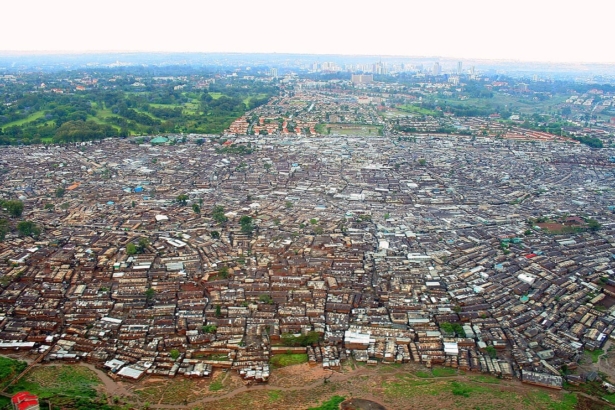
Under the global poverty index, deprivation also remains largely rural. About 83% of poor people live in the countryside, compared with a much smaller share in towns and cities.
The report covers 108 developing countries, home to 6.3 billion people, or 78% of the world’s population. Across that group, 18.9% of residents live in acute multidimensional poverty.
Sub-Saharan Africa carries the highest rate of any region. There, 616 million people, or 51.4% of the population, are poor under the measure. Meanwhile, sub-Saharan Africa and South Asia again hold the bulk of the world’s poorest people, just as they did a year ago.
How the global poverty index works
Rather than measuring income, the global poverty index captures the everyday shortfalls that poor families face. It tracks ten weighted indicators across health, education and living standards.
Those indicators include nutrition, schooling, housing, sanitation, electricity and cooking fuel. Anyone lacking at least one third of these counts as poor.
However, the agency cautioned that population growth explains part of the rise. In 95 countries without fresh survey data, updated population estimates alone added 15.8 million people to the count.
In addition, only 13 of the 108 countries supplied fresh survey data. The rest of the change reflects shifts in poverty rates, demographic changes and differences in the indicators that surveys cover.
A mixed picture across countries
Results among those 13 countries varied. Five achieved big drops in their poverty rates, and Egypt, Nepal and Tajikistan also brought down the total number of poor residents.
Angola and Zambia also lowered their poverty rates. Even so, rapid population growth outpaced those gains, so the total number of poor people in both countries still rose.
Nigeria, on the other hand, highlights how quickly gains can slip away. After major gains in the 2010s, both its poverty rate and its number of poor people climbed again in the 2020s.
Global poverty index shows success stories
Despite the overall rise, the report points to clear success stories. Of 89 nations with data over time, 33 cut their score by half within 15 years. Six of those are in sub-Saharan Africa.
Eswatini stands out. Over 15 years, the share of its people in multidimensional poverty dropped from 38.7% to 8.0%.
China recorded the fastest progress of any country with data. It halved its index value in just four years, as its poverty rate fell from 9.5% to 4.2% between 2010 and 2014. Vietnam, meanwhile, halved its value within seven years.
Still, the global poverty index offers hope. The UN Sustainable Development Goals call on countries to at least halve poverty in all its forms by 2030. According to the report, that target remains hard to reach but achievable.
“We know progress is possible,” De Croo said. Countries that tackled these problems together, rather than one by one, have shown what determined action can achieve, he added.
We welcome your contributions! Submit your blogs, opinion pieces, press releases, news story pitches, and news features to opinion@minutemirror.com.pk and minutemirrormail@gmail.com